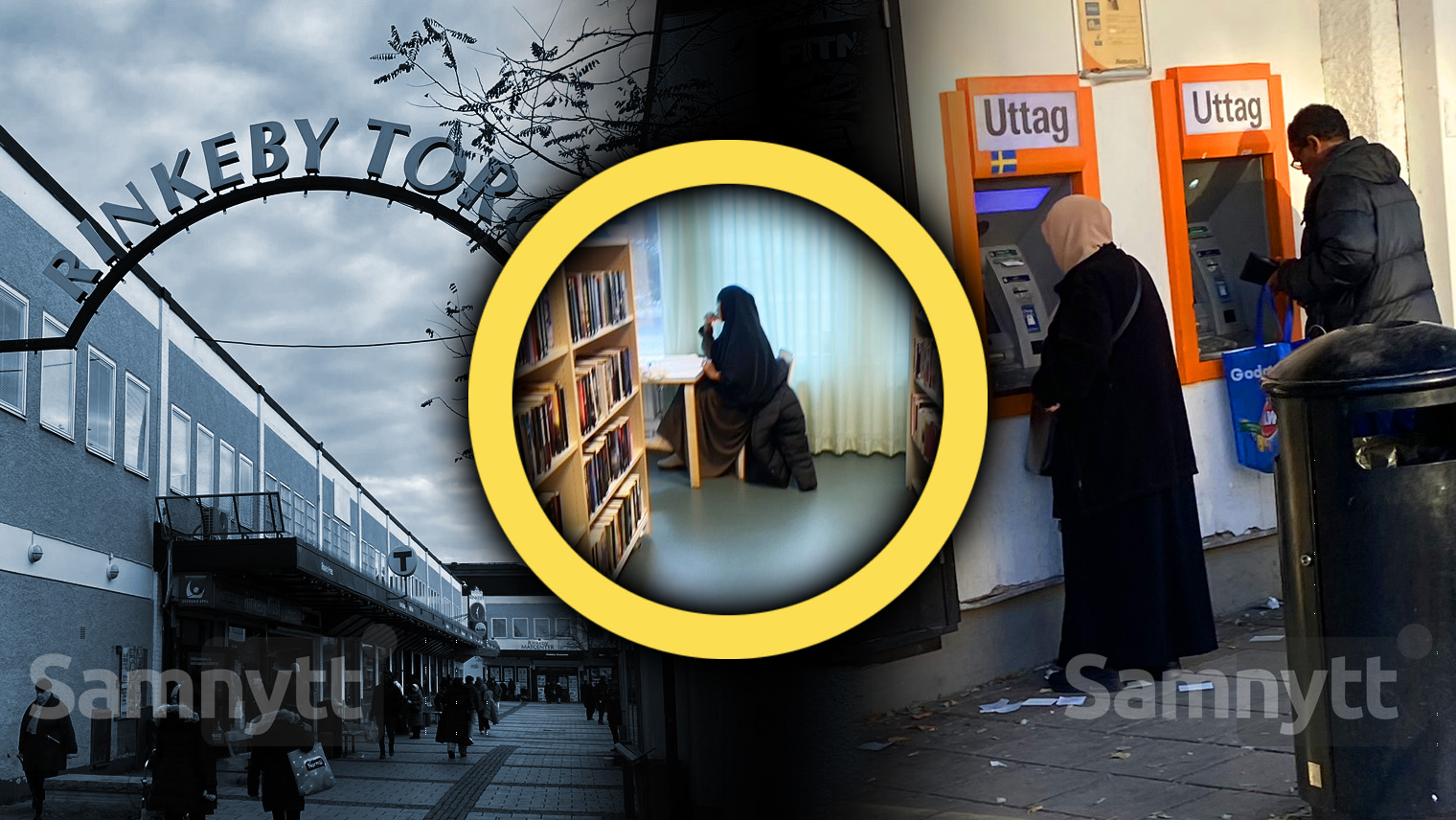
Tensta and Rinkeby are two of Sweden’s most talked-about residential areas. For several decades, they have been the scene of shootings, the emergence of parallel norm systems, and a demographic change that is unprecedented in the country. Here, schools, squares, and residential blocks have been shaped by a development that has occurred faster than many outside the area have understood – and often without the residents being asked about what is about to happen. Today, these districts constitute a separate reality in the middle of the capital, characterized by years of conflicts between criminal networks, changed population patterns, and a security that has at times collapsed. Samnytt meets both older and younger residents, people who have seen the change from different perspectives but all describe the same thing – a place where everyday life has drifted further and further away from the Stockholm and the Sweden that once existed here.
– I will vote for the Sweden Democrats, says a young Somali who has grown tired.
On the blue metro line towards Tensta and Rinkeby, Samnytt’s reporter starts talking to the beggar walking through the carriage. The man, in his fifties, comes with crutches and says in broken Swedish that his whole body hurts. He tells us that he is from Romania and that life as a beggar has become worse in recent years. We ask why he does not work and why he is not staying in Romania?
– No, no, you can’t beg in Romania! The police right away! I have been a carpenter and a painter, but I have to make money to send home to my family. Then I earn better here.
READ ALSO: Kista: Here Sweden was to build the future – now companies and Swedes are fleeing
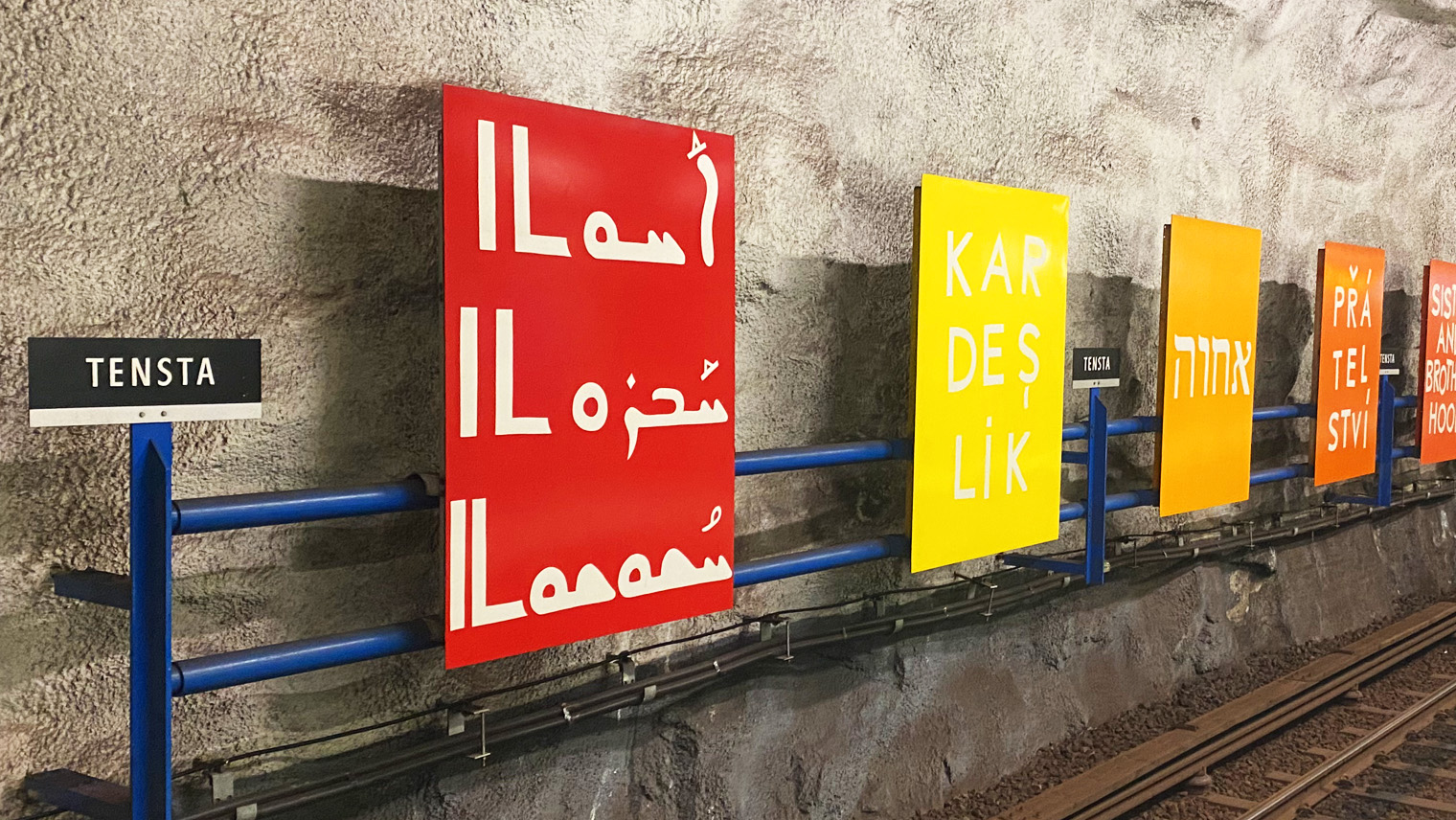
When we arrive at Tensta station, the beggar and Samnytt’s reporter get off at the same time and continue to talk. On the platform, the Romanian takes the crutches and puts them over his shoulder while describing that he is ‘not really a beggar’, but that one has to do what is necessary to make money. He laughs and winks at us.
A chilly morning like this, Tensta center lies still under a gray November sky. A couple of shops are open, a few Muslim women pull shopping bags across the square, and a school class passes by while the teacher gives instructions in Arabic. At the library, there is a notice about ‘temporary reduced opening hours’ and the Arabic signs for ‘Money transfer’ are seen everywhere. The atmosphere is subdued, almost expectant.
Tensta and Rinkeby have for many years been classified as ‘especially vulnerable areas’ by the police – a category used when so-called socio-economic problems, parallel power structures, and crime coincide. In popular speech, the areas have often been described as ‘ghettos’ or ‘no-go zones’.
The Järva area has been one of the country’s most gang-violence-ridden places during the 2020s, even though the number of shootings has decreased significantly in recent years. But for many who live here, the development is not just a series of numbers. It is a concrete everyday life.
Two women about a long Tensta life: ’30 years ago, there were no problems’
In Tensta center, we meet two elderly women from Finland, one with a walker. They have both lived in Tensta since the 1970s, and they describe a change that has occurred gradually but clearly. Like everyone out here, they want to remain anonymous and not appear with name and picture.
Then it is claimed that Islam is a very women-friendly religion, but it is not at all. We Western women are only seen as whores, ‘Swedish whores’, as they say.
Elderly Finnish woman in Tensta center to Samnytt
– I have seen the whole development. Earlier, one did not think much about the population, one went to work, came home. Everything worked, says one of them.
Has it gotten better or worse?
– I cannot claim it has gotten better. Thirty years ago, there were hardly any problems out here. One took a taxi home, went out and danced, says the other. She continues:
– Now we do not go out in the evenings. The first woman adds:
– But it has actually gotten a little better lately. They do not murder as much.
You mean shootings and murders that happen out here?
– We have to talk quietly so not everyone hears, whispers one of the women to Samnytt’s reporter.
We lower our voices and ask:
There has been a lot of talk about repatriation benefits among several parties now, what do you think about that?
– We just say goodbye! The other woman adds:
– Yes, goodbye! She laughs gently and continues:
– Those who do not want to work and pay taxes and live like we do. Swedes are in the minority now, you hardly see any Swedes, but since we are from Finland – and also immigrants – but look a bit like Swedes, it has become worse for us.
You are among the few Nordic people one encounters here?
– Yes, there are not many left. Everyone has moved or died. The children and grandchildren do not want to live here. The center has become much, much worse. There is nothing.
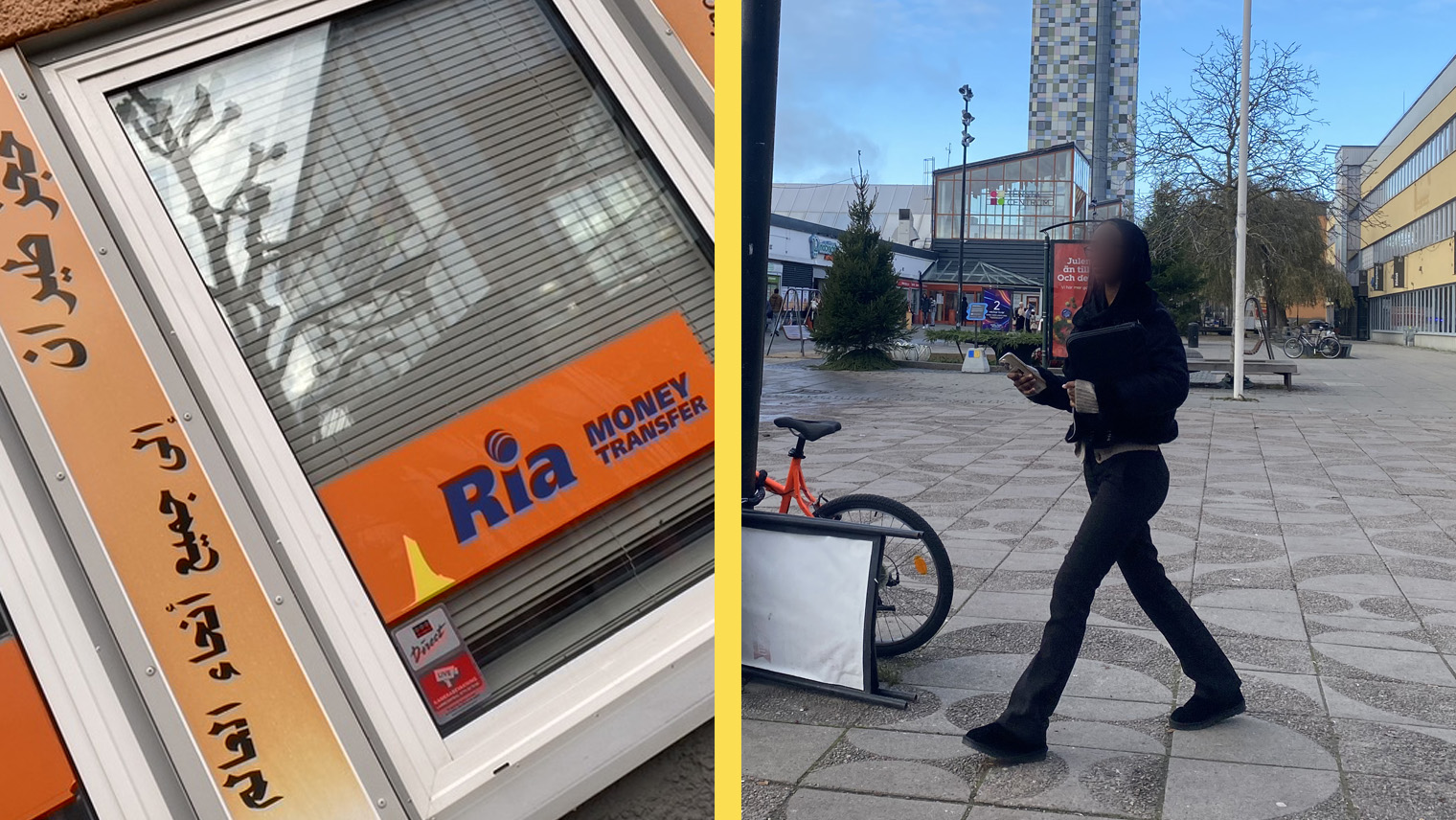
The conversation turns to Islam and the fact that it is becoming increasingly clear that most women wear hijab or fully covering Muslim clothing.
When it comes to the culture that people bring with them, how does it feel as a woman out here when, for example, one is used to showing one’s hair publicly, that what we see now might be the future?
– No, one does not know… In the summers, the old men and the men sit here on the benches and look at the occasional young woman who is a bit scantily dressed and so on. They stare. But their own women are covered. The other woman continues:
– Then it is claimed that Islam is a very women-friendly religion, but it is not at all. We Western women are only seen as whores, ‘Swedish whores’, as they say.
One of them further describes how the feeling of belonging has changed.
– Sometimes on the subway, I think: which country am I in? There are hardly any who even look like me.
Statistics and development: A clear trend
When comparing Sweden with the rest of the Nordic countries, the contrast becomes clear. For much of the 2020s, Sweden has had more fatal shootings than Norway, Denmark, and Finland combined. In Norway, there are no fatal shootings in some years. In Denmark and Finland, there are often only a few cases per year.
At the same time, Sweden has had levels several times higher per capita and now stands out as the country in the EU where firearm violence has developed the fastest. The gang criminal networks in Järva consist largely of and have almost exclusively consisted of people with immigrant backgrounds from Africa – especially Somalia – and the Middle East.
READ ALSO: 800 bomb attacks later – Swedes seek refuge on Åland
It is not just about the number of dead, but about the age of the perpetrators. In Sweden, many of those who have shot – and been shot – have been teenagers. It is a situation that both Nordic and European reports have pointed out as unique in Northern Europe.
In this development, Järva has been one of the most central areas. During 2020 and 2021, between 20 and 23 shootings occurred per year in Tensta, Rinkeby, and the nearby districts. In 2021, nine people were killed here, which meant that a small part of Stockholm accounted for a disproportionately large part of the country’s total fatal shootings.
However, after the change of government in 2022, a clear change occurred. The number of shootings decreased first in 2023 and continued downwards in 2024. The police today describe a development where several major gang conflicts have been pushed back, access to weapons has become more difficult, and arrests have increased. Overall, firearm violence has dropped to the lowest level in several years.
The criminals must be deported. I do not understand why the country does not do that. The Sweden Democrats should do that. Those who ruin the country must go home. Put them on a plane: go home!
Youth with immigrant background in Rinkeby center to Samnytt
But even when the statistics are moving in the right direction, the previous reality lives on in areas like Tensta and Rinkeby. Many residents describe that the insecurity is still palpable, that certain places are avoided in the evenings, and that the memory of shootings, youth recruitment, and violence does not disappear just because the curves point downwards.
For a long time, Järva has been the center of firearm violence that has no equivalent in the Nordic countries, and for the people who live here, the change is slower than the numbers suggest.
Somalis in Rinkeby: ‘Will vote for the Sweden Democrats’
In the square in Rinkeby, Samnytt meets two young men walking across the square. One is in his twenties with roots in the Middle East. The other is 18 years old, born in Sweden, with Somali background. They give a friendly and attentive impression and are happy to talk to us, but do not want to be photographed, and we do not publish their names.
There are many parties now talking about introducing a repatriation benefit for immigrants who do not adapt to Swedish society, what do you think about that?
– I will vote for the Sweden Democrats, I want them to disappear, says the older of the two young men. He continues:
– I am an immigrant myself, but I am a good immigrant, I pay taxes and work. I do something good for Sweden. Those who ruin the country should go home.
When you say ‘they’, who do you mean?
Both men look around and appear thoughtful.
– The criminals who ruin it for everyone. Send them home, says the younger man with Somali roots.
Will you also vote for the Sweden Democrats?
– No, I will not vote for the Sweden Democrats, but the criminals, those who ruin the country should be deported from here. Some are good but…, some are not good. People who come here want to create a life, but those who ruin it make it harder for the rest of us.
– They should go to hell, sorry for my Swedish, the other adds. He continues:
– The criminals must be deported. I do not understand why the country does not do that. The Sweden Democrats should do that. Those who ruin the country must go home. Put them on a plane: go home!
But what do you do when the receiving country says no, we will not accept them?
– Can they do that? I did not know… Now I feel sorry for Sweden.
They also describe how the area has changed from year to year.
– It was a long time since I saw any Swedes here. Have you seen Rinkeby before? You can see in movies, it was quite nice, says the older of the two. 30 years ago, there were only Swedes here. Now you hardly see any, now it is chaos here.
– Yes, you can see a Swede occasionally at the dentist up there, the younger man adds.
The Swedish people have never really taken a stand on the type of societal change that now characterizes these areas. The decisions have emerged from political compromises, authority strategies, and media drives, often far from those who live here and without popular support.
When the conversation returns to the gang criminals who are visible in the square after dark, they also spontaneously bring up the role and responsibility of the families.
– It is mostly the parents’ job to keep an eye. Many do not have that, says the younger with Somali heritage.
But your parents seem to have kept an eye on you?
– Yes, mine did. That is why things have gone well for me.
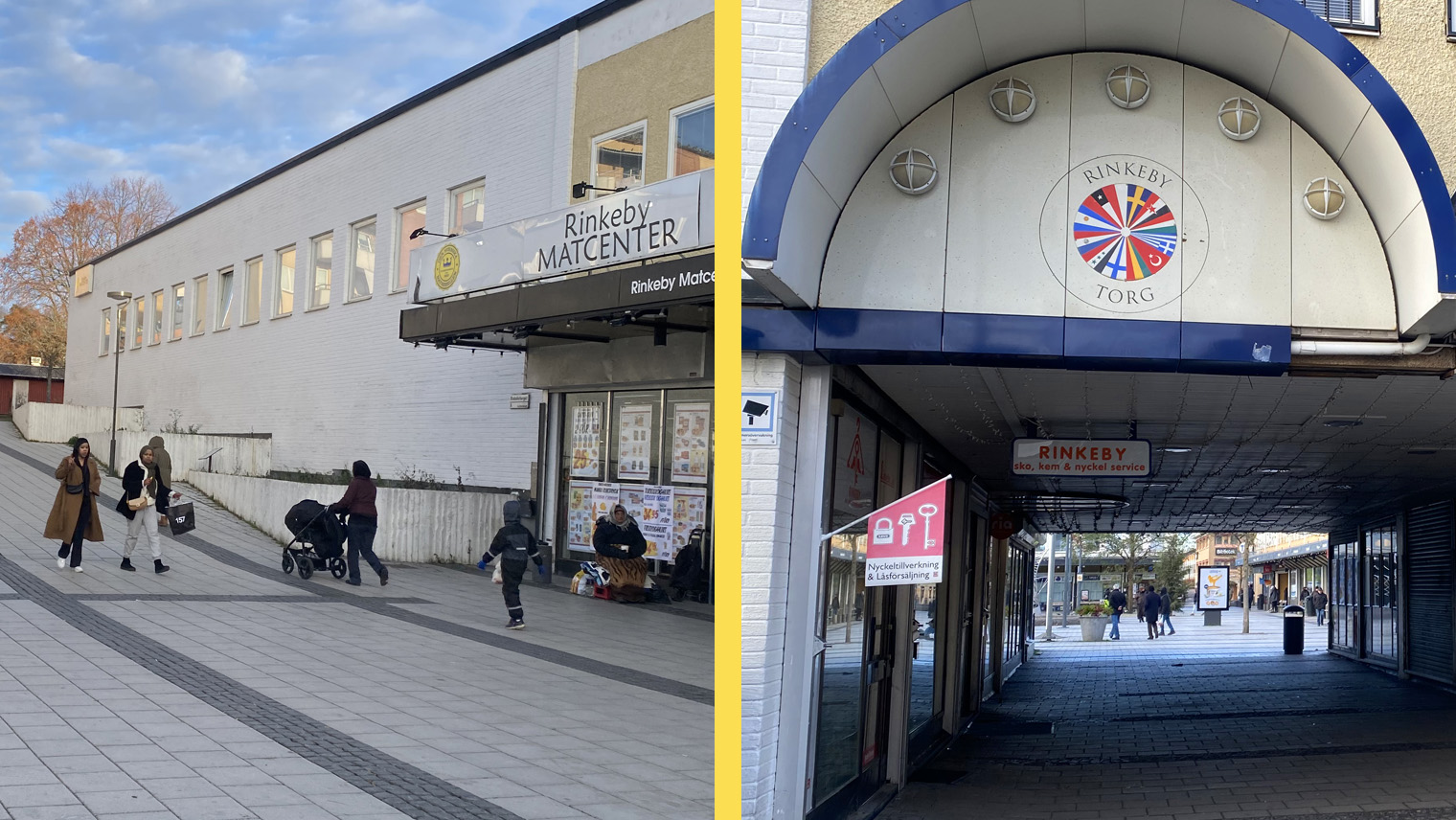
They further tell us that they have started a new e-commerce business and rent a premises in Östermalm, where they feel much better. On several occasions, they say that they appreciate Sweden. The older of the two young men concludes.
– You can see who is bad for Sweden. In the evenings, they usually stand here and sell and everything… Just take them and throw them out. It is not that difficult!
Do you think we could come out here and film in the evening?
Both laugh and look kindly at Samnytt’s reporter:
– Some from Australia tried to film here. The camera was knocked down immediately, says the older.
Two generations – similar descriptions
During our visit to Tensta and Rinkeby, the reporter’s attempts to engage in dialogue among the residents became threatening only once. We asked some older men sitting outside the grocery store about their experiences of the area. They all shook their heads and said no. But one of them, likely with Balkan heritage, stood up and spoke:
– Everyone has to earn money. We work with rented horses. Do you know what that is? When you rent a horse?
No, tell me what it means?
– Yes, you rent the horse. You rent the horse and then load, load, load. There, here, there, here. And when the horse becomes… Or at the slaughterhouse, where you fix some meat for McDonald’s. Such things. So, no more talk, man. You are here to spy. Goodbye, go away!
Despite differences in background, age, and life situation, both the older women in Tensta and the young men in Rinkeby describe a development where the population has changed rapidly, where crime and parallel norm systems have shaped everyday life, and where security has decreased drastically.
Their stories are close to the picture that can be discerned in statistics and official reports. At the same time, several of the residents describe a desire to improve the situation, take responsibility, and create a functioning life – despite the area having changed fundamentally.
READ ALSO: Kista: Here Sweden was to build the future – now companies and Swedes are fleeing
When compiling the testimonies from Tensta and Rinkeby – from pensioners who have lived here for half a century to young men trying to establish themselves in working life – the picture becomes consistent. The change has occurred gradually, but without anyone really taking full responsibility for where the development led.
The Swedish people have also never directly taken a stand on the type of societal change that now characterizes these areas. The decisions have emerged from political compromises, authority strategies, and media drives, often far from those who live here and without popular support.
It is therefore a question of whether responsibility eventually becomes inevitable. How big changes can be implemented in a democratic society without the voters being asked and the responsible being scrutinized? In Tensta and Rinkeby, the answer is not theoretical. It is visible in the street scene, in the schools, in the statistics – and in the people’s own words.