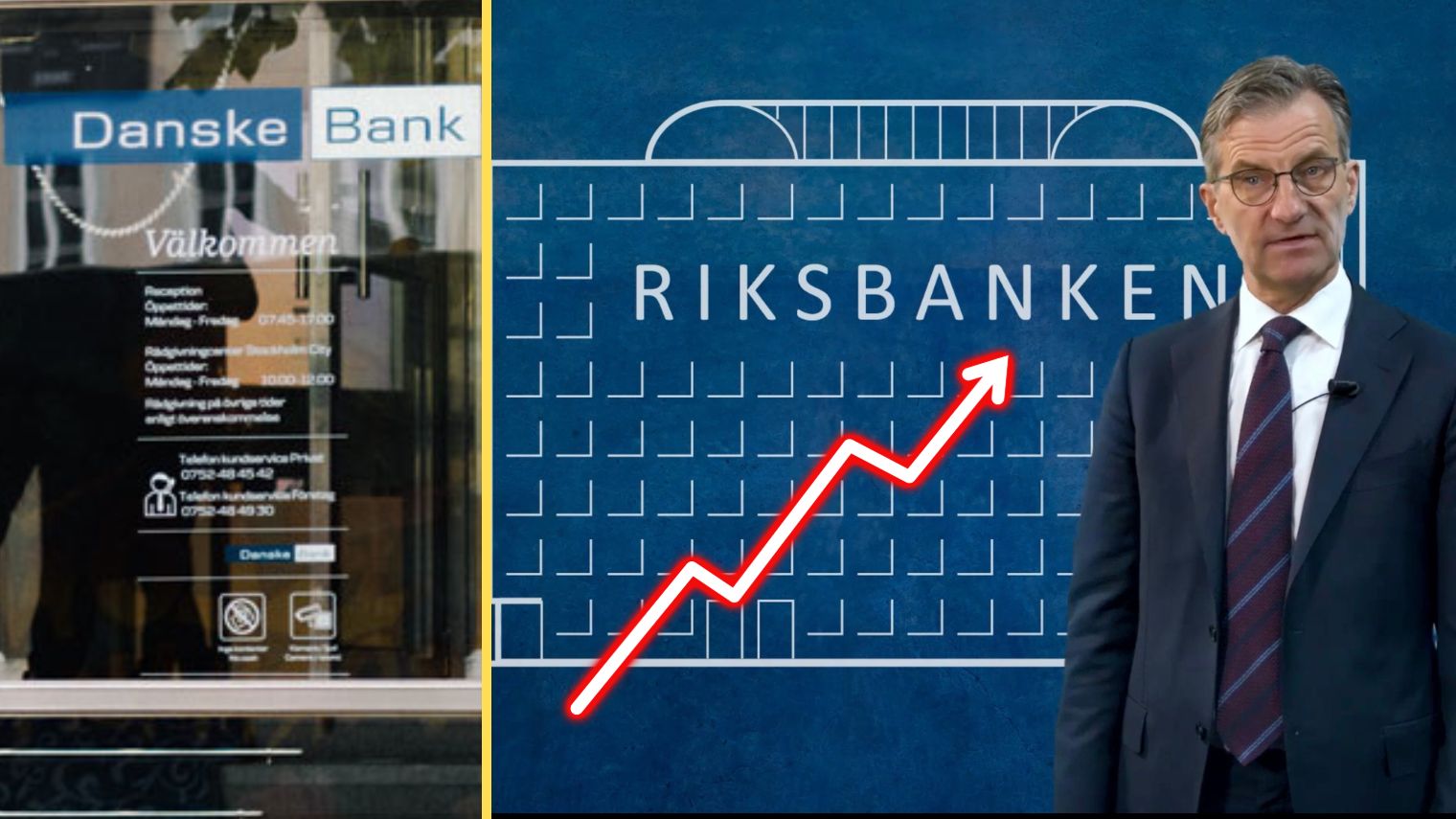
Danske Bank has revised its view on the Riksbank’s upcoming interest rate decisions and adjusted down its expectations for a hike in May. In the new forecast, the bank instead expects two rate hikes, in June and August, which would bring the policy rate to 2.25 percent. The bank cites, among other reasons, the increased uncertainty surrounding the situation in the Middle East, where the conflict and developments around the Strait of Hormuz have contributed to energy market anxiety and disruptions in :censored:6:cdd6bbaa89: supply chains.
The announcement came on Friday morning when Danske Bank presented its updated view in a market report. The future actions of the ECB have also led the bank to change its assumptions. In light of recent statements by ECB members, two hikes are now expected in June and August, instead of the previous forecast of April and June.
A central part of the previous assessment was that a rate increase from the Riksbank in May largely presupposed that the ECB would act already in April. That connection has now been weakened.
At the same time, Danske Bank points out that both inflation and the economic situation in Sweden have developed more weakly than expected. Lower inflation figures for March also give the Riksbank room to await further incoming information before making a decision.
The Riksbank’s upcoming hikes would mean the policy rate reaches 2.25 percent in August.
That is why we are removing our expectation of a hike in May and now expect two hikes in June and August as our main scenario
– Danske Bank
At the same time, the bank emphasizes that uncertainty remains high and that the forecast is to a large extent affected by developments in the Middle East, with particular focus on supply chains and energy markets.
READ ALSO: Chief Economist: The Iran war could hit the economy hard
The geopolitical situation is believed to possibly lead to either tighter or more cautious monetary policy reactions than in the main scenario.
Uncertainty around the situation in the Middle East, due to the conflict between the USA, Israel, and Iran, has caused disruptions to shipping through the Strait of Hormuz. This makes the situation a central part of the current issues.
Expectations on when traffic can return to normal levels have shifted dramatically during April, reflecting how quickly assessments change as new signals emerge in the conflict.
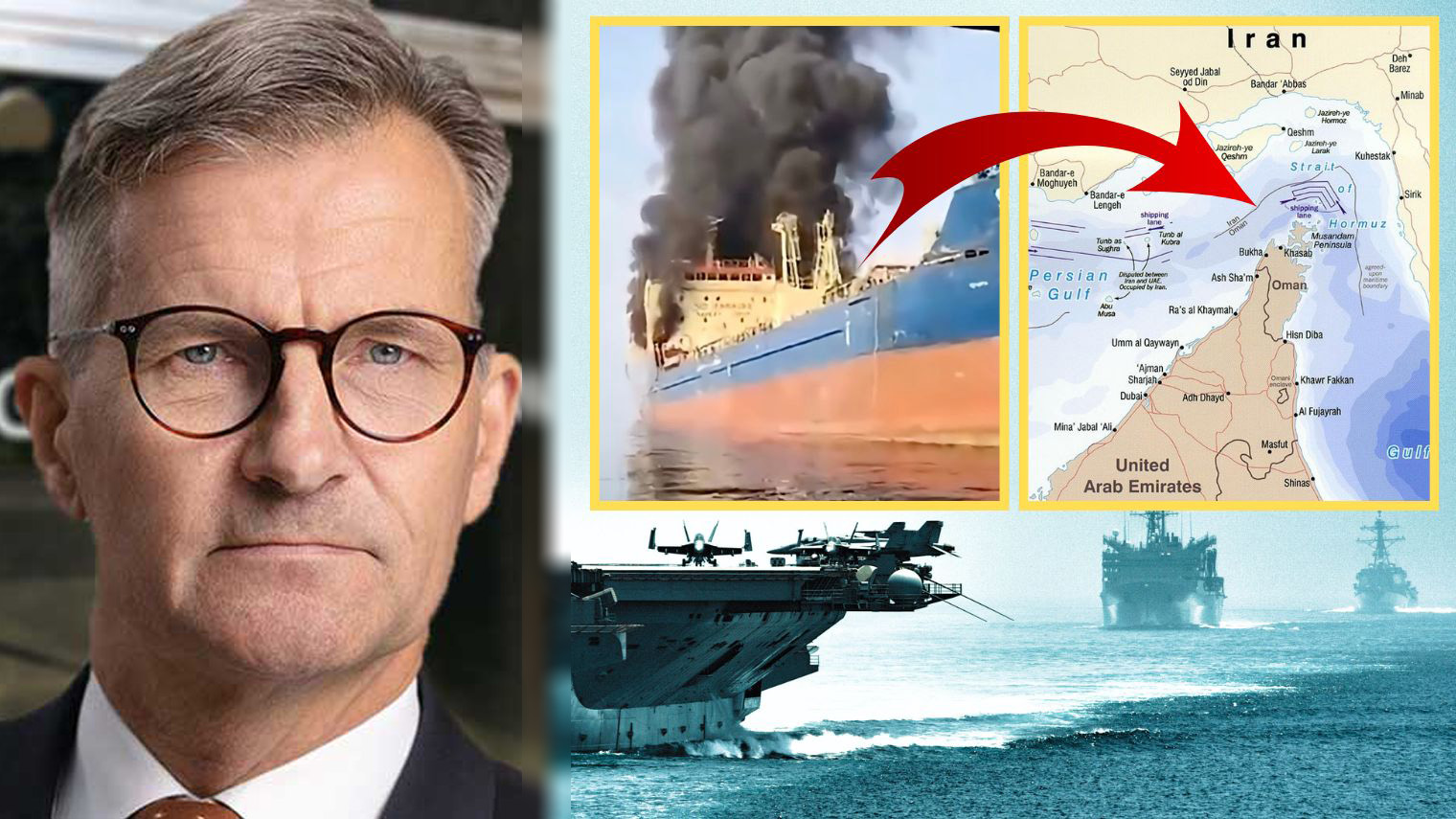
Uncertain – could be higher or lower
Even though a probability of around 60 percent, according to the bank, should be interpreted with caution, they still highlight that it indicates a significant risk that the situation will not normalize in time. Such a scenario would likely be due to a prolonged conflict with knock-on effects on :censored:6:cdd6bbaa89: supply chains.
At the same time, the Executive Board of the Riksbank has recently signaled a more open stance on possible interest rate paths. In a speech, Aino Bunge emphasized that developments could lead to a need for either a higher or a lower policy rate than the main scenario. None of the alternatives are ruled out.
Deputy Governor Per Jansson has also stressed that monetary policy must weigh different inflationary factors against each other. He pointed out that reduced food VAT pushes prices downwards while higher energy prices act in the opposite direction, but that uncertainties from the Middle East situation require special vigilance regarding possible spillover effects.
READ ALSO: Riksbanken raises the rate in 2027 – because of Trump