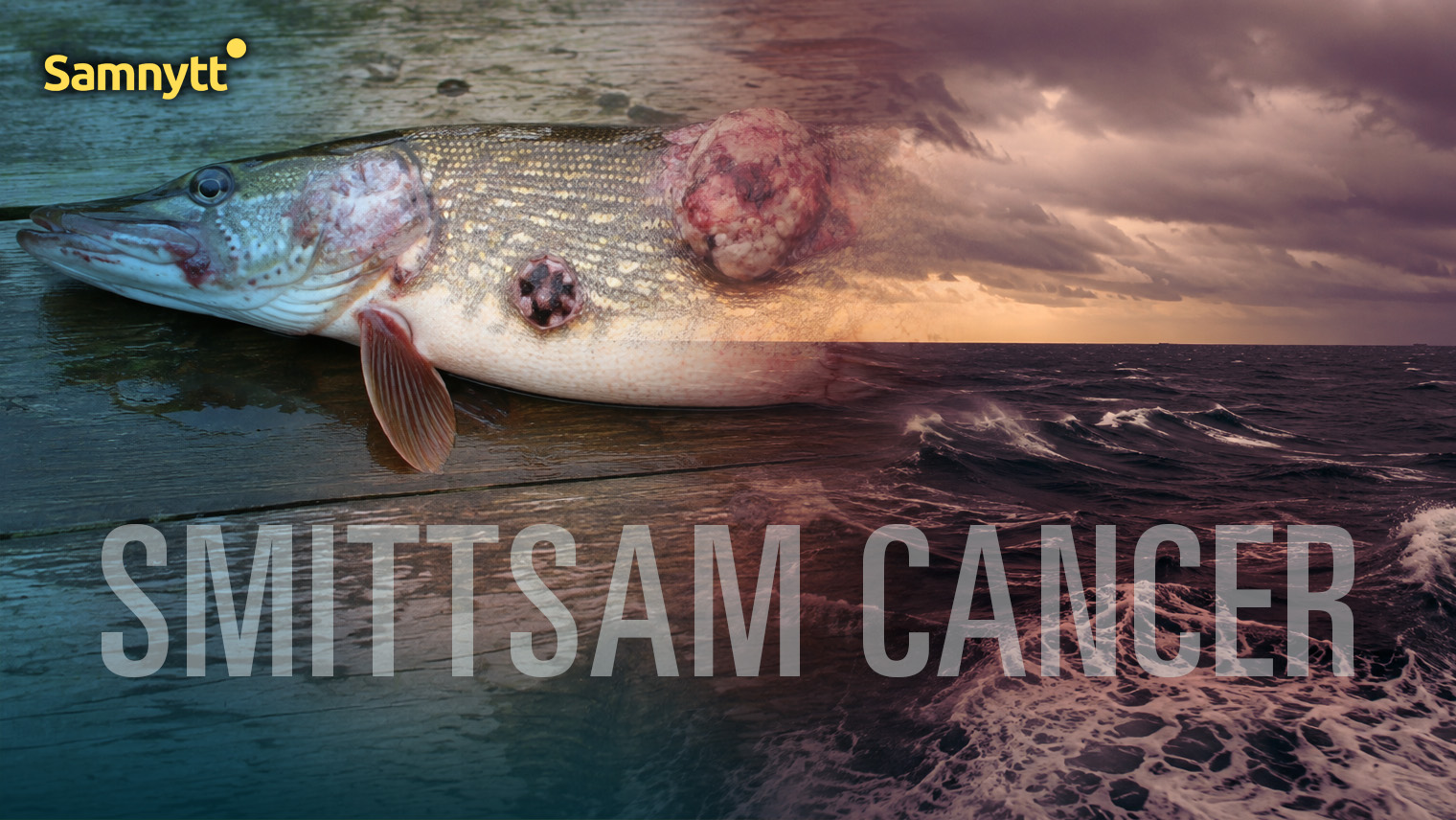
Bloody tumors that grow through the skin and into the muscles. For decades, pike in the Baltic Sea have been afflicted by the rare cancer lymphosarcoma, which is believed to be transmissible between fish during spawning. Researcher Lennart Balk describes the phenomenon to Samnytt as “metastases jumping from one individual to another.” At the same time, he points to another issue he considers even more serious for life in the Baltic Sea.
In Sweden, lymphosarcoma has almost exclusively been found in pike from the Baltic Sea. The National Veterinary Institute (SVA) reports that a large proportion of pike in a given area can be affected periodically. The authority is still studying the disease and wants to collect more tumor-affected pike for further investigations.
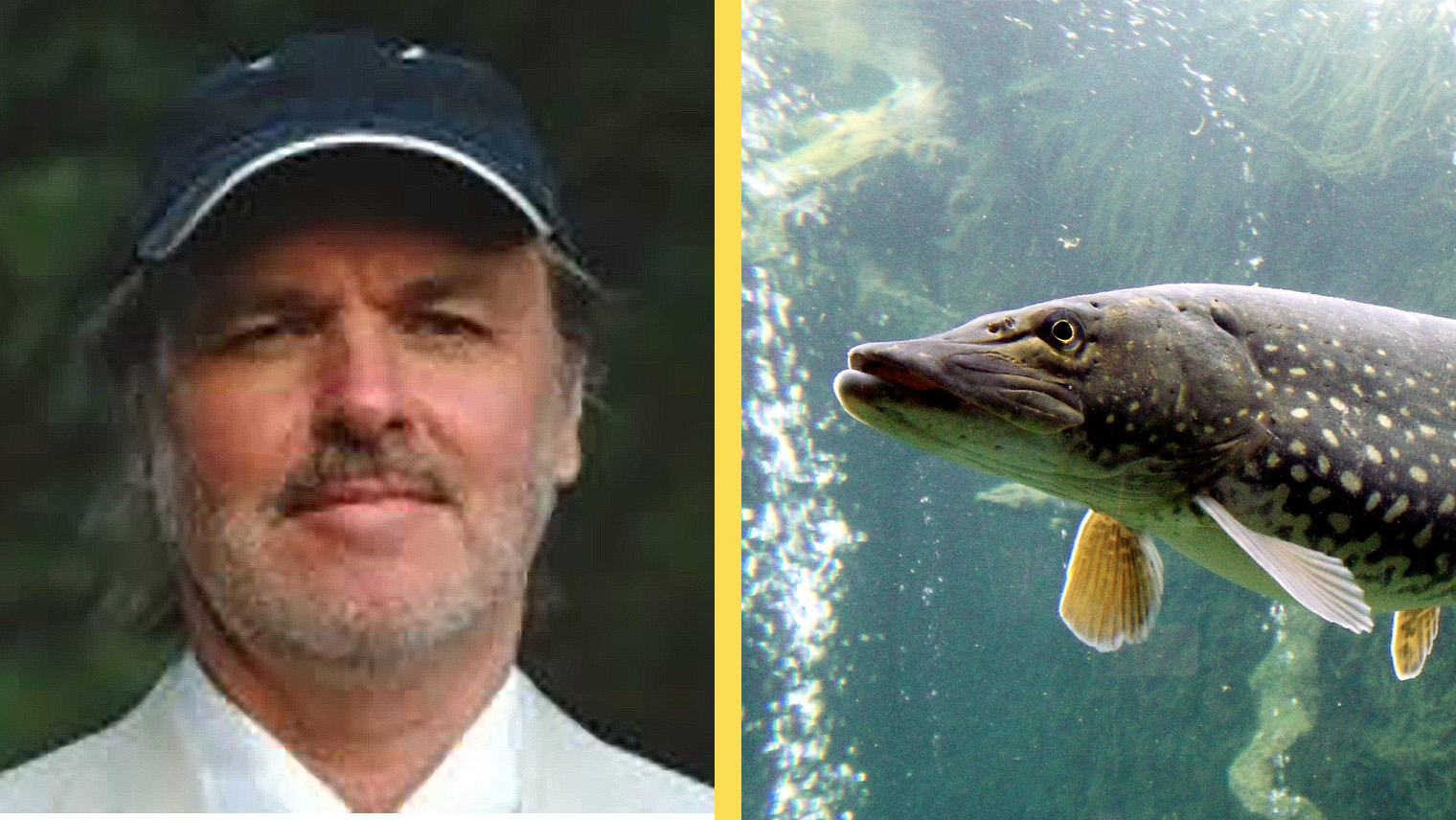
Lennart Balk, professor emeritus at Stockholm University, has researched environmental disturbances and diseases in animals for many years. He tells Samnytt that pike cancer has been known for a long time.
– It’s a type of cancer that’s existed for many years in the Baltic region and also in other polluted areas. For example, in North America, where it has been linked to polluted waters.
“Metastases That Jump”
What makes the disease particularly noteworthy is that it can be transmitted between pike. Already several decades ago, Swedish veterinary researcher Olle Ljungberg at SVA conducted experiments with the disease.
READ ALSO: Researchers: Cancer Now Spreading Between Fish
According to Balk, the researchers were able to take tumor material from a sick pike and transfer it to another, where a new tumor would then develop.
– You can take tumor cells from one pike and give them to another pike, and then you see how the tumor develops there.
Just as a cancer can metastasize inside a body, it can possibly metastasize from one body to another through the medium, that is, the water.
Lennart Balk, Professor Emeritus at Stockholm University
Older research supports this view. The disease has experimentally been transmitted between fish, and research published in Nature in 1976 found virus particles of a type associated with retroviruses.
Even then, researchers pointed to close contact during pike spawning as a likely path of infection. SVA today states that a retrovirus is the most probable cause and writes that the disease has experimentally been transmitted from fish to fish through contaminated water. Direct contact is believed to be a more effective transmission route, likely through open wounds.

Balk describes the mechanism more bluntly:
– It’s like, so to speak, metastases that jump from one individual to another.
However, Balk’s description should not be interpreted as confirmation that the cancer cells themselves spread between the fish. SVA’s main hypothesis is that an as-yet-unidentified retrovirus is behind the disease.
“A Bloody Brain Sitting on the Head”
Pike reproduction may be a key factor in the spread. When the fish gather for spawning, there is intensive bodily contact and skin injuries.
– If you look at how pike spawn, how they reproduce and rub against each other a bit, it’s been assumed that’s part of the spread, says Balk.
The disease can cause dramatic changes. SVA describes how the tumor can first appear as a scale-less swelling that subsequently grows. Tumors may be white or yellow with blood-red streaks, and in severe cases, penetrate into the muscles. The disease can also occur in organs such as the kidney and liver.
READ ALSO: Preservatives in Food Linked to Diabetes and Cancer – Researchers Warn
Balk has a more vivid description.
– What I usually describe as a bloody brain sitting on the head.
Is the most remarkable thing about this that this form of cancer is contagious? That’s not something people usually associate with cancer?
– Yes, it is. You could say that, absolutely. But we mustn’t forget that the medium, the water, in which these fish live, is the same as in their bodies. He continues:
– Just as a cancer can metastasize inside a body, it can possibly metastasize from one body to another through the medium, that is, the water.
There are much more serious disturbances in our environment right now. Above all, there is a lack of a vitamin, vitamin B1 or thiamine, in many fish species, and in many animal species overall.
Lennart Balk, Professor Emeritus at Stockholm University
There is no known risk that humans could be infected by pike cancer, according to Balk.
– For a type of cancer to jump from one species to another is extremely unlikely, he tells Samnytt.
At the same time, there are observations that the tumors can disappear. SVA reports that tagged pike have been found where the tumor has healed and been replaced by a scar.
As recently as 2025, fishing guide Johan Skoglund in Västervik told SVA that he had noticed an increase in the number of affected pike.
During the spring, he said, about 30 percent of the pike he observed had sarcoma of some form. This is a local observation and not representative of the entire Baltic Sea.
“Not Suitable for Consumption”
What happens if people eat these fish—can the cancer be transmitted?
– No, I don’t think so. That’s highly unlikely.
But he advises against eating a tumor-affected fish. A severely ill pike may have a weakened immune system and could also be attacked by other bacteria, viruses, or parasites.
– Altogether, that means it’s probably just not suitable for eating.

SVA’s recommendation is also that fish with tumors or open wounds should not be used for food for humans or animals.
When Samnytt asks Balk how concerned people should be about pike cancer, he simultaneously highlights another issue he considers even more serious—thiamine (vitamin B1) deficiency among wild animals.
– There are much more serious disturbances in our environment right now. Above all, there is a lack of a vitamin, vitamin B1 or thiamine, in many fish species, and in many animal species overall.
Balk and other researchers have published several scientific studies on this phenomenon. In a comprehensive 2016 study, recurrent thiamine deficiency was reported among several groups of wild animals in the Northern Hemisphere.
The researchers established that the vitamin is required for several vital enzymes in cellular metabolism. Balk is critical that, as he sees it, the problem has not received greater attention.
– We see how this spreads both geographically and to different species. And as long as society does not appreciate the importance of finding out what’s causing it, these are major problems that we simply don’t pay attention to. That’s just how it is, he concludes.