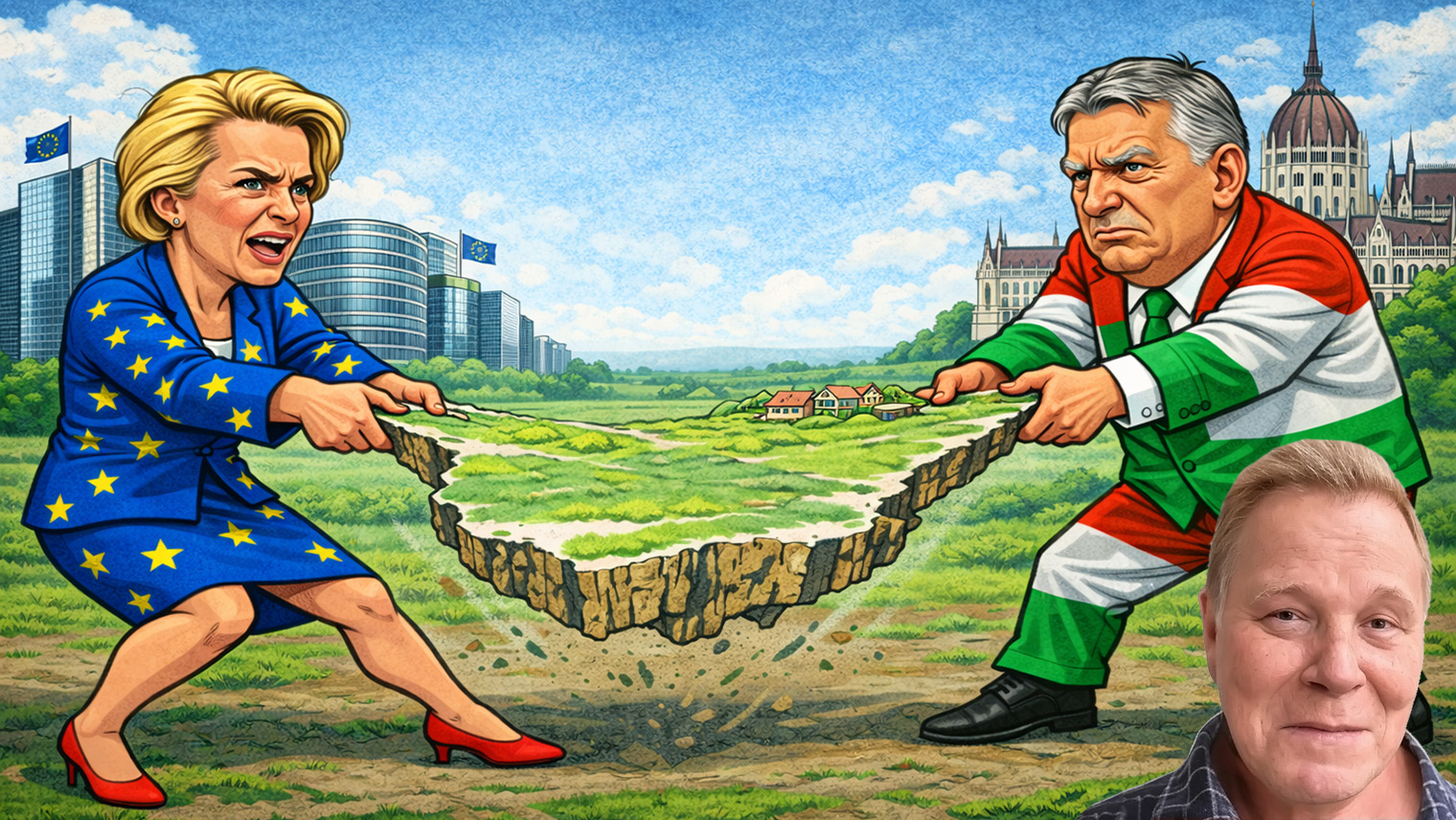
EDITORIAL • There are phrases that reveal more than those who utter them may have intended. When EU diplomats talk about how to ‘cope with Hungary’—how to put up with or handle Hungary—and that this will be done with ‘the gloves off,’ these are such phrases.
This is not language befitting a community of equal democracies. It is the language of a supranational system that has lost its democratic compass and respect for its own citizens, viewing them more as subjects and tools than as the foundational building blocks of a free society.
The Problem: The Hungarian People
Viktor Orbán and Fidesz are not fringe phenomena. They have won election after election. Not narrowly. Not by chance. But with majorities that most governments in Western Europe can only dream of, because they pursue policies that are appreciated by the Hungarian people.
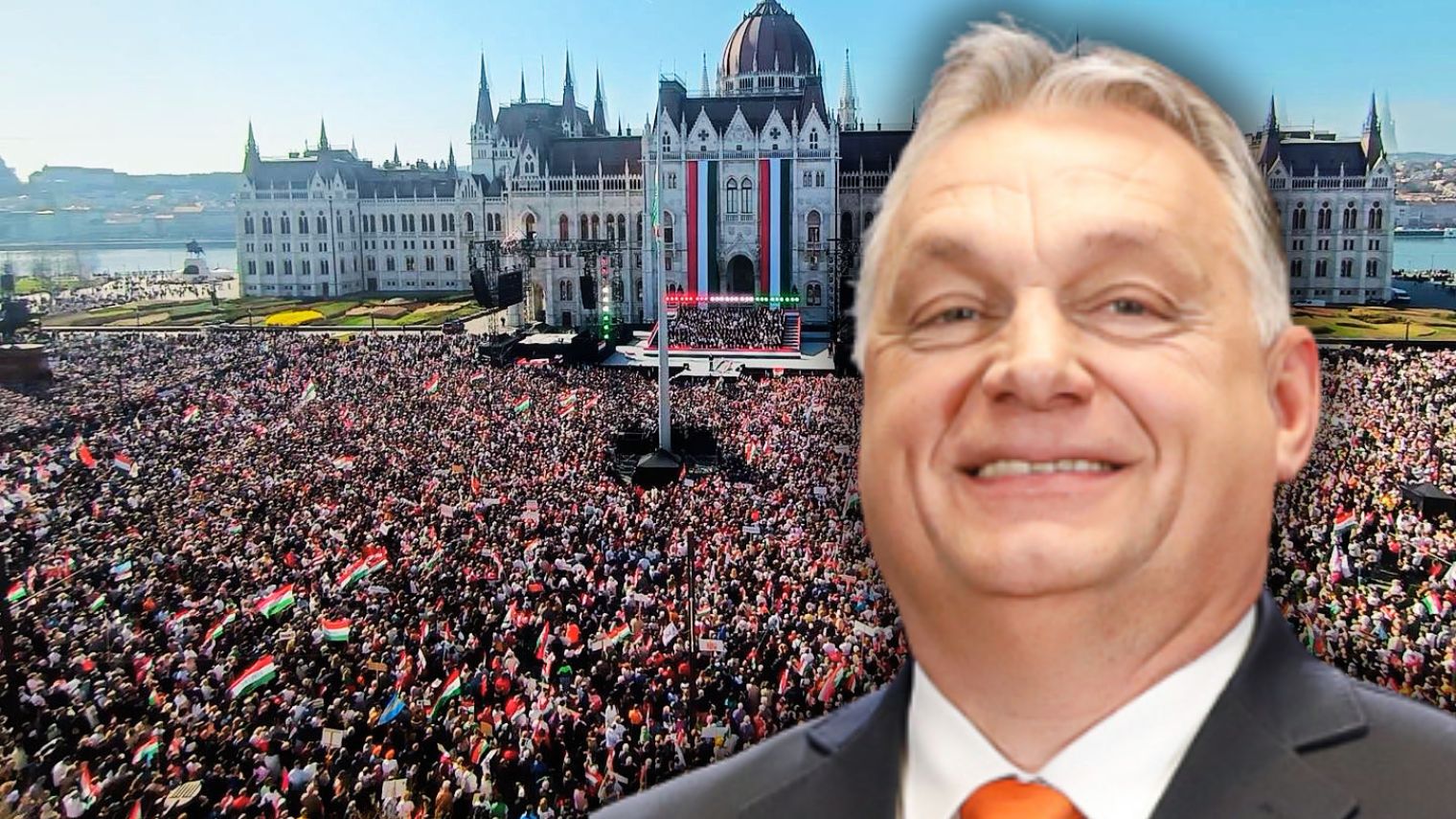
The real problem in Brussels is not Orbán as a person, nor the party or the government he leads. It is that Hungarian voters have repeatedly reaffirmed his policies and may be poised to do so again.
The problem for Brussels is that Hungary is a democracy, and for Hungarians, that Brussels finds it difficult to respect this.
“Gloves Off” – When the Mask Falls
In the Politico article ‘5 ways the EU could cope with Hungary if Orbán wins again,’ EU sources speak openly about what awaits if Orbán wins again. ‘The gloves will come off.’ That’s a remarkable way to speak about relations with a member country.
Or maybe not. For what is happening now is that the EU no longer pretends this is about technical matters and acknowledges that it is about power. And about who ultimately decides—the nomenklatura in Brussels, or the Hungarian voters.
ALSO READ: How the EU Plans to Handle Orban in the Event of an Election Victory
The most remarkable thing may have been when they previously spoke in ways that tried to conceal this. But that what they are now engaged in is described as ‘creative ways’ to deprive the Hungarian people of influence in the EU suggests that they have not entirely abandoned their newspeak rhetoric.
Five Ways to Bypass an Inconvenient Democracy
The measures being discussed are not subtle. They are a kind of handbook for dealing with a government that cannot be gotten rid of—not because it is illegitimate, but because they feel no need to respect democratic decisions that go against them.
1. Abolish the veto—because it is being used
When Hungary says no to issues like migration or Ukraine, it is called sabotage. But the veto does not exist for no reason or just for show; it exists to protect national self-determination.
To now want to abolish it because a country actually uses it is just a step short of abolishing general elections because voters ‘vote wrong.’
2. Move on without Hungary—democracy à la carte
If a country does not cooperate, they move forward without it. ‘Coalitions of the willing’ sounds constructive.
In practice, it means ‘You can participate—but only if you agree.’ Otherwise, you stand on the sidelines and watch.
3. Cut the Money—until the politics change
The EU has already frozen billions to Hungary. Now there is talk of doing this even more systematically.
Officially, it is about upholding the rule of law. In practice, behind this newspeak, it is pure and simple extortion—far from the principles of the rule of law: conform, or it will cost you.
4. Take Away the Country’s Vote
Even discussing stripping Hungary of its voting rights says everything about the direction development is heading. A democratically elected government in a member state can remain—but is to be deprived of all democratic influence in the union where the country is a member.
It is hard to imagine a clearer illustration of what the EU believes national democracy is worth when it becomes inconvenient.
5. And if nothing else works…
…then there is always the possibility of pressing the country out of the EU. That this too is being discussed says even more about the democratic deficit in Brussels.
It shows that the limit of what is considered acceptable has shifted far beyond rules and has been reduced to obedience at any cost.
“Values”—or Politics in Disguise?
The EU likes to talk about values. But in conflict after conflict, it’s about something far more concrete.
Migration: Hungary wants to decide who should be allowed into the country. This is seen as a problem. Not because it lacks popular support—but because it deviates from the line that has dominated in Brussels.
Meanwhile, countries like Sweden and Germany, which have followed that line, struggle with enormous consequences that Hungary has, for the most part, escaped. Yet the conclusion in the EU is not to let different countries make different choices. The conclusion is that everyone must do the same, no matter how self-destructive the result is proven to be.
ALSO READ: Trump Supports Orban Ahead of Election: ‘Powerful Leader’
Cultural Issues: When Hungary legislates about what children should be exposed to in terms of explicit and odd sexual content, it is called a breach of the EU’s values. Brussels tries to make it a legal issue, but fundamentally it is a value-driven political issue where people can have different opinions.
It’s not just in Hungary that broad segments of society want to protect children from being sexualized or exposed to sexual content and propaganda they are not mature enough to process mentally. The debate rages in Sweden as well, but there, rulers have opted to listen more to LGBTQ+ activists than the average Swede.
In Hungary, the rulers have done the opposite. This annoys the nomenklatura in Brussels, where corridors have been stormed by ultra-liberal sex lobbyists.
ALSO READ: Meta Accused of ‘Shadowban’ Against Orbán Ahead of Election
Ukraine: When Hungary uses its veto, it is called blackmail. But the veto is a part of the system. It’s meant to be used. The real blackmail, moreover, comes from Brussels toward Hungary.
When other leaders instead seek to circumvent it, the question arises whether the rules only apply to some. That at least one EU country opposes the ongoing spending of uncountable billions in taxpayer Euros on a war of attrition with equally uncountable deaths should not be as strange or controversial as it is depicted.
A Memory Brussels Lacks
Hungary has a history of having its policies dictated from outside—not least during Soviet times. It’s an experience that shapes the country’s view on sovereignty.
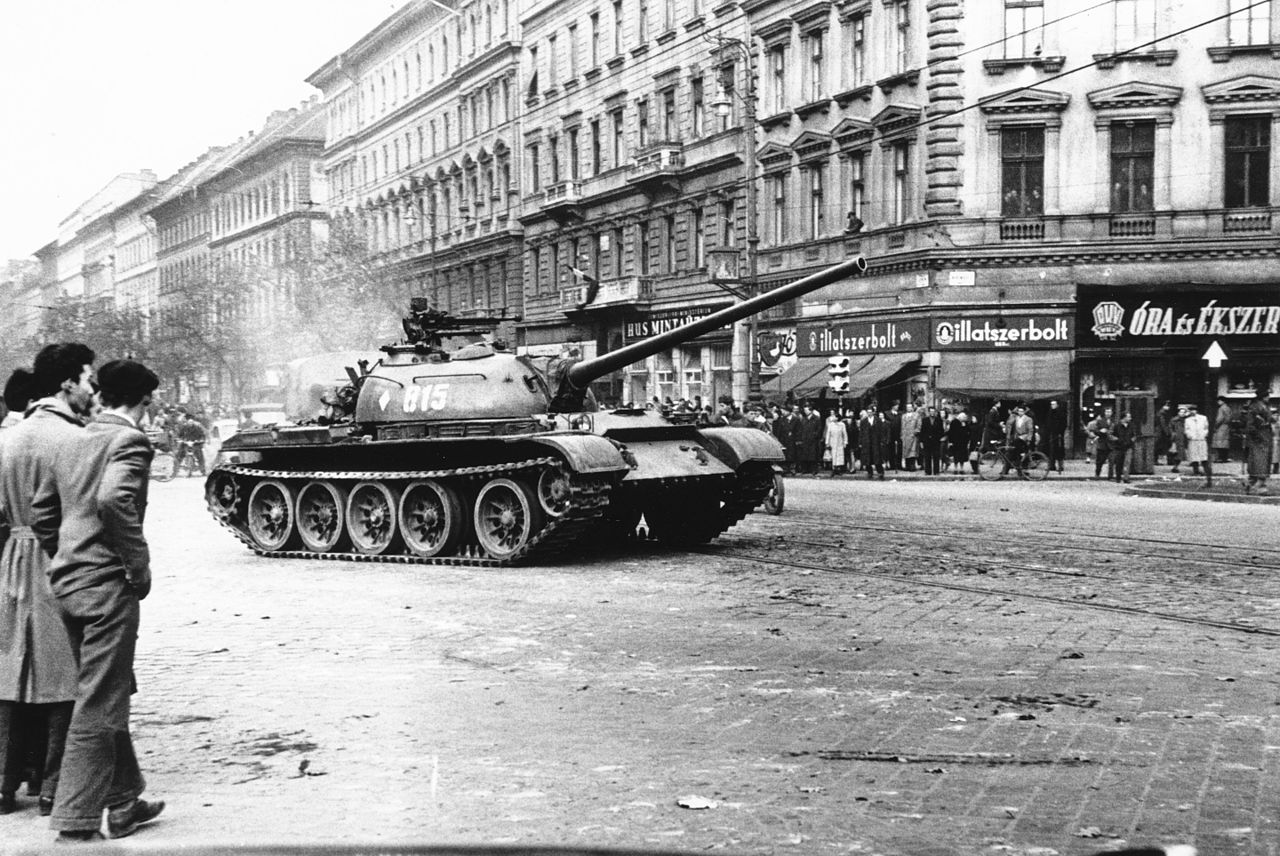
When Orbán talks about national self-determination, it is not just political rhetoric. It is a response to a historical trauma. That’s also why the reaction in Budapest to supranational displays of dictatorial power is often stronger than Brussels seems to understand.
From Cooperation to Obedience
The EU is often described as a peace and cooperation project. But in its relationship with Hungary, something else emerges—a supranational federation that is more engaged in waging war than peace, failing to respect democratic pluralism among its member states, regarding national election results as problems to be managed, and not hesitating to extort those who will not fall in line, with rules applied ad hoc depending on who is applying them.
Brussels vs. Hungary demonstrates with all possible clarity that critics were right in accusing the EU of abandoning intergovernmental cooperation in favor of supranational coercion.
The Big Core Question
The core question in this conflict is not whether one likes Viktor Orbán, Fidesz, the Hungarian government, or conservative politics in general. It is about something much greater.
The question is whether there is any respect whatsoever left in Brussels for national self-determination, sovereignty, and democracy. If a government with as strong popular support as the Hungarian one must again and again be ‘handled,’ circumvented, and extorted, the answer seems to be a clear no.
On April 12, Hungarians will head to the polls. The outcome is uncertain. Opposition leader Péter Magyar and his party Tisza look set to give Orbán a challenge—but he also has all the hardline support from the left-liberal EU establishment, and has even flirted with Fidesz voters by saying he too will put Hungary first. Believe that who will.