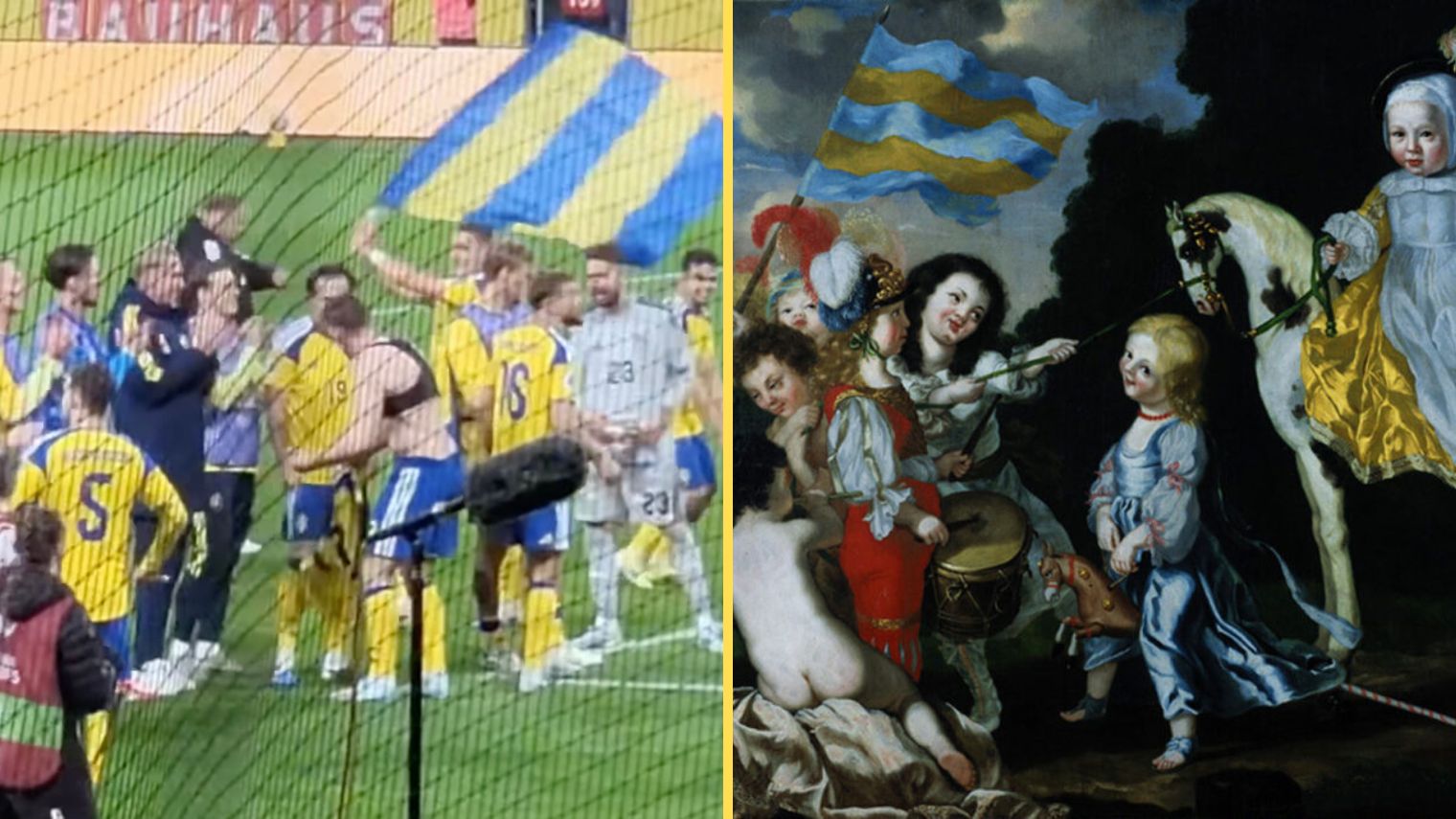
What at first glance was dismissed as a possible April Fools’ joke has, in retrospect, given rise to a number of conspiracy theories. The striped blue and yellow flags seen both in the stands and in the hands of Swedish national team players during the World Cup qualifier have been interpreted by some as a politically correct initiative to tone down the Christian cross flag. Others have speculated about symbolism linked to Ukraine. But according to the Swedish Football Association, there’s a much simpler explanation. The striped flag also has old Swedish roots.
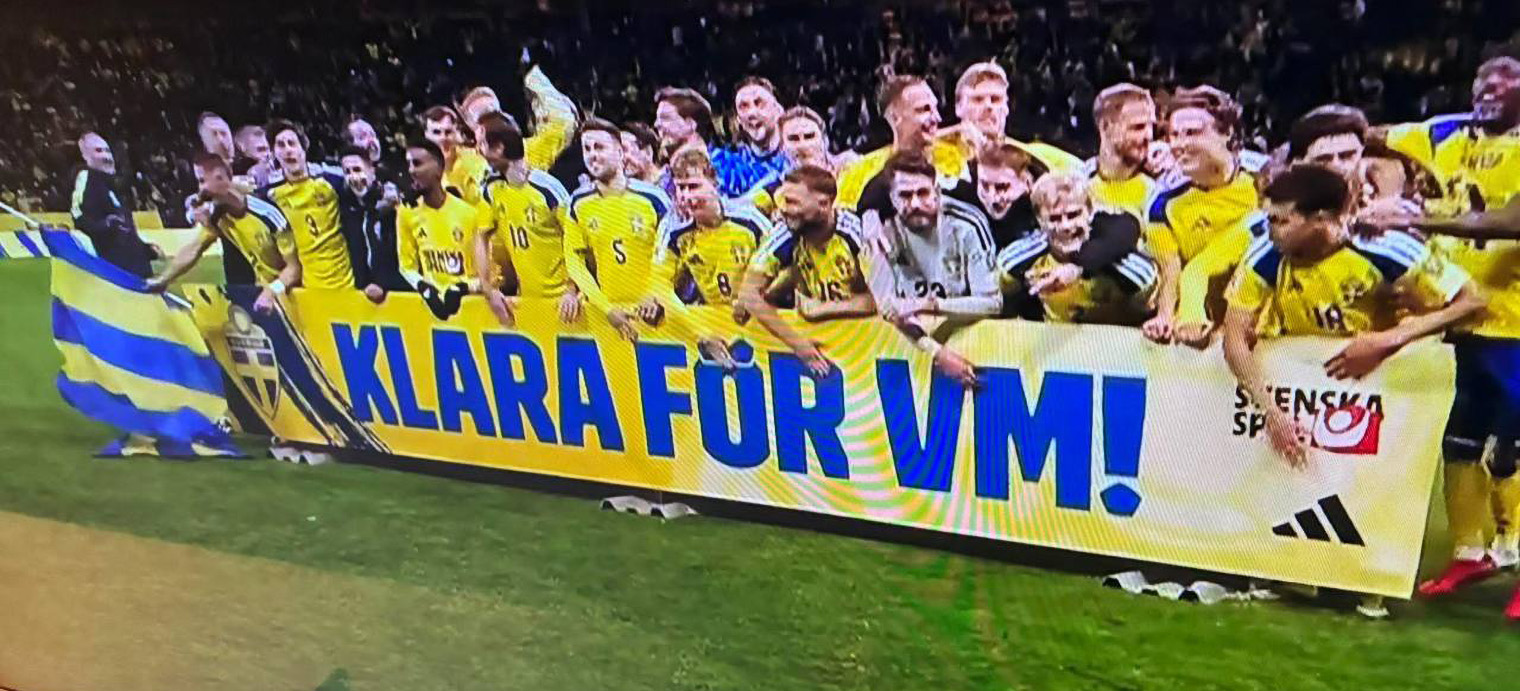
During Sweden’s dramatic World Cup qualifying match on March 31, 2026—where Sweden defeated Poland with a decisive goal in the final minutes—images began to circulate of something unexpected: blue and yellow flags, but striped instead of featuring the Christian cross.
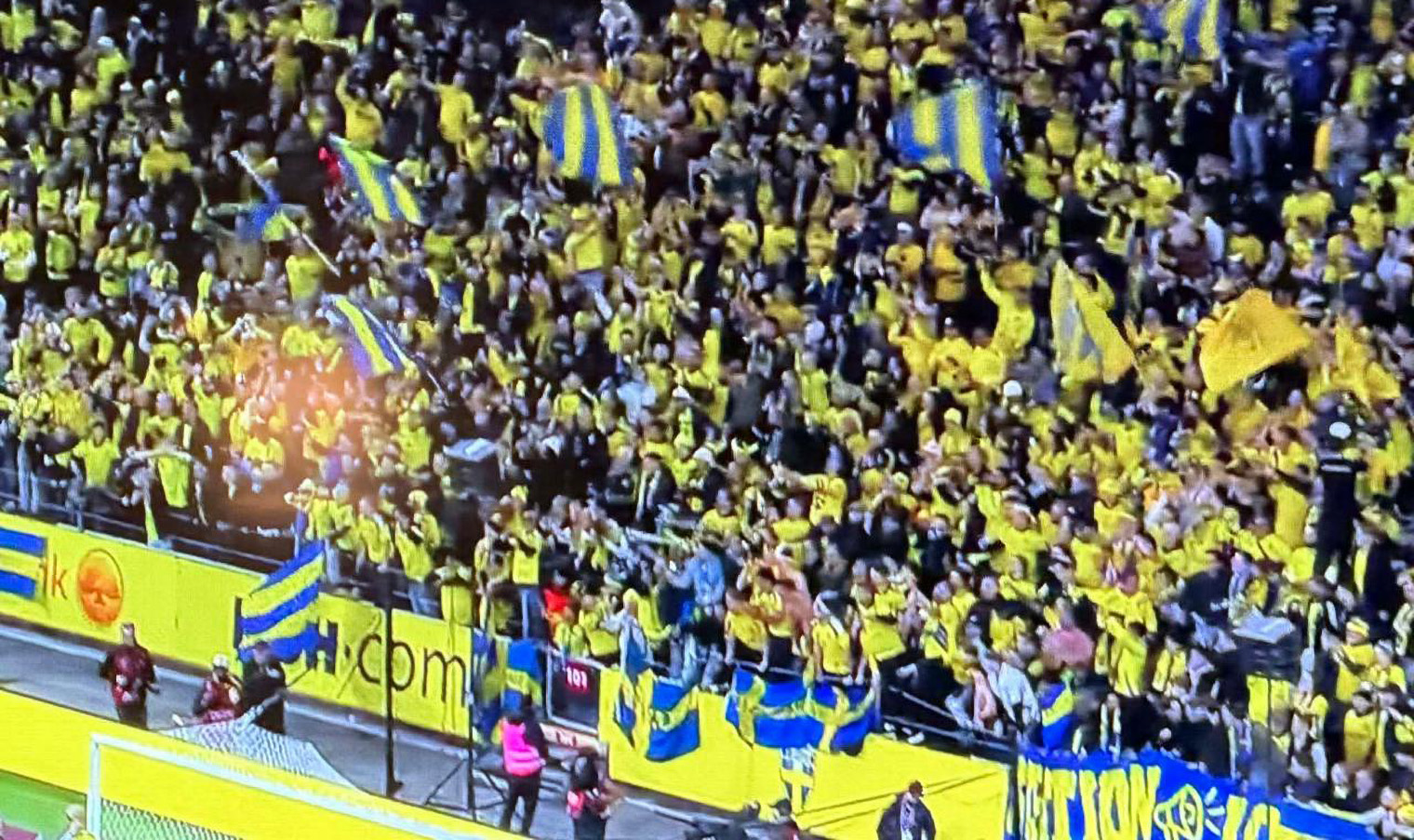
The flags could be seen both in the stands and on the field as players celebrated the victory. The timing, just before April 1, contributed to many initially thinking it was an April Fools’ joke, with images manipulated by AI technology.
Soon, however, more far-reaching theories took off on social media. Some speculated that the flags were a deliberate attempt to replace the traditional Swedish flag for political and religious reasons, so as not to offend Muslim and other non-Christian football fans.
SEE ALSO: Sweden QUALIFIED for the World Cup this summer
Others thought it was an extension of the solidarity with Ukraine that was expressed when Sweden defeated the country in the previous qualifier. Ukraine’s flag is similarly blue and yellow—though with two horizontal fields.
The Association’s Response: “An Aesthetic Issue”
As the matter grew in prominence, Samnytt contacted the Swedish Football Association to hear whether there was any truth to claims that the flags were an initiative from higher up. In an email response, media officer Petra Thorén explains the background:
“The flags came from the stands. The players received them on the run. The supporters had several flags with different stripes and shapes, since these were used in a previous TIFO, a fan display. They wanted more blue in some places and more yellow in others to add depth to the TIFO. They also had ‘regular’ Swedish flags. So, it was more of an aesthetic issue contributing to the overall effect.”
According to the association, this is not any sort of directed change to national symbols, but rather a supporter initiative connected to stadium choreography.
Roots in Sweden’s Age of Greatness
The striped flag motif also turns out to have historical roots dating back to Sweden’s era as a great power. The blue and yellow striped flag, sometimes with a canton in the upper corner, appeared as early as the early 1600s.
During the reign of Gustavus Adolphus (Gustav II Adolf), such banners were used as field signs for Swedish troops, both on land and at sea. They often consisted of horizontal blue and yellow stripes and served as an early symbol of the Swedish armed forces before the cross flag became standardized.
The colors were drawn from the national coat of arms with three golden crowns on a blue field, and the striped banners can be seen as forerunners to today’s Swedish flag.
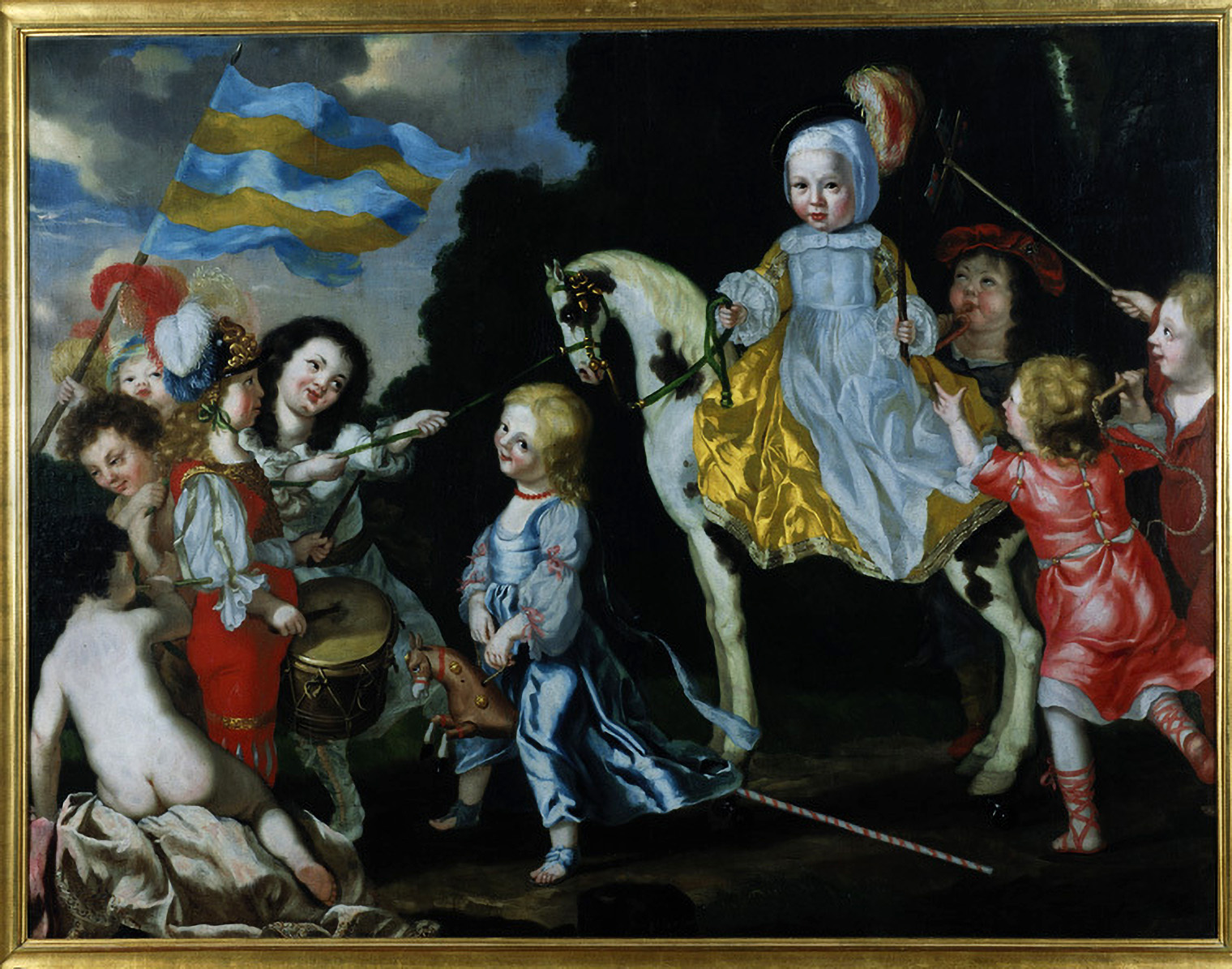
The image to the upper right and above is an oil painting from 1651 depicting Grand Marshal Carl Gustav Wrangel’s children, one of whom is holding a standard with the then-common striped Swedish banner.
From TIFO to Debate
What began as a visual effect in a supporter TIFO has therefore had an unexpected and misguided aftermath. In contrast to speculation, there is nothing to suggest that the striped flags are the result of any organized, politically correct, left-wing identity-political campaign or an attempt to change and de-Christianize Sweden’s national symbols.
Rather, it is a combination of supporter culture, aesthetics—and a piece of traditional nationalist Swedish history that has, due to misinterpretation, found itself in the spotlight.