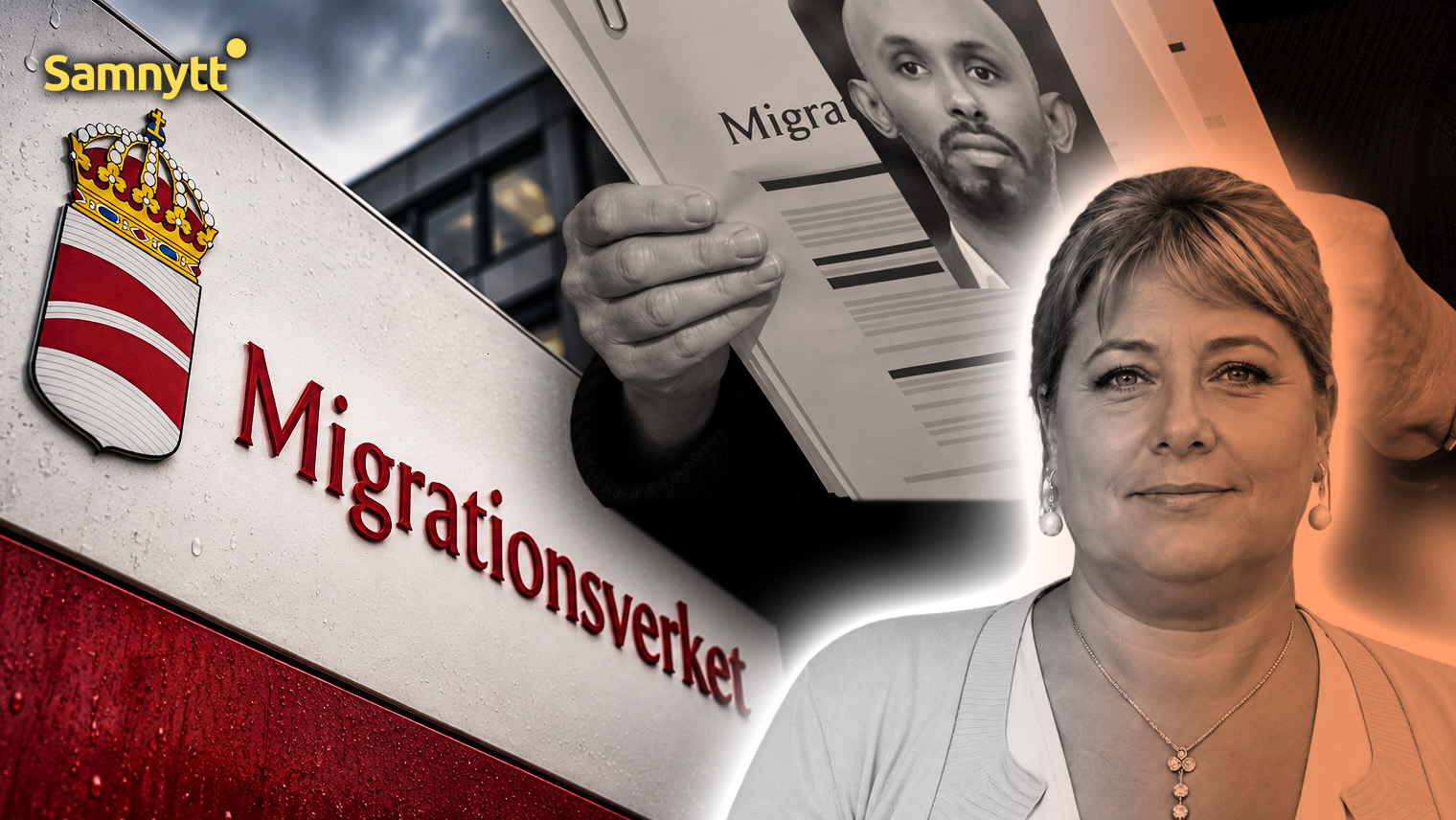
When questions began to arise about the Swedish citizenship of Left Party politician Mohamed Abdukardir Ali, Marita Welin did not settle for reading what others had written. The 64-year-old disability pensioner started requesting documents herself and mapping out the officials behind the decision – and intends to take the matter to court to get answers. Now, a source inside the Migration Agency is also reacting to what her investigation has uncovered and points to three possible explanations: ‘point-chasing,’ lack of knowledge about the regulations, or activism.
Marita Welin is not a professional journalist. She is 64 years old, a disability pensioner due to a serious injury, and sits at home in Kristinehamn doing something more commonly associated with an investigative newsroom – requesting public records, following decision paths, and trying to identify which officials did what.
This time, her investigation concerns Left Party politician Mohamed Abdukardir Ali and the decision to grant him Swedish citizenship.
How did your investigation into Mohamed Ali’s citizenship start? What first made you react?
– What made me react is what has come out in the media. Above all, how the process unfolded, simply how he obtained this citizenship. And what has come out around it, that he had debts.
A personal experience also triggered her further. Marita tells the story of an English acquaintance in Sweden who had financial problems and, according to her, was informed by the Migration Agency that even after paying off his debt, he would have to wait two years before being eligible for citizenship.
The Migration Agency’s own information confirms this principle. The authority writes that even those who have paid off their debts must normally wait a period—’usually two years’—to demonstrate that they can remain debt-free.
READ ALSO: After Suspected Election Fraud: V-Somali on Sick Leave – Avoids Police Interrogation
‘Nothing is revealed there anyway’
Marita mainly follows what is known as alternative media, which includes Samnytt. This becomes clear when Samnytt asks which media she refers to.
When you mention media, which ones do you mean?
– Yes, alternative media. I avoid other media, because nothing ever comes out there anyway.
What finally made her start digging herself included reports that incorrect information had been provided in Ali’s application process.
– Then I thought, no, now I’ll try to tackle this myself. Because no one else seems to be doing it, at least not fully. That the media have investigated that it appears this way is one thing… But to obtain records. Who are the ones pulling the strings?
The Decision and the Young Officials
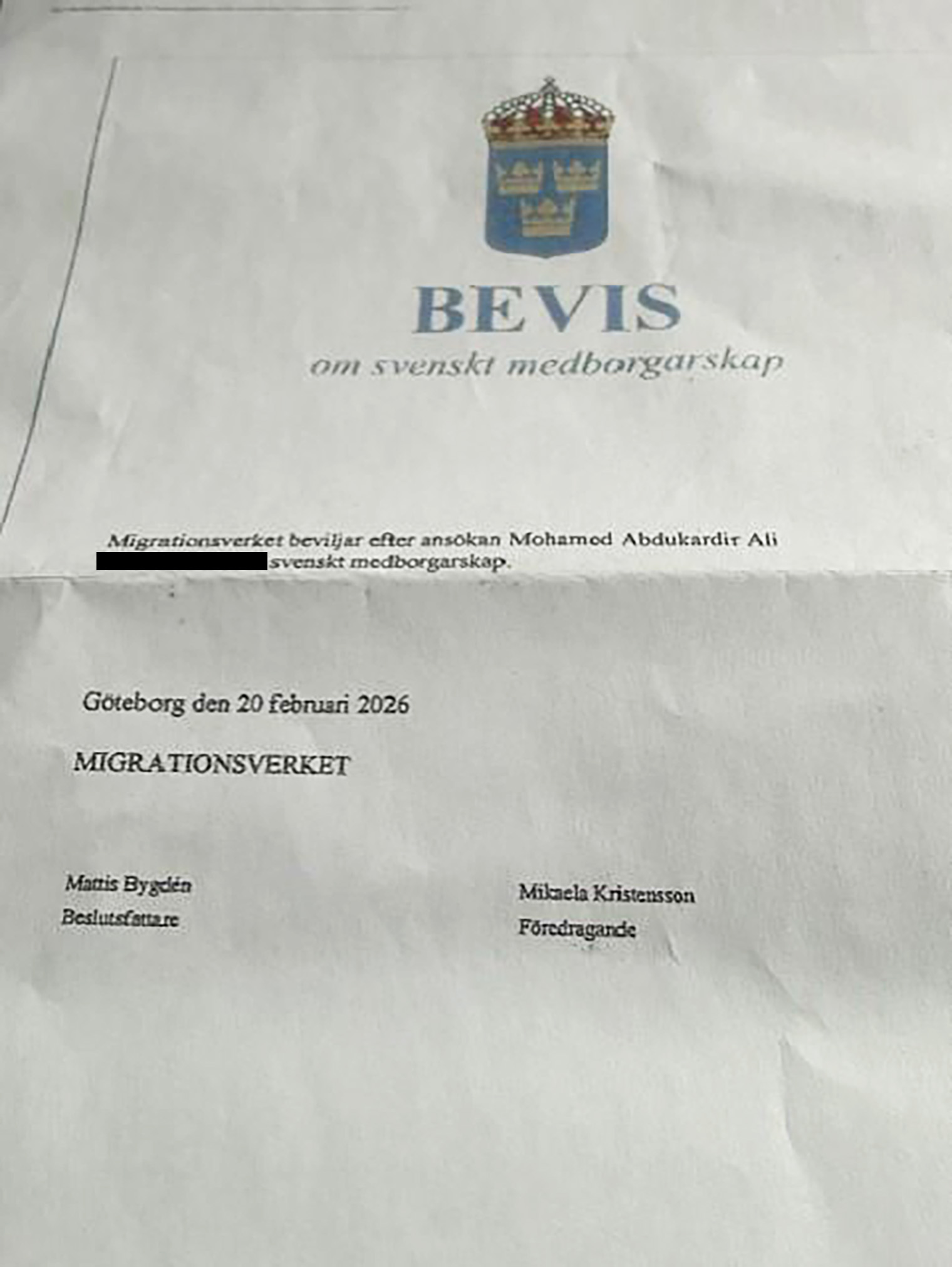
Ali was granted Swedish citizenship on February 20, 2026. The citizenship certificate lists Mattis Bygdén as the decision-maker and Mikaela Kristensson as the presenting officer.
Marita has also begun to investigate the officials behind the decision and reacts, among other things, to the fact that, according to her research, they are young. She estimates Bygdén’s age to be around 30 and Kristensson’s to about 27, but Samnytt has not been able to verify their exact ages.
– So they are young people. I find the whole thing remarkable.

However, what matters most to her is not the age of the officials but what they actually checked before granting citizenship.
The Migration Agency itself states that the authority gathers information from the Enforcement Authority, the Police Authority, and the Security Service to check whether the applicant has debts or has committed crimes.
The Response from the Migration Agency
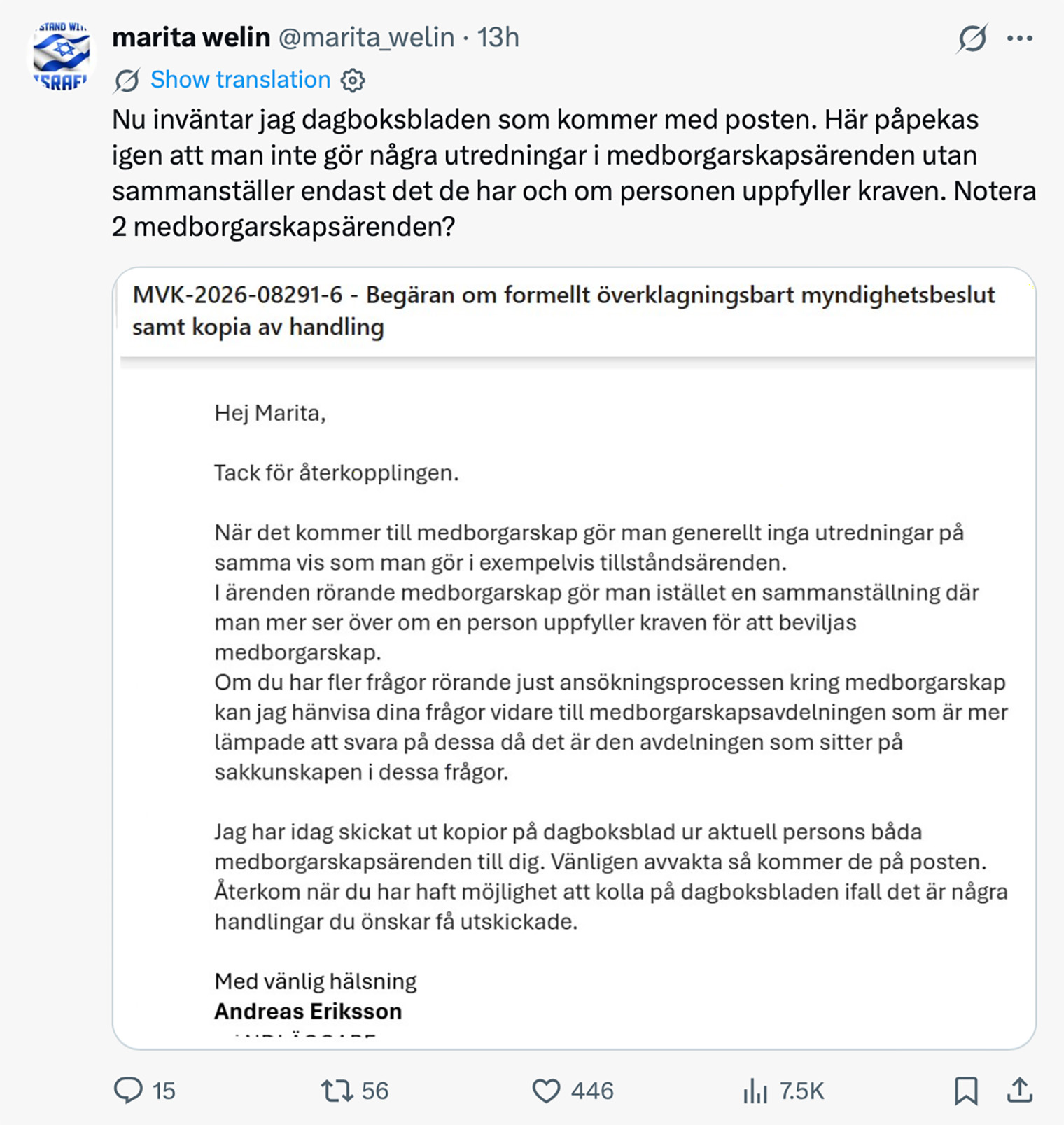
When Marita requested the documentation, she received a response that made her react. The Migration Agency wrote:
‘Note, however, that direct investigations generally do not exist in citizenship matters. Usually only summaries exist.’
The authority therefore suggested that she first request the diary sheet, see what documents are in the file, and then specify which of them she wants to obtain.
This does not mean the Migration Agency says no review is carried out at all. But the wording raised new questions for Marita about how the review was documented and exactly what material the decision-maker had at hand.
How do you interpret the Migration Agency’s response?
– Well, the documents that are submitted are of course listed in the diary sheet. But it should be clear there that those who handled this have contacted the Enforcement Authority to check this, for example. What did the police say? Possibly the Security Service, given his [Ali’s, ed.] contacts.
It is precisely these contacts with Somalia that she now wants to follow up.
– What is contained in these diary notes? And what did he really tell the Migration Agency since he was granted citizenship?
‘I’ll go all the way to the Administrative Court of Appeal’
Marita also interprets the Migration Agency’s way of handling her request as an attempt to draw out the process.
– I would call it a deliberate delay.
And she is not willing to settle for a no.
I consider those at the Migration Agency to be corrupt. There is activism going on there. That’s my firm conviction.
Marita Welin, disability pensioner and citizen journalist
What will you do if you don’t get the documents you requested?
– I’ll go all the way to the Administrative Court of Appeal if I don’t get the documents.
Marita says she has previous experience with such battles. She recounts that she has appealed secrecy decisions in her own municipality on several occasions and won.
– I know exactly how authorities operate. I know how they act in my own municipality and how they abuse the principle of public access.
She describes what she’s doing as a form of citizen journalism.
– I need to start holding power to account. Because this can’t go on any longer.
However, Marita’s conclusions do not stop at criticism of the release of documents. She levels much harsher accusations against the Migration Agency.
What do you think about what you have uncovered so far about the authority’s handling?
– I consider those at the Migration Agency to be corrupt. There is activism going on there. She adds:
– That’s my firm conviction.
There is currently no evidence to suggest that the two officials who handled Ali’s citizenship acted corruptly. But Marita argues that this is why she wants to see the entire documentation – to determine what checks were made and on what basis the decision was taken.
Debt restructuring until 2027
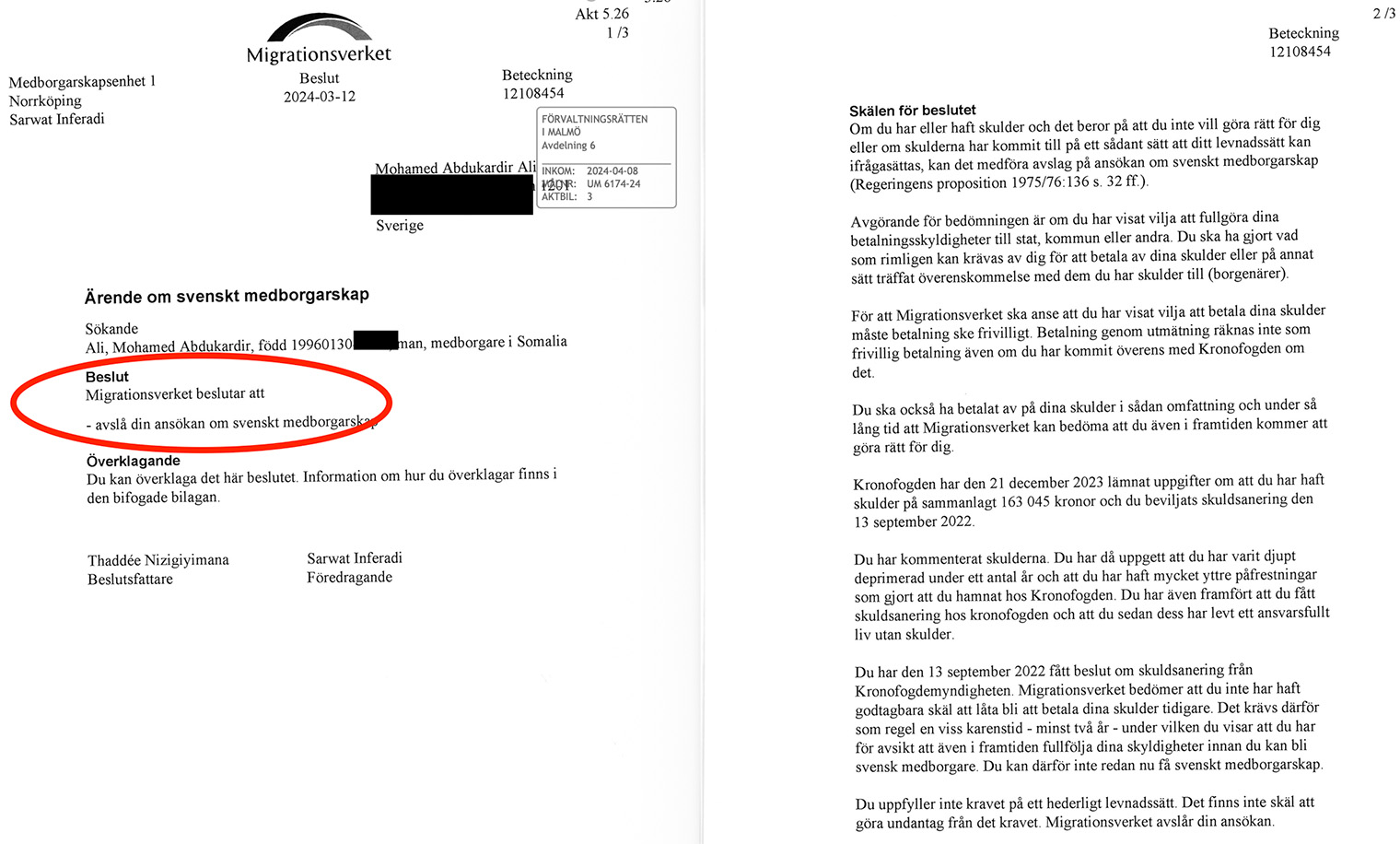
The debt issue is central to her investigation. According to the information Marita is working from, Ali’s debt restructuring lasts until 2027, while he was granted citizenship as early as February 2026.
The Migration Agency writes that unpaid debts with the Enforcement Authority can result in a rejection, and that someone who paid off their debts must normally wait about two years before citizenship can be granted.
Four months after his debt restructuring was approved, Mohamed Ali told the Migration Agency that he had no debts with the Enforcement Authority. His counsel later told the court that the restructuring was complete. It runs until 2027, as Kvartal has reported.
After paying off your debts, you must still wait two years…
– Yes, two years. And that was made clear to him, Marita says of her English acquaintance’s contacts with the Migration Agency. That’s exactly why she wants to know how the agency reasoned in Ali’s case.
– He has a debt restructuring set until 2027. With zero kronor decided for him to pay.
Then comes the next question.
– How was he able to afford trips to Somalia? Who paid for that?
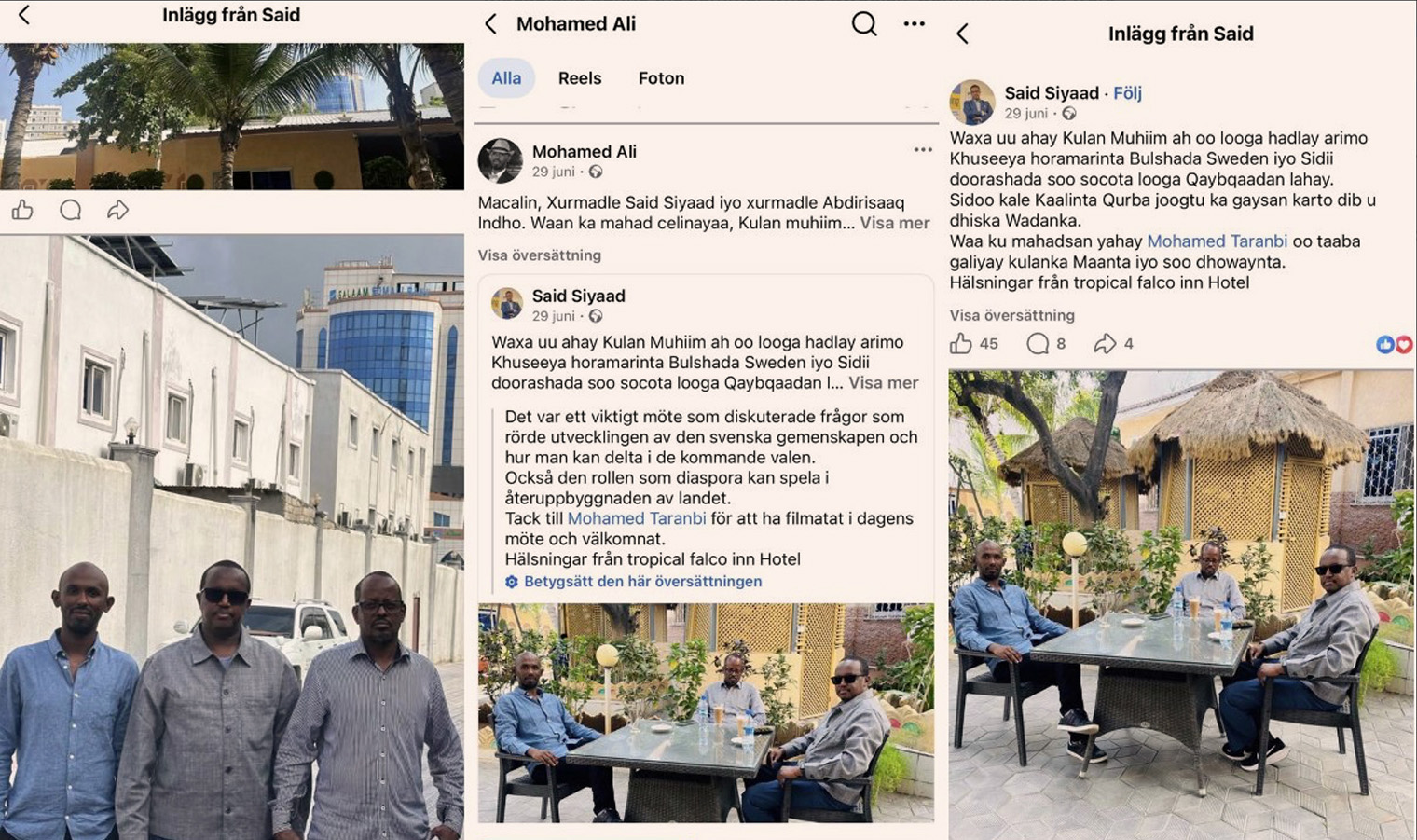
That someone undergoing debt restructuring takes a trip abroad does not in itself mean anything incorrect has occurred. Marita’s question is rather about how these trips were financed and whether the authorities managing the cases were aware of his economic circumstances. She is therefore now turning her attention to the Enforcement Authority.
Do you think the investigation should continue there as well?
– Yes, absolutely, I believe the Enforcement Authority also needs to be reviewed. Who handled the case there?
READ ALSO: The Left Party Somali Received Debt Restructuring with a Zero Plan – Wasn’t Even a Swedish Citizen
She wonders, among other things, how the authority reasoned regarding Ali’s future ability to work and pay his debts.
– This person is so young. Had they calculated that he would never be able to work in his life?
It’s actually all politicians. And regardless of party, I have to say. I stand by that. I’m just as angry at all of them. Why aren’t they reacting? At all. The police and prosecutors have known about this for a long time. Why don’t they do anything?
Marita Welin, disability pensioner and citizen journalist
Marita has also begun to take an interest in Ali’s background in Sweden and his later trips to Somalia.
He received a residence permit based on asylum grounds. And then he went back to Somalia. How do you comment on that – that someone gets asylum here because they flee their country, and then goes back?
– If you go back to the country you fled from for your life and get asylum here on those grounds, then you don’t have any grounds for asylum.
READ ALSO: Somali Top Vote Getter in Småland Accused of Election Fraud: ‘Didn’t Feel Like a Free Election’
The specific grounds for protection that formed the basis for Ali’s residence permit are confidential. It is therefore also unclear how his later trips to Somalia have been assessed by the Migration Agency.
But Marita thinks the trips should have raised questions.
– Someone ought to be raising their eyebrows. Do you return to the country you fled from?
‘I’m just as angry at all of them’
When the conversation turns to politics, Marita says her anger is not limited to any single party.
– It’s actually all politicians. And regardless of party, I have to say. I stand by that. I’m just as angry at all of them.
What do you think politicians should do?
– Why aren’t they reacting? At all. The police and prosecutors have known about this for a long time. Why don’t they do anything?
She even goes so far as to claim that misconduct may have been committed.
– Those at the Migration Agency have clearly committed misconduct. That’s my firm conviction. There’s no doubt about it.
The Manager Refused to Answer
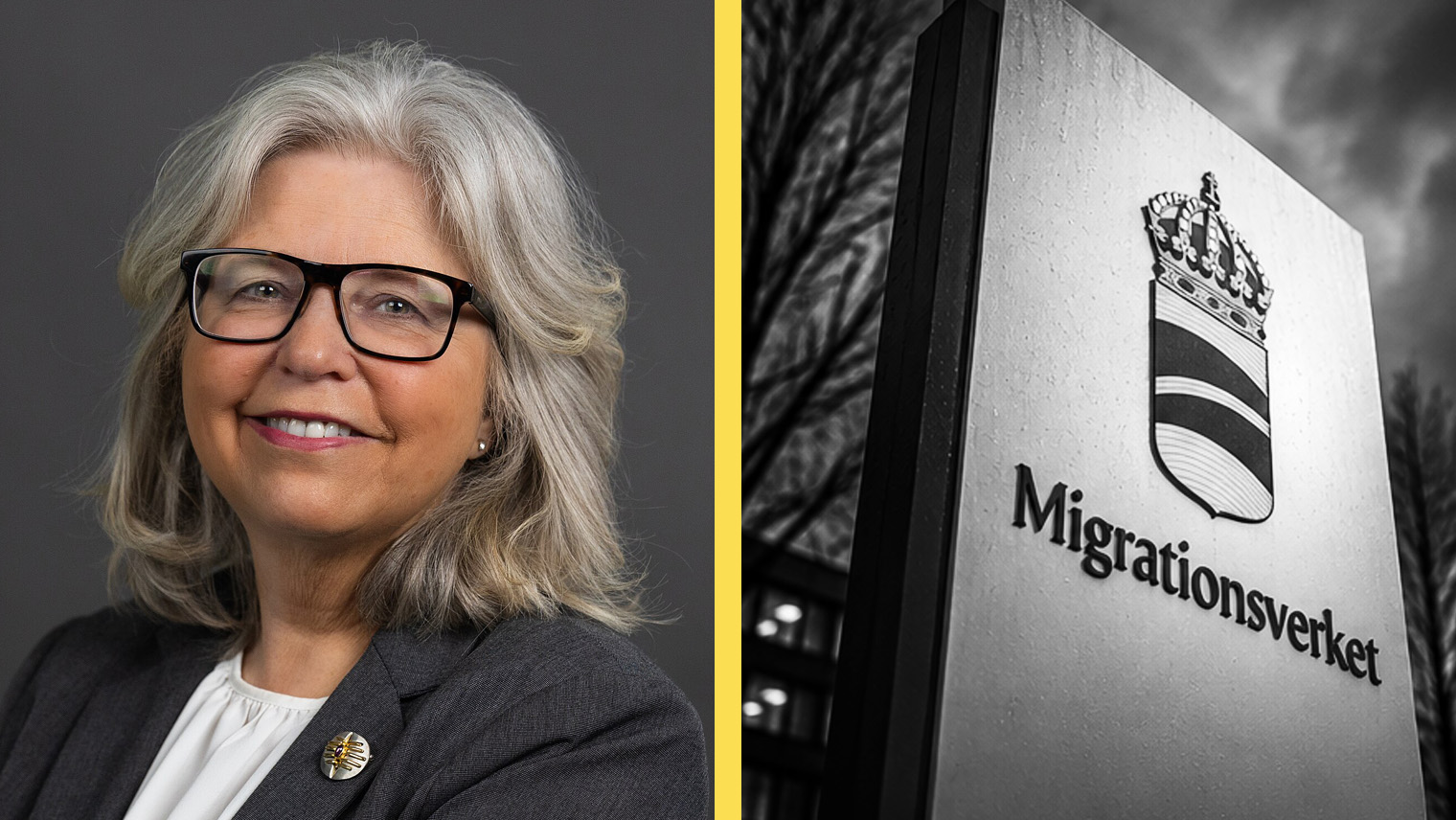
Samnytt has tried to get answers directly from the Migration Agency. Mattis Bygdén, listed as the decision-maker on the citizenship certificate, could not be reached. Therefore, Samnytt also contacted Åsa Holmes, head of the Migration Agency’s citizenship office in Gothenburg.
The questions concerned, among other things, what checks are made regarding debts and debt restructuring, how the so-called waiting period is assessed, and how the authority documents the material behind a citizenship decision.
Holmes did not want to answer any questions and referred Samnytt to the Migration Agency’s press office.
Can you answer some more general questions about how cases are handled?
– No. That must go through Press, you have to contact them, then we’ll make a plan if I can speak with you.

Why don’t you want to answer our questions?
– Because I am unprepared for the questions. I want to know what the questions are about before I answer.
The fact that Samnytt had explained what the questions concerned did not change Holmes’ attitude.
READ ALSO: The Migration Agency’s Inside: Clans, Swedes in the Minority, and a Culture of Silence
Migration Agency Source Reacts: ‘It’s Really Strange’
Marita Welin is not alone in reacting to how Mohamed Abdukardir Ali could have been granted Swedish citizenship. Samnytt has let a well-informed source at the Migration Agency review the latest information to emerge in the case.
Granting is just about following the template and pressing the button. But a denial must always be justified, it takes much longer. And you get paid for how many decisions you make.
Samnytt’s source at the Migration Agency
The source is not currently working with citizenship cases and does not personally know the involved officials. But the source reacts strongly to the combination of Ali’s debts, previous rejections, and the information that his debt restructuring is still ongoing when citizenship is granted.
The Migration Agency’s own documents state that after having a debt with the Enforcement Authority, there is a sort of waiting period. Two years must have passed. Yet Mohamed Ali was granted citizenship even though his debt restructuring won’t be completed until June 2027. What conclusions can be drawn from this?
– Probably that they don’t understand the regulations. Or a combination of their manager pushing them to make many decisions.
READ ALSO: Migration Agency Source Testifies to Pressure to Approve: ‘The System Favors Granting’
The source points to what is described as a long-standing ‘point-chasing’ culture in the Migration Agency. Case officers and units are expected to produce a high volume of concluded cases, and according to the source, there is a built-in difference between how much work is required for a grant versus a denial.
– Granting is just about following the template and pressing the button. But a denial must always be justified, it takes much longer. And you get paid for how many decisions you make.
By way of example, the source tells of a decision-maker who at one point made 37 decisions in a single day. Despite this extreme rate, the person is, according to the source, still working at the Migration Agency as a decision-maker.
‘Doesn’t seem to be the case here’
A key question in Marita’s investigation is what checks were actually made regarding Ali’s finances. The source cannot say exactly which registers a case officer on the citizenship side has direct access to, but notes that debt information should reasonably be able to be checked.
Most people probably assume that some form of check is a given. But you’re not sure one was done in this case?
– No, that doesn’t seem to be the case here.
He said that’s how it is in Gothenburg, both for citizenship and permits. Point-chasing is part of the whole culture. Everything is about making as many decisions as possible.
Samnytt’s source at the Migration Agency
At the same time, this is exactly what Marita is now trying to get documented by requesting the diary sheet and other records in the file – whether the Enforcement Authority was contacted, what information was retrieved, and what material the decision-maker had when citizenship was granted.
The fact that Ali had previously been refused makes the later decision even harder to understand, according to the source.
He was granted debt restructuring but hasn’t yet paid off his debts. He is still with the Enforcement Authority and the debt restructuring isn’t finished until June 2027 – but he gets citizenship in 2026. How do you react to that?
– It’s really strange considering that he was refused twice and the other times it was checked. But the third time, he gets it just like that.
Three Possible Explanations Pointed Out
The source sees three possible explanations for how such a decision could nevertheless have been made—production pressure and the drive for many decisions, lack of knowledge about the regulations, or activism.
Regarding the first two, the source is clear.
– There are basically three reasons. Either it’s pressure to make many decisions. There’s plenty of evidence for that. And then, probably, that they don’t understand the rules either.
The third possibility being discussed is that activism within the authority could influence decisions. However, the source will not claim that this happened specifically in Ali’s case.
Can you decide whether this is more due to activism or efficiency and producing as many decisions as possible?
– That’s very hard to say.
So the source cannot say which of these three possible explanations—point-chasing, lack of knowledge, or activism—could explain Ali’s decision.
READ ALSO: Party Colleague on Allegations Against V-Somali’s Suspected Election Fraud: ‘Sewer of Racism’
Point-Chasing Is Cultural – Gothenburg Stands Out
After Samnytt’s first conversation, the source contacted a person who had previously worked in the Migration Agency’s Gothenburg operation. The former colleague apparently did not know Åsa Holmes personally, but described instead the workplace culture in the unit.
– He said that’s how it is in Gothenburg, both for citizenship and permits. Point-chasing is part of the whole culture. Everything is about making as many decisions as possible.
According to the source, the former employee said this ultimately contributed to his leaving the Migration Agency.
– He said the reason he left was that the decisions were very poor. It was just about granting as many as possible, as many decisions as possible.
So he describes it as such a culture there?
– Yes. There was nothing about quality. It was just as many decisions as possible.
Which explanation is closest to the truth may only become clear once the Migration Agency discloses what checks were actually made before Mohamed Abdukardir Ali was granted Swedish citizenship—something Samnytt will follow up on.