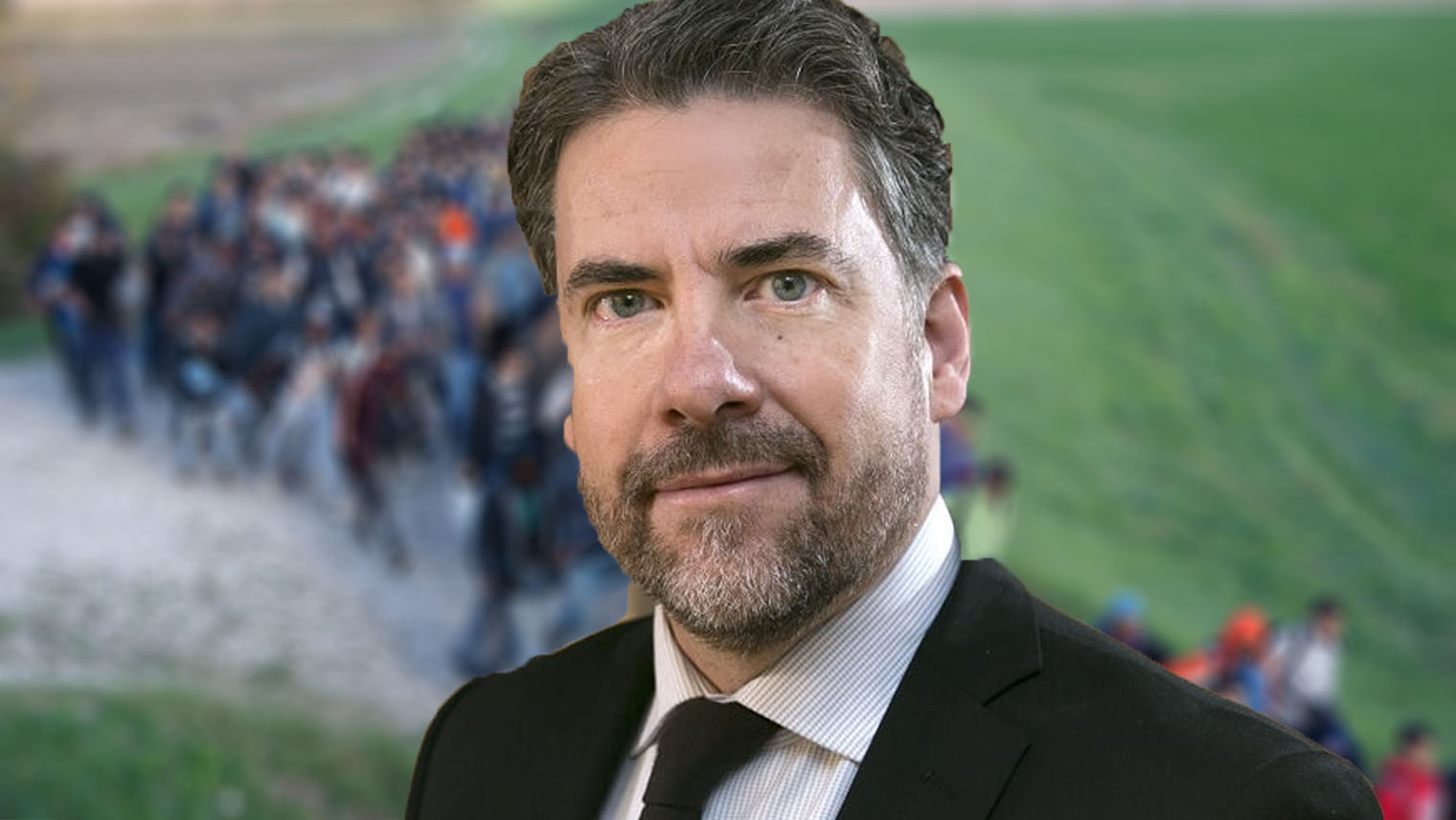
The Director General of the Swedish Migration Agency, Mikael Ribbenvik, was forced to leave his position after long-standing and repeated criticism regarding his management of the agency. Now, he is striking back. In an opinion piece, Ribbenvik claims that the decisions and shortcomings he was criticized for were actually the result of legislation, court practice, and political inaction – asserting his own innocence and that his leadership of the agency was impeccable.
In a lengthy opinion piece in Kvartal, Ribbenvik describes how, as the agency’s top executive, he was repeatedly compelled to make decisions he himself regarded as unreasonable and risky from a security perspective. He argues that, according to current law, the agency was obligated to grant residence permits to individuals whom the Security Police assessed as security threats, as long as deportation could not be enforced.
READ ALSO: Fired Director General for the Migration Agency: SD Got Rid of Me
Ribbenvik claims that from the very beginning, he attempted to bring about change. According to him, the Security Police, the courts, and politicians from various parties were all aware of the problems – yet, legislation changes were delayed for nearly a decade. The former director general describes how he eventually chose to raise the issue publicly, including through op-eds, to pressure the government into action.
Shifting Responsibility Upwards and Sideways
Throughout the text, Ribbenvik returns to the idea that responsibility was so spread out across so many actors that no one acted. He claims that the courts referred to the legislature, the legislature to investigations, and the investigations to narrow directives. He presents himself as tied up by regulations and by his role as agency chief.

At the same time, he argues that the criticism directed at him personally misses the point. Ribbenvik claims that the controversial decisions – such as granting individuals linked to terrorist organizations access to the welfare system – were a direct consequence of political decisions and legal practices that he lacked the mandate to change on his own.
Severe Criticism and Recurring Controversies
Ribbenvik’s tenure as director general was marked by repeated controversies. Over the years, the Migration Agency faced harsh criticism for poor quality in asylum evaluations, weak internal controls, and a culture where the number of completed cases, so-called ‘points’, was prioritized over legal certainty.
A particularly debated issue concerned the agency’s decisions at the outset of the Syrian war, when individuals claiming – but not verified – to be from Syria were in practice granted permanent residence permits without individual assessment.
READ ALSO: Fired Ribbenvik Summoned to Committee by SD
Critics argued that this decision contributed to a sharp increase in asylum immigration and that identity checks were insufficient. They thought that such decisions, which greatly impact Sweden’s immigration, were unreasonable to make with the stroke of a pen at the agency level and should instead be reserved for parliament.
Left Without Extension of Mandate
In February 2023, it was confirmed that Ribbenvik would not get his mandate extended. The government described the decision as a natural consequence of a shift in migration policy. Critics instead referred to it as a failing grade for the leadership of an agency described as dysfunctional.
Ribbenvik himself has later said he found the dismissal deeply unfair and believed he was made a scapegoat in a politically charged issue. In the current opinion piece, he returns to the same theme: that he has had to bear the blame for a systemic failure that gradually developed with broad political responsibility, while his own culpability is reduced to almost nothing at all.
“Everyone Agreed – But No One Acted”
In summary, Ribbenvik paints the picture of a bureaucratic democracy where responsibility vanishes in complex decision-making processes and for which he himself became a victim. Everyone saw the problems, he writes, but everyone waited for someone else to take the initiative.

Ribbenvik describes the fact that legislation has now finally changed as a personal victory, even if it comes due to pressure from the Sweden Democrats. He also sees it as evidence of how slowly the system worked, and as an alibi for his own passivity.
READ ALSO: Director General of Migration Agency “fired” – gets new top job at EU Asylum Agency
He dismisses the criticism against him as overly simplistic. According to the former director general, it was never his decisions that were the problem, but a political and legal framework that no one took responsibility to change for a long time.