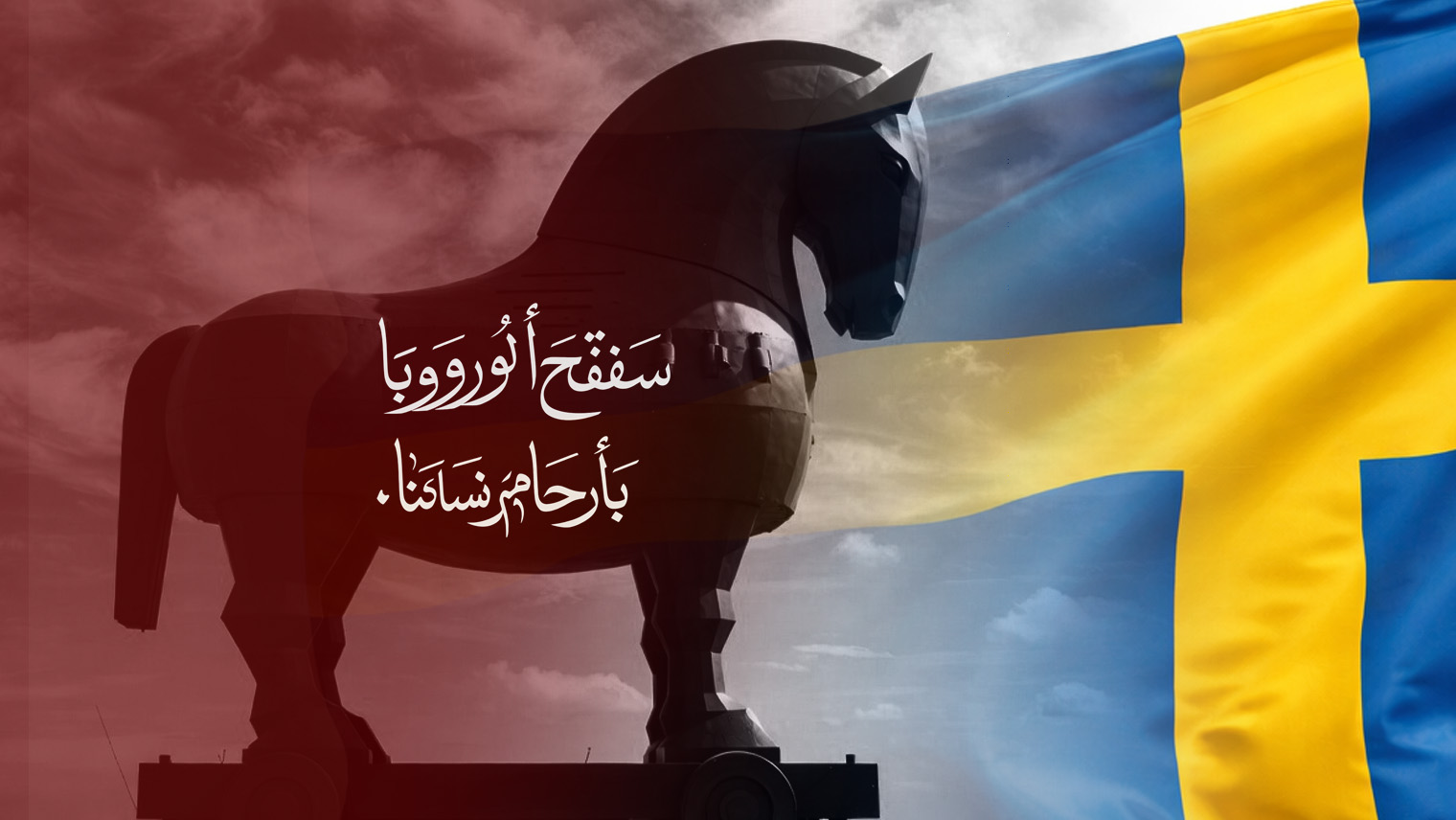
In recent decades, Sweden has undergone extensive changes in population composition, religious practice, and cultural expressions. The development has been gradual and often sector by sector: within cityscapes, academia, demographics, and state institutions. Individually, these changes have rarely been described as decisive. Together, however, they point to a shift in society where Islam is gaining an increasingly strong presence and normalization in the public space.
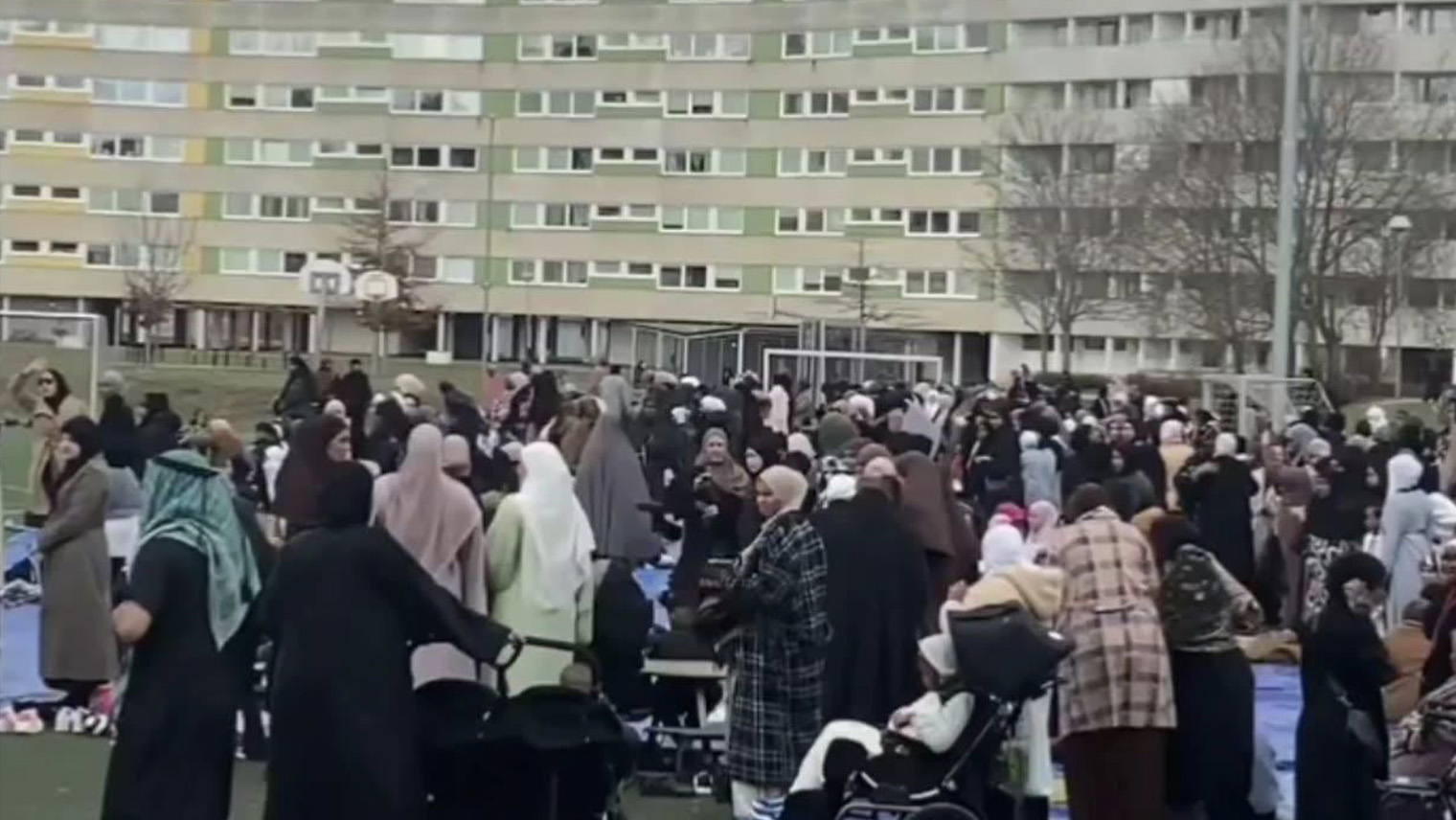
A clear expression of Islamization in Sweden is the sharp increase in mosques and Muslim prayer rooms. In less than 25 years, the number, according to data from the Authority for Support to Religious Communities (SST) provided to Samnytt, has grown from a handful of permanent mosques to about 300 across the country.
This is a 4200 percent increase, as Samnytt has previously reported. The establishments occur both through new construction and by converting existing premises – former shops, industrial buildings, and basements.
READ MORE: Shock Figures: 4200% Increase in Mosques in Sweden – In Less Than 25 Years
This development means that Islam today has a physical and organizational presence in a large number of Swedish municipalities, even in places where the religion was previously marginal. The mosques serve not only as places of worship, but also as social and organizational hubs, often connected to larger national and international networks.
Politics and Warning Signals
The expansion of mosques has sparked political reactions. The Sweden Democrats’ senior politician Richard Jomshof has in interviews with Samnytt referred to the development as an ideological and societal nightmare.
He has described Islam as more than just a faith, warning that the religion also functions as a political system with ambitions to influence the social order.
These statements have been criticized by the unified left and by the Muslim groups that now form an ever-larger part of both the Social Democrats’ and the Left Party’s voter base, yet they reflect a broader political discussion about how religious structures are established in Sweden and what role the state should play in relation to them.
And that these kinds of dictatorships are allowed to operate in Sweden, to use our democracy with the aim of taking it from us. For that is precisely the purpose. So it’s clear that this is an incredible problem.
Richard Jomshof (SD)
Questions about transparency, funding, and core values have become recurring, without any unified national strategy having been presented by the Tidö government.
Academia as a Conflict Zone
The debate about Islam in Sweden has also reached academia. One notable example is researcher Sameh Egyptson, whose dissertation on political Islam and the Muslim Brotherhood’s ties to the Social Democrats triggered an extensive conflict within Swedish academia.
I exposed agreements between the Social Democratic Brotherhood movement [today Faith and Solidarity, ed. note] and the Muslim Brotherhood’s Islamic Council. One party – the Social Democrats – receives votes and the Islamists, in exchange, get schools, building permits for mosques, and seats in the parliament, municipalities, and county councils.
Sameh Egyptson
The dissertation was subjected to unusually extensive scrutiny after complaints from other researchers. Despite review by several bodies, Egyptson was cleared of allegations of research misconduct.
ALSO READ: Ideology before Facts – Sameh Egyptson and the Reckoning with Swedish Islamic Research
The process instead served to highlight a conflict over what may even be considered an acceptable subject of study within Swedish Islamic research. The criticism was not only directed at methodological choices but also at the dissertation’s conclusions regarding political Islam and its organizational presence in Sweden.
The case has subsequently come to be used as a concrete example of how research that challenges established narratives about Islam meets strong resistance within academia.
Demographics as a Long-Term Driving Force
Behind both the establishment of mosques and new organizations lie demographic changes. The Finnish mathematician and demographic analyst Kyösti Tarvainen, in conversation with Samnytt, has warned that Sweden – given the current birth rates and immigration levels – could face a historic majority shift this century, and thus risk becoming a caliphate.

According to Tarvainen, the development is mathematically predictable. Low birth rates among native Swedes are combined with continued immigration and higher fertility in certain groups.
READ MORE: Demographic Powder Keg: Researchers Warn of Civil War in Future Sweden
An important aspect is that many Muslim families receive money from their home countries to establish themselves in the West through fertility. It is a mathematical fact that Muslims will become majorities. Moreover, the more children they have in Sweden, the more money they get from the Swedish state.
Kyösti Tarvainen, Finnish mathematician, demographic analyst, and professor emeritus at Aalto University
READ MORE: The Professor’s Dark Prognosis: Swedes a Minority Within a Few Decades
Although trends can change in the long term, he describes demographic processes as slow and difficult to influence rapidly through political decisions.
Cultural Institutions and the New Normal
The changes are also evident in how Swedish institutions describe the nation’s traditions. When the Nordic Museum presents Ramadan and Eid al-Fitr as Swedish holidays, it is, according to the museum, part of its mission to document contemporary life and customs.
ALSO READ: Nordic Museum: “Eid al-Fitr” and “Ramadan” Are Swedish Holidays
At the same time, critics perceive this as a sign of the normalization of Islamization and how Islam is gradually being integrated into the narrative of Sweden as a cultural space.
The development is described by advocates of Islamization as a natural reflection of a changed society. Critics argue that it entails a reformulation of Swedish identity, whereby historically dominant traditions are relativized and marginalized while Islamic ones receive institutional recognition.
ALSO READ: The Giant Mosque in Skärholmen: Secret Funding, Islamist Connections – and Local Concern
Taken together, the development shows how the Islamization of Sweden does not happen through a single decision or a clear turning point. It happens through parallel processes – physical establishment, demographic change, academic reassessment, media influence, and institutional adaptation. Each part can be described as limited, but together they shape a new societal condition.
This is the background to why the question of Islamization is no longer about hypothetical future scenarios but about how Sweden has already changed – step by step, sector by sector – and what consequences these changes will have in the long term.
Less than 1% of our readers support us
Hundreds of thousands read Samnytt, but only 1 in 100 contribute. Help us grow and continue to deliver in-depth reports and investigations.
Without your support, Samnytt cannot exist.
No advertisers. No government support. Only our readers. Thanks to you, Samnytt has published over 31,000 articles that have challenged the mainstream narrative in Sweden.
123 083 33 50
Swish any amount
Thank you for reading and supporting Samnytt
@media (max-width: 650px) {
div[style*=”max-width:600px”] {
padding:15px;
}
h2 {
font-size:1.6em;
}
p {
font-size:0.95em;
}
a[href*=”prenumerera”] {
padding:14px 28px;
font-size:1.1em;
}
}