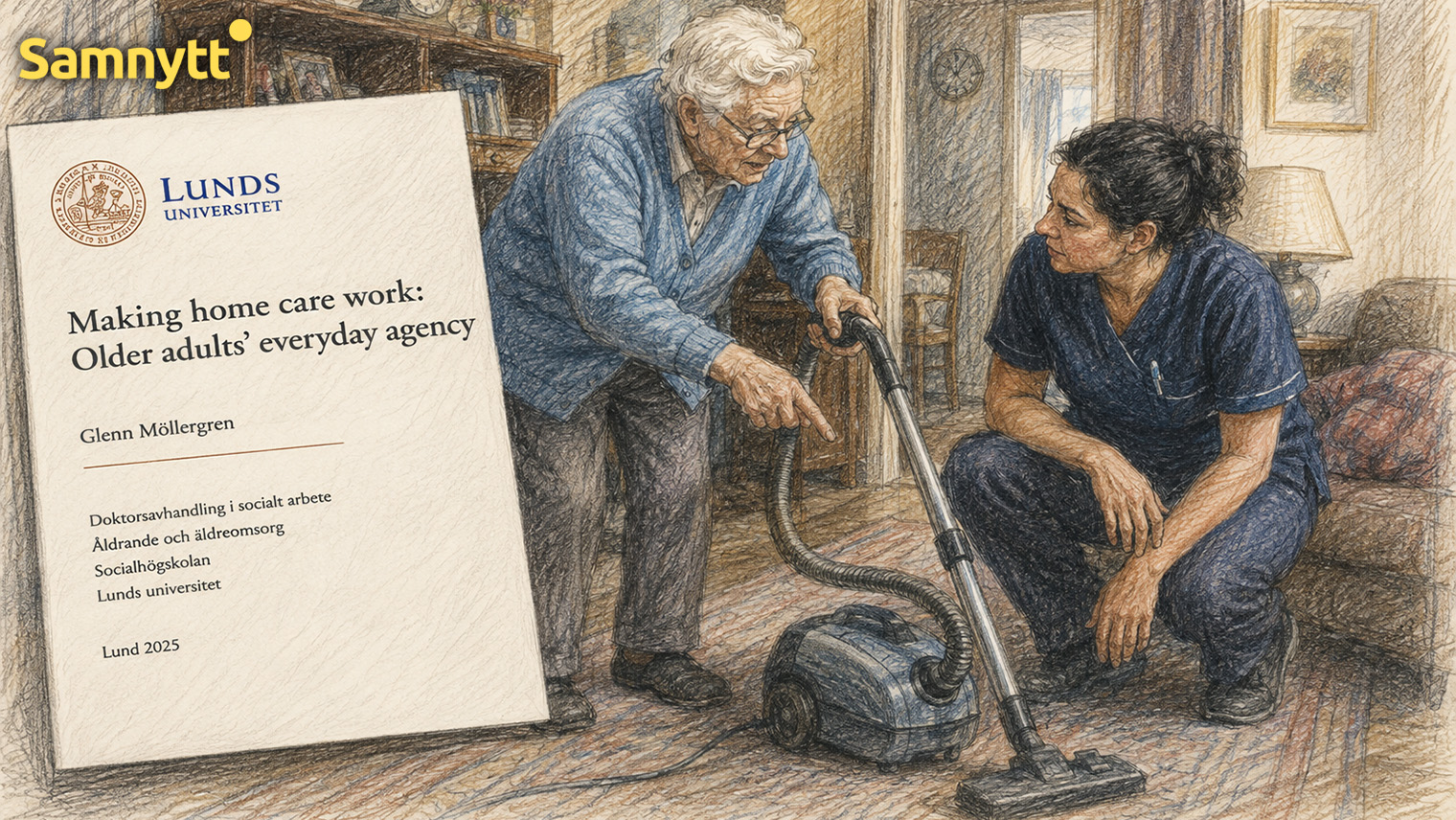
The purpose of home care is to enable elderly and frail people to manage their daily lives in their own homes. But a new doctoral dissertation from Lund University reveals an almost upside-down dependency: for home care to work, many elderly are forced to plan, prepare, instruct, coordinate, and compensate for shortcomings in the organization themselves. The greater the need for care, the more important it becomes for the elderly person to be able to “operate” the system.
Missed visits, forgotten alarms, poor language skills, lack of continuity, substandard food, and in severe cases neglect and abuse, have repeatedly put Swedish elderly care in the spotlight. However, problems in home care don’t need to be so dramatic to have major consequences for those reliant on help.
In the doctoral thesis Making home care work: Older adults’ everyday agency at Lund University, researcher Glenn Möllergren instead focuses on the everyday reality of home care. His conclusion is that the system is largely held together by the labor of the very people who are supposed to be receiving help.
READ ALSO: Jessica Stegrud on the ‘Rot’ in Elderly Care: Warns About Clan Rule
The elderly adjust their daily rhythms and meals according to home care schedules, prepare their homes before staff arrive, train new employees, keep track of who can do what, and coordinate contacts between different parts of the health and care system. At the same time, many try to ease the workload of stressed staff and lower their own expectations.
The main conclusion of the thesis is that today’s Swedish home care does not solely depend on or build upon the work of the staff. It also continually requires work by the elderly themselves. In this way, operations can be cut down to less than the bare minimum.
– Everything I show in my thesis, the massive burden placed on individual home care users to make home care function at all—the extensive work they do preparing for interventions, coordinating actors, instructing staff, and adapting their own day-to-day lives—none of this appears in official documents or descriptions of elderly care. This major involvement needs to be made visible and acknowledged, says Möllergren to News55.
36 Elderly Studied in Their Own Homes
The thesis consists of five sub-studies and is built on extensive qualitative material. In total, 36 home care users participated, many of whom were followed on several occasions. The researchers used in-depth interviews, observations while home care was delivered in the home, follow-up interviews, and diary notes.
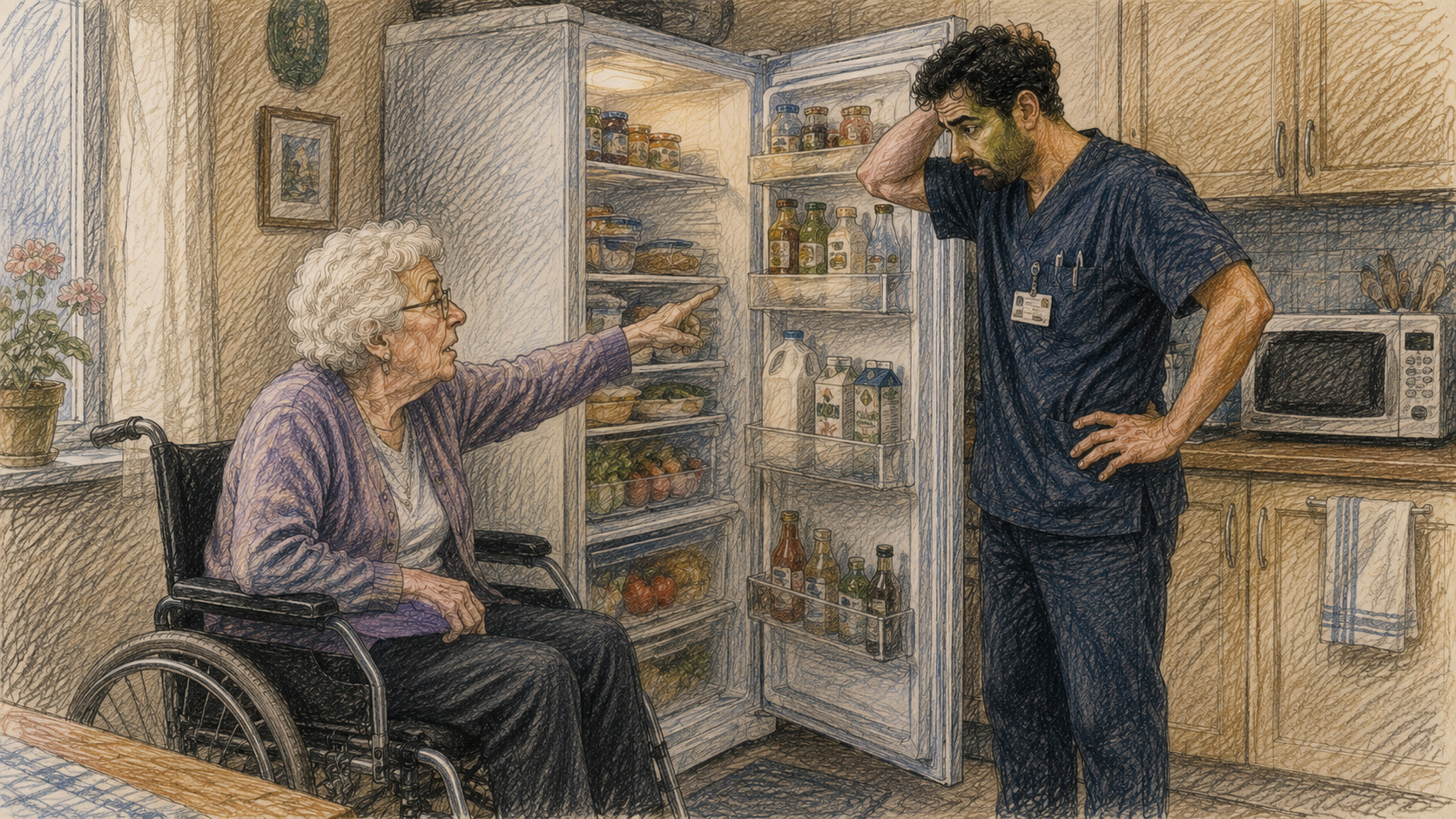
In one of the sub-studies, eleven people aged 67 to 97 were specifically interviewed about how they had to contribute to making home care work. They described how they prepared their home, coordinated different providers, instructed staff, compensated for organizational shortcomings, and spent time and energy on fostering good relationships with employees.
READ ALSO: Dagerlind: The Forbidden Election Issue – How Sweden Betrayed Its Elderly
This is not an investigation into isolated and spectacular cases of neglect. Möllergren instead tries to highlight a more fundamental issue in how home care is organized—or rather, fails in its organization.
– Home care is usually described as something society does for the elderly. But my research shows that the elderly themselves perform substantial work that is vital for care to function, he says.
Prepares for the Cleaner – Who Doesn’t Have Time
A concrete example in the thesis concerns a woman who, before home care’s cleaning visit, brings out the vacuum and mop herself.
She knows staff are rushed and tries to ensure as little of the allocated time as possible is spent on preparations. Other interviewees describe how they piece together things they can still do themselves with moments where they have to wait for help, which can mean long and unpredictable waits.
The adjustment can go as far as changing one’s own body clock. One woman mentions she gets up earlier than she would prefer to “fit into their schedule.” Outwardly, it’s communicated that home care adapts to the elderly’s needs. In reality, it’s often the elderly who must adjust, both in big and small ways, to home care’s inadequate and undersized organization.
The study shows how sleep, meals, leisure interests, social activities, and the home itself have to be organized around care routines. Möllergren describes how an institutional logic can thus enter the private home, limiting one’s ability to live according to personal habits and desires.
Meets On Average 16 Different Employees in Two Weeks
A central explanation is poor staff continuity. Home care is largely staffed by recent migrants who can’t find other jobs in the labor market—both as an integration measure and because the pay and working conditions are such that anyone who can get another job does so.
Reviewed previous research presented in the thesis shows that an average Swedish home care user encounters 16 different employees over a two-week period. Meanwhile, the possibilities to have individual wishes and everyday needs met have greatly diminished. The result is that the elderly themselves must create some of the continuity that the organization cannot provide.
READ ALSO: Sweden’s Shame: The Welfare State That Abandoned Its Elderly
The interviewees describe how they train new employees, remember which staff are good or bad at different tasks, and adjust their requests based on who happens to show up that day. One participant describes it as “annoying” to constantly have to instruct newcomers and says there should be more continuity. The elderly thus become something of a manager for their own care.
Must Know Who to Call
The problem doesn’t end at their front door. Those needing extensive help can depend on home care, medical care, aids, home adaptations, transportation services, private providers, family, and other support services.
Möllergren’s research shows how elderly people learn which individuals and authorities to contact, who can actually solve a certain problem, and how to piece together various forms of support.
READ ALSO: Daughter of 98-Year-Old With Dementia: “Mom Died in Agony – Staff Wanted Her to Learn Arabic”
They coordinate contacts, arrange aids, plan how to move within and outside their home, and prepare things before staff visits. In the thesis, this is not described as an exception but as a recurring consequence of a system where support is spread between multiple providers.
Möllergren uses the term “regime competence”—meaning system or regime competence—for the knowledge that elderly people are gradually forced or learn to develop: how the system works, who does what, and how it can be influenced and navigated.
Takes Care of Stressed Staff
Even more paradoxically, the care recipient not only receives care, but in some respects also provides care to the staff.
The elderly notice the staff’s time pressure and poor conditions for performing their work and try to ease their workdays. The study shows how care recipients encourage the staff, show appreciation, try to reduce conflicts, and sometimes shield employees from criticism or unpleasant situations.
READ ALSO: Elderly Person Found Dead at Home After One Month Without Home Care
They also adapt their way of communicating, ask about the staff’s lives, and try to establish personal relationships. This can be a way to create a more humane care situation, but also a strategy to get the help they need.
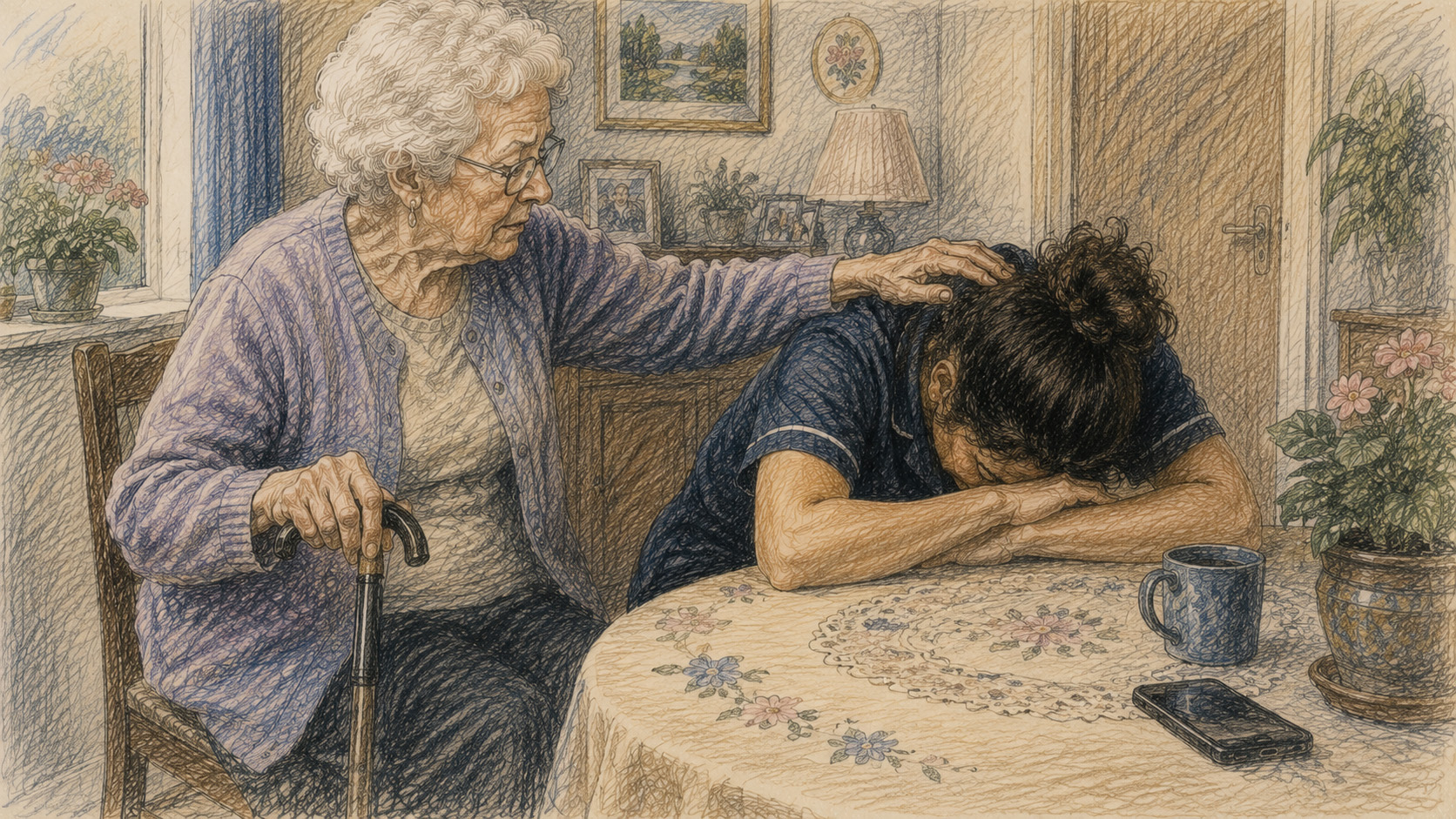
Möllergren notes that this emotional labor is particularly common in operations with tight schedules, high staff turnover, and poor continuity, where the elderly have to establish a functioning relationship with a new home care worker again and again.
Home Care Increasingly Like an Assembly Line
The thesis places this development in a longer perspective. Swedish home care has, over several decades, shifted from relatively small-scale operations where staff had more leeway, toward larger-scale organizations with standardized tasks and detailed time management.
Möllergren describes how ideas from industrial production—including Taylorism, lean, and assembly line principles—have influenced elderly care organization. Among the ideals were economies of scale and interchangeable staff. Already in earlier research from the 1990s, minute-by-minute management and individual interventions as short as 15 minutes were described. Since then, the pressure has continued to mount.
The thesis refers to current research showing that 72 percent of home care workers have considered quitting, and those who leave are those able to—the most competent, and those who can get other jobs. Those who remain often do not have such options, which leads to an overall decline in staff quality.
Among the reasons for leaving home care are physical and mental exhaustion, increased time pressure, understaffing, and diminished opportunities to tailor care to the individual. According to Möllergren’s findings, this pressure spills over onto the elderly.
– The elderly who use home care develop knowledge about how the system works. But when their own engagement and work is needed to compensate for time pressure, high staff turnover, and fragmented welfare systems, responsibility shifts to people who themselves are in need of care, he says.
The Paradox: The Sicker You Get – The More Important It Is to Operate the System
One of the thesis’s most troubling conclusions is the paradox that arises when care needs increase. As health and functional capacity decline, the elderly person becomes more dependent on help. But at the same time, the need to manage, coordinate, and influence their care can increase.
In one of his sub-studies, Möllergren likens elderly people with extensive care needs to “operators” of a complicated care machine. This, in turn, raises the question of what happens to those who no longer have the capacity to perform this invisible but essential work to make home care function.
READ ALSO: 79-Year-Old Eva Was Served Cat Food by Home Care: ‘Language Difficulties’
The thesis does not, however, support the conclusion that relatives always automatically take over this function for those who are seriously ill or demented, even if such assumptions may be made. On the contrary, Möllergren explicitly points out a limitation—the study was not specifically designed for people with dementia, and results cannot automatically be generalized to people with severely impaired memory, communication, and orientation skills.
The issue remains central since current policy means that even those with very large and complicated care needs are increasingly living at home. Places in special accommodations have become more limited and are largely reserved for those with the greatest needs.
“They Become Unofficial Employees”
Möllergren’s research thus paints a picture of a system where the adaptability of the elderly risks masking just how great the organizational problems actually are. They learn how much time staff have, what is realistic to request, and what probably won’t be done. They adapt, prepare, and compensate. In the long run, expectations of care risk sinking as well.
– By staff constantly telling home care users how stressed they are and how few minutes each task is allowed to take, elderly people grow accustomed to the situation and feel loyal to the staff. They become unofficial employees, and at the same time reduce their expectations of what is possible. I think it would be good if we had a larger political discussion in society about what kind of life we believe home care users actually deserve, says Glenn Möllergren to News55.
READ ALSO: IVO: Elderly Exposed to Violence, Abuse, and Serious Shortcomings in Elderly Care
The thesis’s conclusion is clear in this respect. Fragmentation, poor continuity, standardized interventions, extensive time management, and staff lacking basic conditions to perform their tasks create practical demands that do not stay within the home care organization—they move into the everyday lives of the elderly.
And the work performed by care recipients is not just a sign of enterprising spirit. Möllergren notes that their efforts compensate for system failures and, to a large extent, ensure that their needs are met at all.
Those approved for home care because they can no longer manage everyday life on their own might, at the same time, need to possess exactly the initiative, perseverance, and organizational competence required to get the help to work.