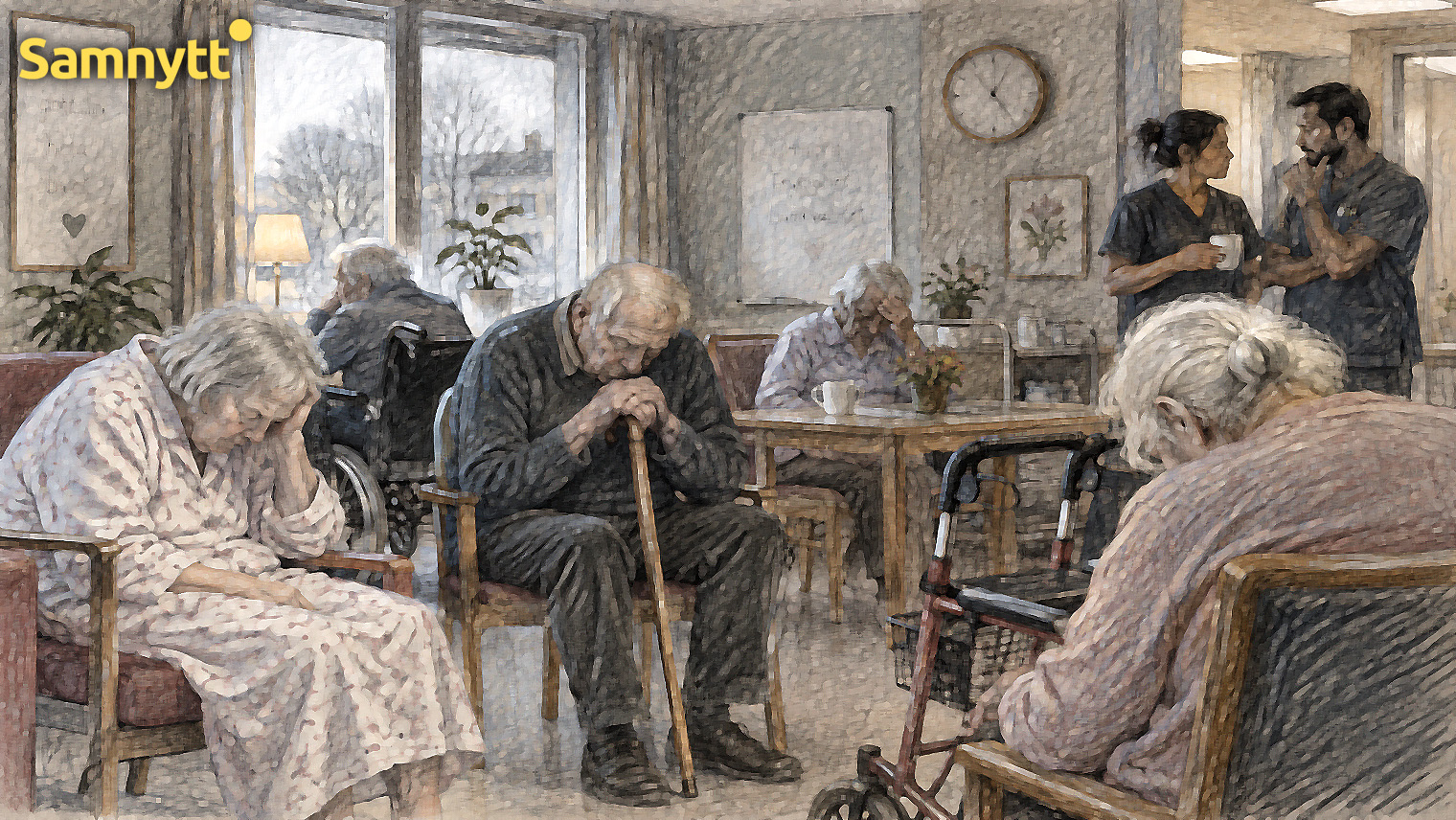
Understaffing, stress, and ever less time for the elderly. Two safety representatives with a total of over 75 years of experience are now sounding the alarm about the situation in elderly care in Härryda. The criticism follows several previously noted shortcomings—including an IVO (Health and Social Care Inspectorate) decision with serious criticism and a fatal accident at the same nursing home. At the same time, new national figures show the problems are far from limited to just one municipality.
The situation within elderly care in Härryda municipality has deteriorated over several years. This is according to safety representatives Yvonne Kanthe and Lisbeth Olofsson, who work at Ekdalagården’s care and nursing home in Mölnlycke.
Together, they have more than 75 years of experience in the profession. Now, they describe an operation where staff are finding it increasingly difficult to manage even the most basic care.
– We can’t work miracles when resources don’t exist, says Yvonne Kanthe to Lokalpressen.
Fewer Hands – Less Time for the Elderly
In the dementia wards where they work, staffing has decreased, according to the safety representatives. Care routines that were previously a natural part of their work have, at the same time, had to be deprioritized.
Ten years ago, staff could arrange excursions, visit Liseberg, and take the elderly for walks. Today, there is significantly less time for such activities.
READ ALSO: Home Care Worker Prosecuted for Sexual Assault – Against Four Elderly Women
According to the two assistant nurses, the problem is not just about quality of life but also safety. They recount, for example, an incident with a young substitute recently left alone with a resident in a difficult situation that ended badly.
– There is no money to put in an extra person to prevent such incidents. It’s totally unacceptable, says Lisbeth Olofsson.
The safety representatives stress that many substitutes do a good job, but that inexperienced staff need the support of more seasoned colleagues to manage difficult situations, especially in dementia care. At the same time, the pressured work environment is said to contribute to experienced staff leaving the service.
“Do What You Want, but Don’t Let Me Live Here”
The criticism is also directed at economic management. According to the staff, the operation is closely tied to occupancy. When an elderly person passes away, is admitted to the hospital, or vacates their spot, the revenue disappears as well, creating pressure to quickly make room for the next resident.
For Yvonne Kanthe, developments have gone so far that she herself does not wish to spend her final years in a municipal care home.
– I’ve told my children: “Do what you want, but don’t let me live here,” she says.
Lisbeth Olofsson, meanwhile, reacts critically to the municipality’s marketing of Härryda as a “super municipality.”
– What ‘super municipality’? It’s anything but super for our elderly at the moment. Don’t the politicians want things to be good for all residents?
Previous IVO Criticism of Härryda
The warnings do not come out of a historical vacuum. When the Health and Social Care Inspectorate (IVO) in 2023 reviewed medical care at special accommodations in Härryda, the authority found shortcomings in all four areas examined.
IVO determined, among other things, that staff making medical assessments did not have sufficient competence and did not master the Swedish language to a sufficient degree. The authority also found deficiencies in documentation and staff continuity and assessed that medication management was not patient-safe and that end-of-life care did not follow guidelines. The municipality was required to report what measures would be taken in response.
The privately operated Attendo Säteriet in Mölnlycke had previously also received extensive criticism. In summer 2022, Härryda municipality assessed that Attendo’s plan to address identified shortcomings was insufficient and the administration proposed terminating the contract with the company. At that time, both IVO and the Swedish Work Environment Authority were conducting inspections.
Resident Fell from Roof and Died
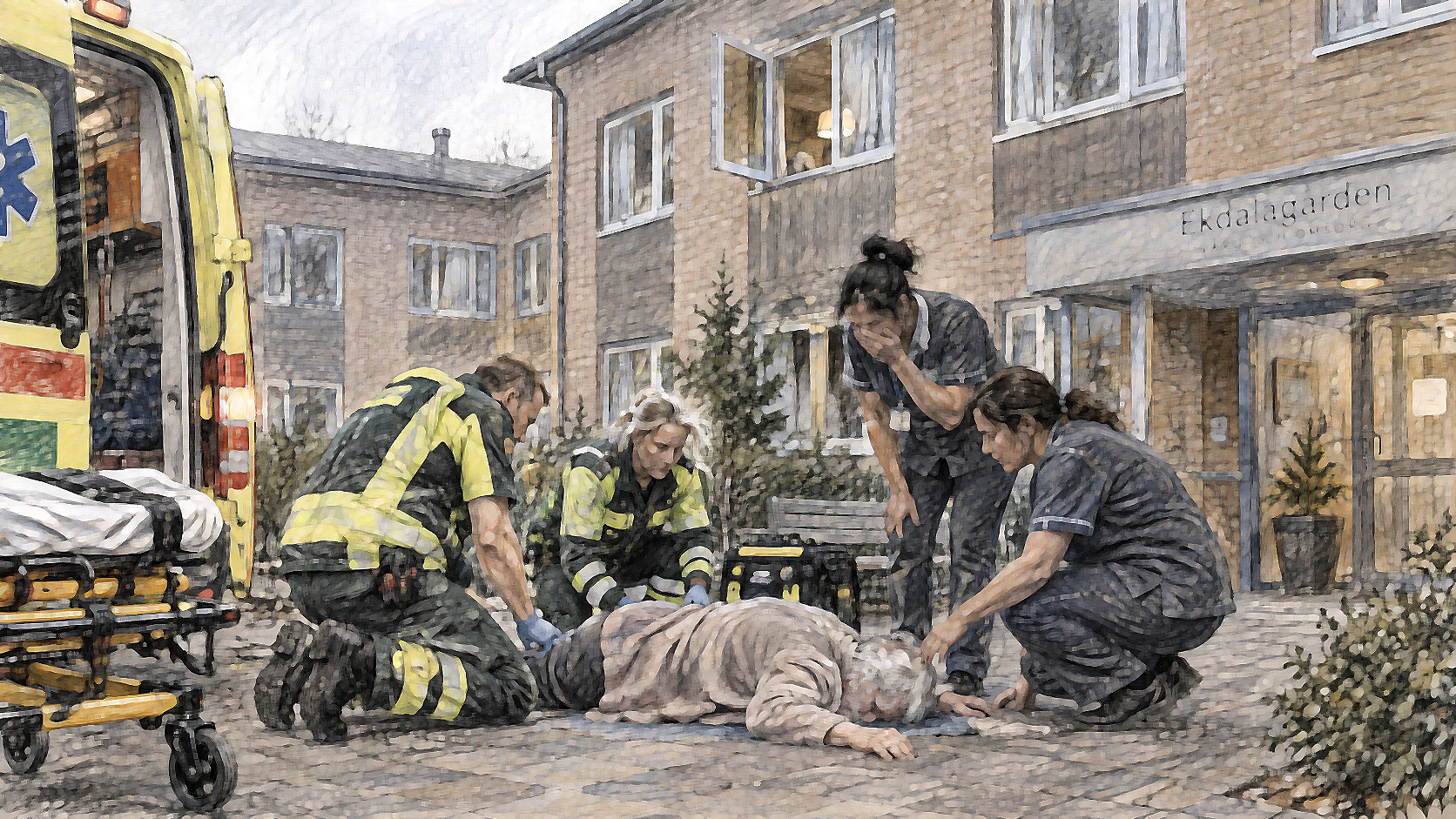
Ekdalagården itself, where the two safety representatives now work, was also thrust into the spotlight after a very serious incident in January 2025. A resident on the second floor exited through a window and fell from the roof into the courtyard. The person was taken to the hospital with severe injuries and later passed away.
According to the municipality, the window should have been locked and only opened for ventilation under staff supervision. At the time of the incident, it was unlocked. The municipality launched a Lex Sarah investigation and announced that the routines surrounding the window, the alarm function, and the monitoring carried out during the night would all be reviewed.
As recently as August this year, Björkelid’s care home in Rävlanda also received attention following the National Board of Health and Welfare’s national user survey. The facility ranked lowest among the comparable homes in Härryda and, in multiple subareas, was among the poorer performers nationwide.
According to Härryda-Posten’s analysis, barely half of respondents stated they had confidence in the staff. The responsible unit manager distanced herself from criticism and responsibility, claiming the low response rate made it difficult to draw far-reaching conclusions.
Politicians Promise Change
After these new warnings from the safety representatives, the municipality’s two largest parties have presented different explanations for the problems and measures they wish to see implemented.
Social Democratic group leader Patrik Linde points to the municipality’s system under the Freedom of Choice Act (LOV) as a key cause and wants to abolish the model. The party instead wishes to allocate more resources and increase the number of staff per shift.
Municipal Council Chair Per Vorberg (Moderate Party) wants to develop monitoring, governance, and dialogue between the service and the politicians as well as change the compensation model. He also argues for the need for sufficiently trained staff in adequate numbers and more modern care and nursing homes.
Both sides say they want to improve services, but they disagree on both the causes of the problems and which political changes are required.
Problems Across the Country
Härryda is, at the same time, far from alone. IVO’s extensive nationwide review of special accommodations has previously revealed serious and widespread patient safety issues throughout Sweden.
Among the deficiencies were medical assessments, end-of-life care, medication management, and staff competence. IVO also noted that staff in almost all reviewed municipalities lacked adequate Swedish language skills to communicate with patients and convey information about their health conditions.
READ ALSO: REVEALED: Gang Criminal Hired in Home Care – Raped Pensioner
The language skills problem has since led to legislation. Since July 1 this year, there is a directive in the Social Services Act requiring providers to ensure that staff in elderly care possess the Swedish skills needed for their duties. The government has specified level B2 in the European framework as the relevant level.
However, the regulation does not prohibit the employment of persons who do not yet meet the level. Operations are only required to work towards staff eventually attaining the relevant language proficiency.
1,430 Serious Reports in Three Years
Even more alarming is IVO’s latest compilation of Lex Sarah reports. The authority analyzed 1,430 reports from elderly care between 2023 and 2025. Most concerned interventions that were either missed or carried out incorrectly, but in 150 cases the reports involved physical violence and abuse, including sexual assaults, by staff.
About 170 further reports concerned psychological abuse, violations, or poor treatment. Among other things, IVO describes cases involving hitting, pushing, rough handling, restraint, inappropriate touching, and sexual violence.
At the same time, municipalities reported in 2025 that 7,100 already made decisions on elderly care could not be implemented within three months. In almost three quarters of cases, it concerned elderly people waiting for a spot in a special accommodation. Lack of space was the main cause in the cases where IVO proceeded and demanded a special fee from municipalities.
Against this backdrop, the government has commissioned a special inquiry into the safety of elderly care. Among other tasks, it will propose how misconduct and abuse can be prevented and detected, and examine whether training requirements for staff need to be strengthened.
For Yvonne Kanthe and Lisbeth Olofsson in Mölnlycke, the demands are much more immediate. After years of what they describe as deteriorated conditions, their top priorities are more resources and more hands on the ground.
– They have to give services more resources. Elderly care in Härryda no longer works!