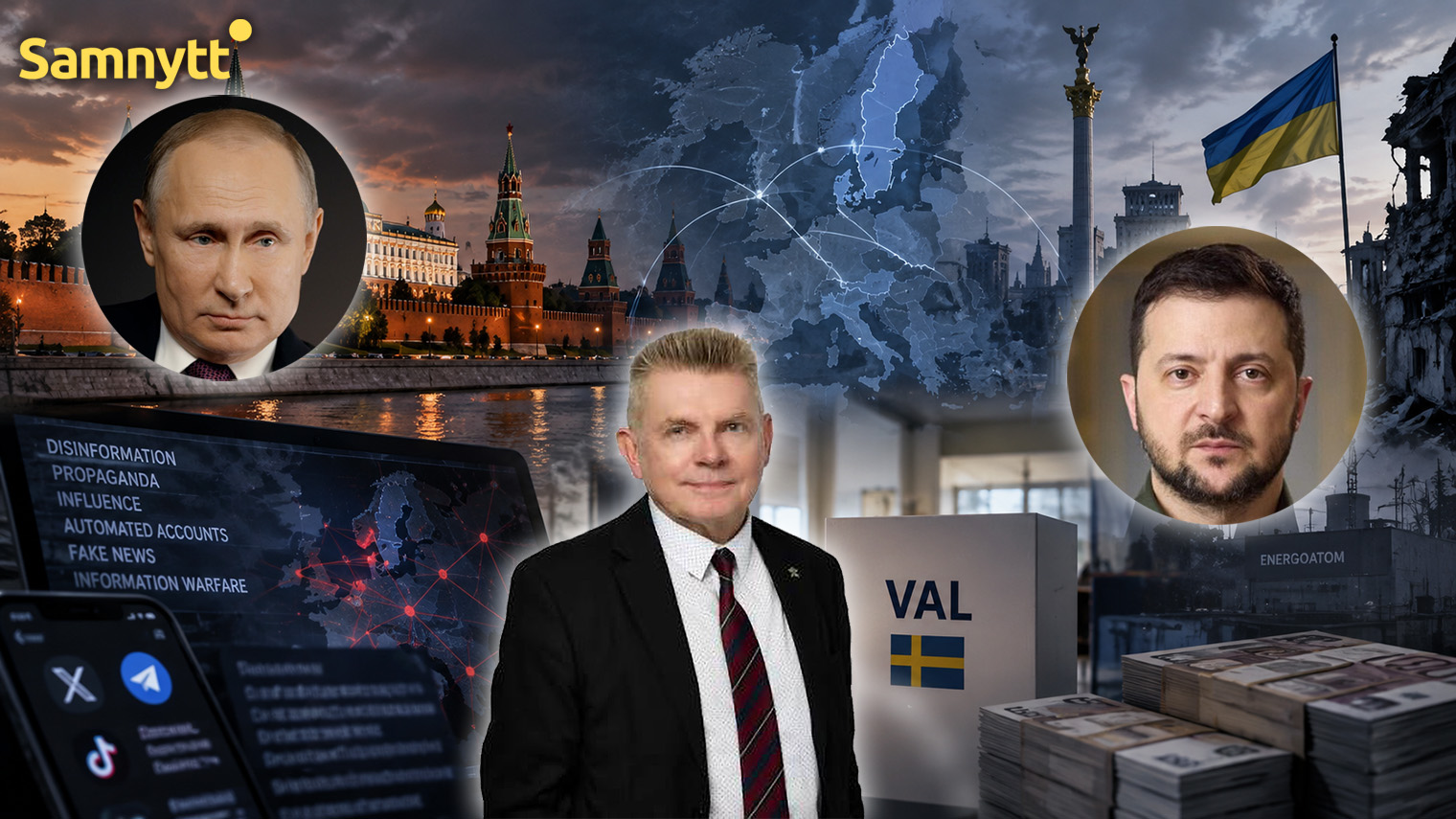
Russia is attempting to influence European voters through botnets, fake news, and stories about, among other things, corruption in Ukraine, warns the Swedish Psychological Defence Agency (MPF). However, the agency sees no coordinated Russian campaign against the Swedish election on Sunday and also cautions that fear of Russian influence itself can be exaggerated. When Ukraine is used as an example, the picture becomes even more complicated—the country faces real and extensive problems with corruption, with a long series of high-profile scandals reaching close to President Volodymyr Zelensky’s inner circle.
Suspicions of Russian influence have had a large presence in the final sprint of the Swedish election campaign. As recently as last week, the left-wing radical Expo published a comprehensive investigation of a Russian-born official working for the Sweden Democrats. The woman was described as pro-Russian and linked, through both past and recent social media posts, to messages that align with Russian narratives.
The information spread widely in other media and among the Sweden Democrats’ political opponents. On social media, the woman has even been called “suspected spy,” despite no evidence of espionage or of her providing information to Russia being presented.
Expo was also forced to correct a claim that the woman had come to Sweden through a sham marriage. She had never been married.
That a person of Russian background in a sensitive political position has expressed sympathies for Vladimir Putin and repeated Russian narratives are facts that can reasonably lead to questions. But it is a significant leap from that to proving that the person is actually working for a foreign power.
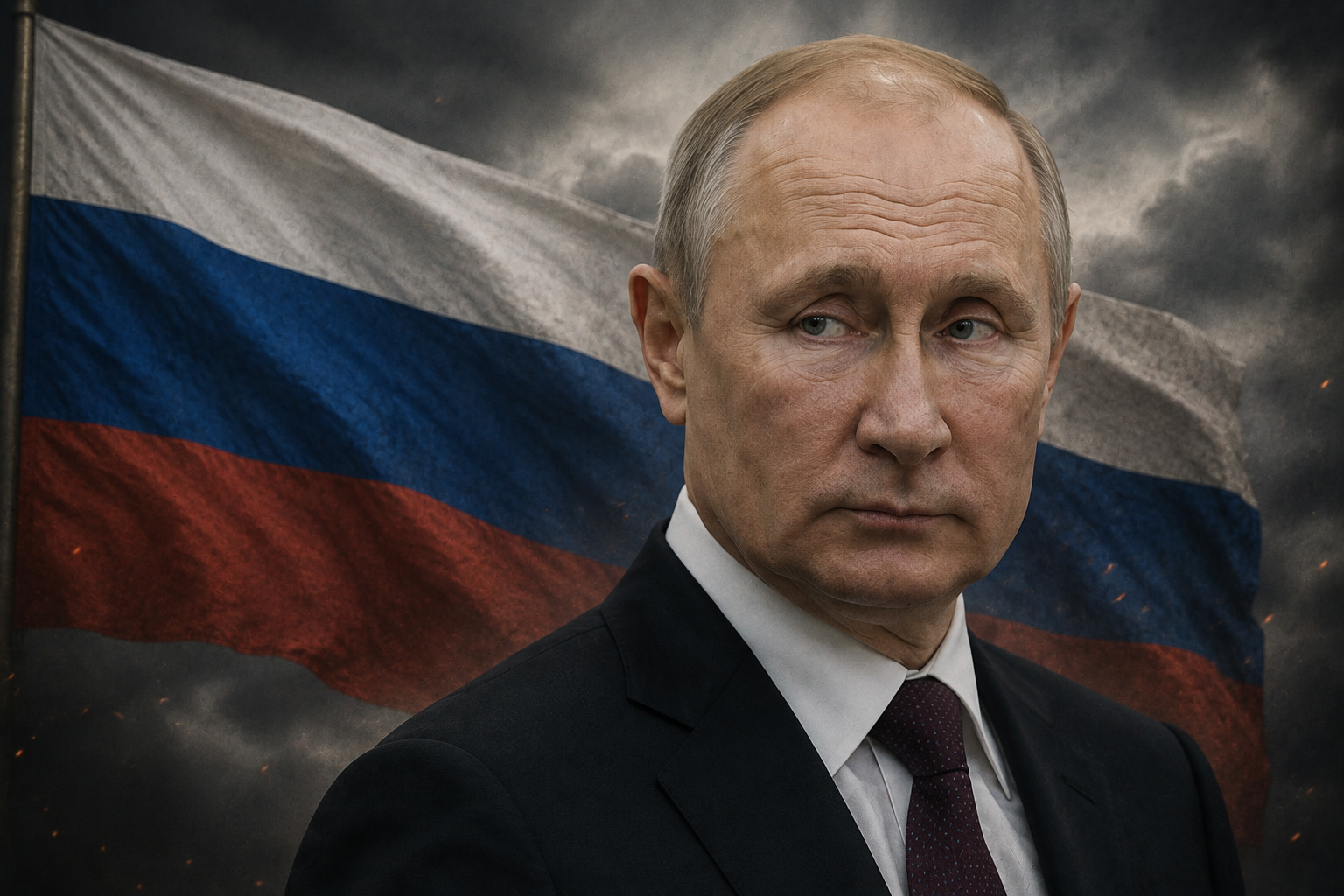
Now, a slightly different picture comes from the Swedish authority charged specifically with detecting and countering foreign information influence. Putin is fairly uninterested in Sweden and the outcome of the Swedish election, it argues.
No Russian campaign against the Swedish election
Magnus Hjort, Director-General of the Psychological Defence Agency (MPF), told Politico in an interview that Russia continuously tries to influence public opinion in the West. Elections are especially attractive moments for the Kremlin, since political divisions are already high and can be further intensified.
However, when it comes to this Sunday’s Swedish parliamentary election—in contrast to the way media coverage has presented it—MPF does not judge that a coordinated Russian influence operation is underway.
“Our assessment is that right now we do not see any coordinated campaign directed at Sweden,” Hjort told Politico.
READ ALSO: Agency after media alerts: Sweden is not a main target for Russian influence
According to him, one explanation is Sweden’s broad support for Ukraine. Moscow is thus believed to focus more effort on countries where political opinion is more divided and where influence could have a greater impact.
Hjort mainly points to upcoming elections in Germany and next year’s French presidential election. In France, Marine Le Pen is leading in the presidential polls. Her National Rally party has long been criticized for previous ties to Russia.
Seeking to create doubt about support for Ukraine
A central objective of Russian information warfare, according to Hjort, is to get European voters to question why their governments continue sending money and weapons to Ukraine. One way is to spread stories about corruption and other misconduct in Ukraine.
The problem is that the line between Russian propaganda and real circumstances isn’t always as clear as the political debate may suggest.
Russia has a clear interest in exaggerating, distorting, and exploiting Ukrainian corruption scandals. But that does not mean the corruption problems or scandals themselves are invented.
The latest Transparency International Corruption Perceptions Index illustrates the difference. Ukraine receives 36 points out of 100 and ranks 104th out of 182 countries reviewed. Russia is somewhat further down, at 157th place with just 22 points.
Ukraine is thus better placed than Russia—but still far from the European countries with the lowest perceived public corruption. Sweden, by comparison, sits in sixth place with 80 points.
Corruption scandal close to Zelensky’s circle
The reality of Ukraine’s corruption problems is also clear from the country’s own official investigations. The extensive Operation Midas, led by the anti-corruption agencies NABU and SAPO, uncovered a suspected criminal organization around the state energy sector.
According to NABU, the scheme forced suppliers to the state nuclear power company Energoatom to pay between 10% and 15% of contract values in bribes, partly to get their invoices paid.
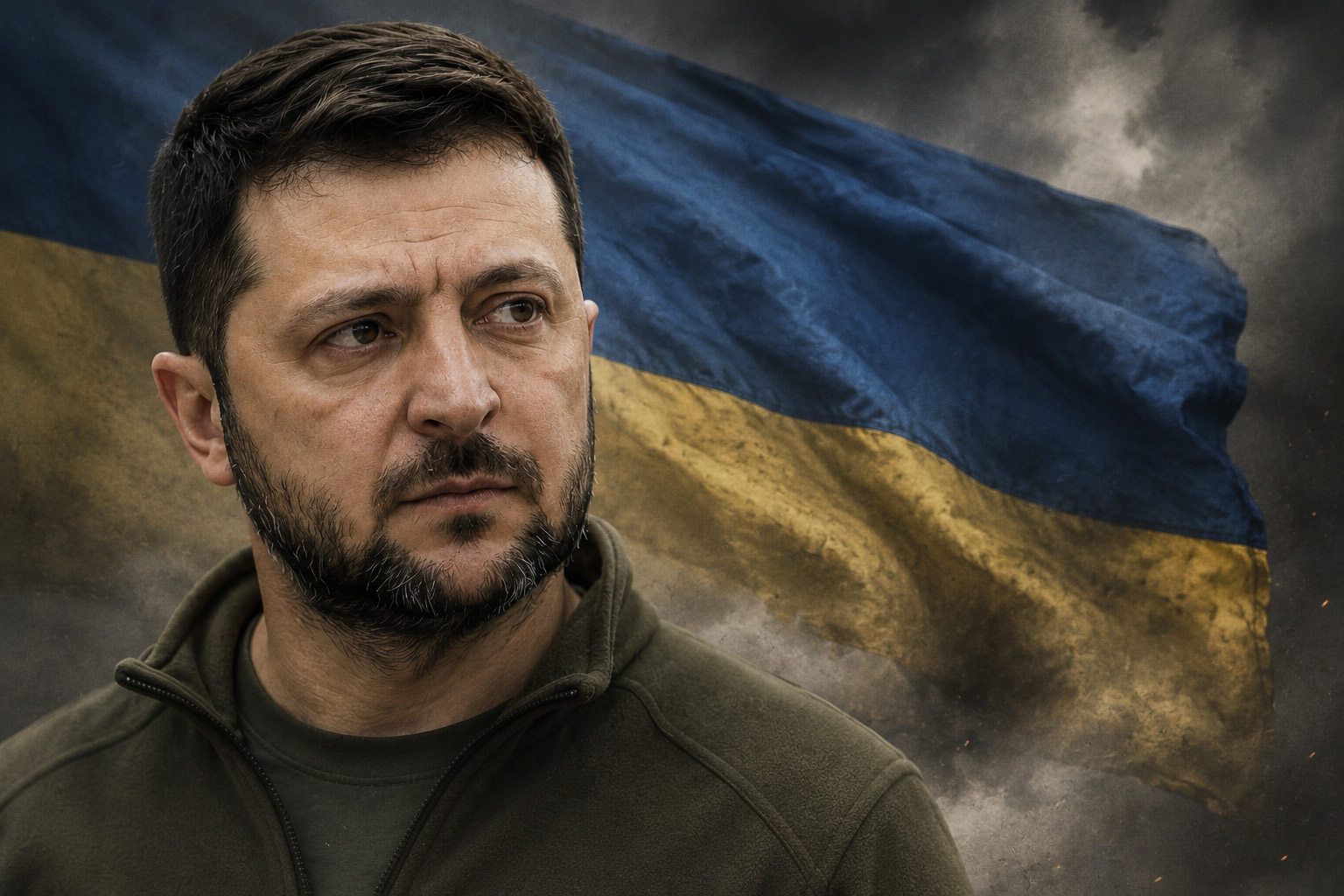
Around 100 million dollars is believed to have passed through the group’s money laundering system. The investigation has reached high into the Ukrainian political leadership and President Zelensky’s circle.
READ ALSO: Zelensky’s closest aide resigns after anti-corruption raid
In November last year, NABU and SAPO conducted searches at, among others, the then-chief of staff to the president, Andriy Yermak. He resigned and has since been formally notified as a suspect in Operation Midas. Another central figure is Ukraine’s former energy and justice minister Herman Halushchenko.
Swedish minister later praised corruption-suspect colleague
Halushchenko has had close contact with the Swedish government and, among other things, met with energy and business minister Ebba Busch (Christian Democrats) during the war. Busch has previously expressed great appreciation for her Ukrainian ministerial colleague and wrote that Sweden had much to learn from Ukraine in the energy sector.
Since then, the image has changed dramatically and in a way embarrassing for Swedish politicians. In February, Halushchenko was formally suspected of money laundering and participation in a criminal organization. According to NABU and SAPO, this relates to the large Operation Midas case.
READ ALSO: Zelensky’s minister funneled over a billion to tax havens
Investigators suspect that money from the operation was laundered through a complicated network of companies, funds, and accounts in multiple jurisdictions. Halushchenko was arrested while trying to leave Ukraine and has denied any crime. Therefore, it is Ukrainian anti-corruption agencies—not Russian propaganda outlets—behind the accusations.
Operation Midas has continued to expand. In July, NABU stated that another former executive at Energoatom is suspected of laundering more than 30 million hryvnias, and allegedly bought luxury cars and properties in Ukraine and in Bali with the money.
Propaganda can be based on real problems
This highlights a recurring dilemma in the disinformation debate. A foreign power does not need to invent an incident to use it for propaganda. Real wrongdoing can be selected, magnified, taken out of context, or presented as representative of an entire country.
That Russia uses Ukrainian corruption to try to reduce support for Kyiv, then, does not mean that reports of Ukrainian corruption can automatically be dismissed as Russian disinformation.
On the contrary, Transparency International itself describes Ukrainian anti-corruption efforts as meaningful and emphasizes that civil society, journalists, and independent institutions in 2025 contributed to defending the anti-corruption agencies’ independence.
The fact that extensive corruption cases are actually uncovered can also be seen as a sign that control systems are working better than before. Nevertheless, corruption itself remains a serious problem in a country receiving substantial economic and military support from Sweden, the EU, and other Western countries.
MPF also warns against exaggerated fear
Magnus Hjort above all wants the major social media platforms to do more to stop organized networks of automated accounts.
Among other things, MPF has identified a network of about 1,200 accounts on X targeting Sweden and other countries. The accounts started with innocent topics like holidays and sports but later shifted to polarizing political messages. Over 2025 and 2026, the network posted about 50,000 entries and comments.
Hjort says that Russia, but also China and Iran, continuously engage in information manipulation. His advice is not to reflexively react to every provocation. The purpose of many Russian campaigns is precisely to make journalists, politicians, and ordinary users upset, share the material, and thereby contribute to its spread themselves.
And ahead of the Swedish election, the MPF chief highlights another risk: that the threat from Russia is exaggerated. An overly inflated fear of foreign election interference, Hjort notes, could lead people after the election to claim the outcome was illegitimate—even when there is no evidence for such influence. In turn, this could make government formation more difficult and undermine trust in democracy.
The Swedish authority tasked with countering foreign information influence thus comes to a more nuanced conclusion than parts of Swedish election debates and media reporting suggest—Russian propaganda and influence activity are real and ongoing—but there is also a risk in seeing the Kremlin behind every uncomfortable claim or political opinion.