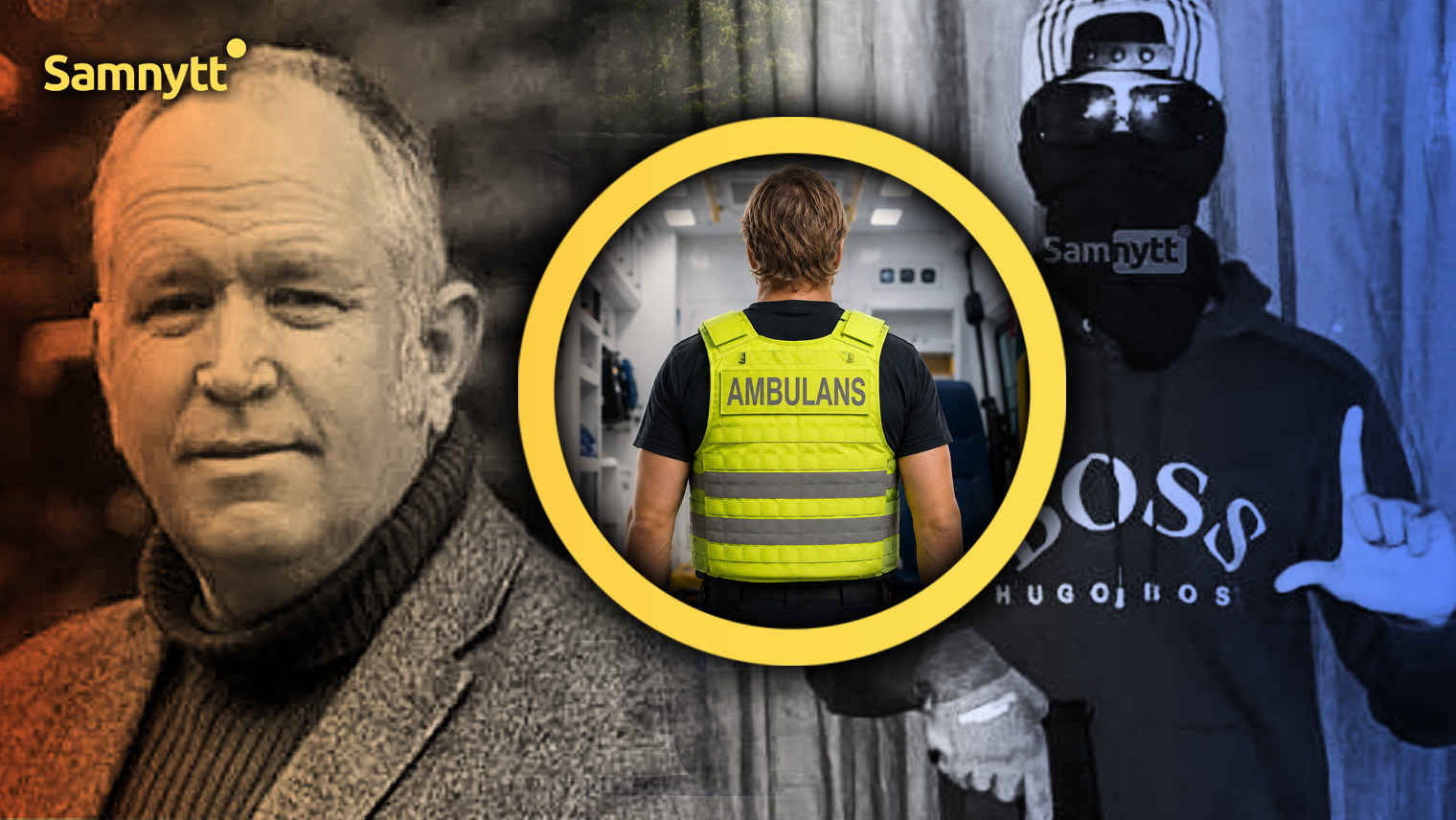
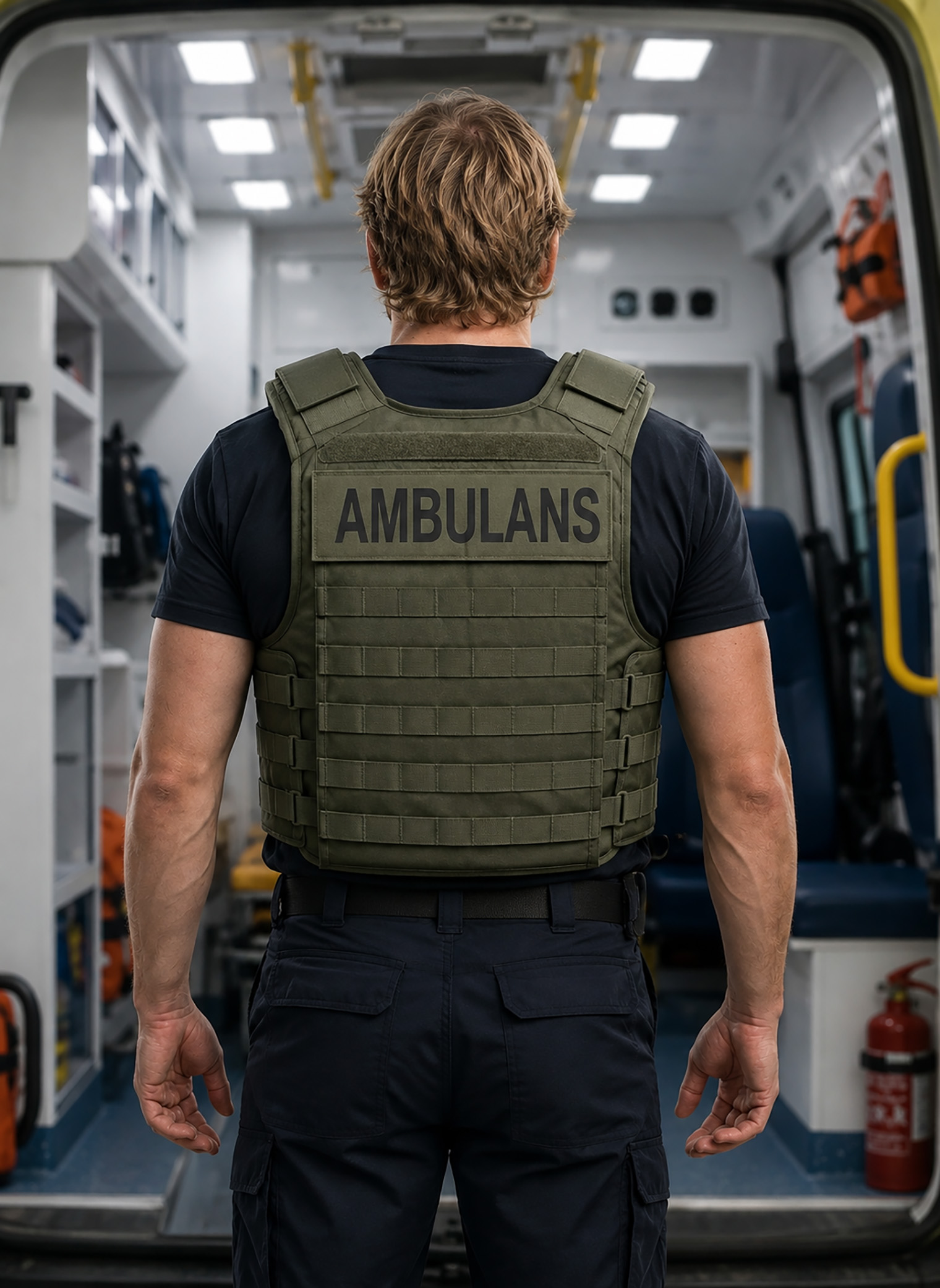
Bulletproof vests, ballistic helmets, security guards, and ultimately armed staff. Henrik Johansson of the Ambulance Union tells Samnytt about Swedish ambulance services that, for the past 15–20 years, have been forced to adapt to an increasingly severe threat landscape. Paramedics are sent to addresses red-flagged by the police, while some colleagues have been forced to assume protected identities after threats. He speaks about gangs, clan structures, and immense access to illegal weapons—and describes the situation as “a form of low-intensity war.”
Lately, the Ambulance Union has demanded further security measures for Sweden’s ambulance staff. After the murder of a paramedic in Harmånger, the question of staff vulnerability has once again come to the fore.
But when Samnytt speaks to Henrik Johansson, secretary of the Ambulance Union, he is careful to describe the problem as much older and broader than an isolated murder.
“The situation is very alarming and we have several ongoing cases across the entire workplace environment,” he says.
According to Johansson, several ambulance employees have chosen to leave the profession entirely. At the same time, there is a group that rarely appears in the statistics.
“What does not show up in these statistics are all those who have obtained protected personal registration or protected identity.”
SEE ALSO: Murdered Paramedic – Here Was the Sentence
The reason, according to Johansson, is the environments where ambulance staff are being sent.
“We enter environments with a lot of weapons, there may be human trafficking. This is a widespread problem that has also resulted in a culture of silence.”

“We Have No Police to Send”
Johansson also directs criticism at the employers and the 21 regions. He claims there’s a reluctance to openly describe the severity of the situation and notes that the Ambulance Union on the very day of the interview held two union negotiations on workplace environment issues connected to these problems.
SEE ALSO: She Freed Man Who Killed Ambulance Worker: “Extremely Tragic”
Why doesn’t anyone want to talk about the problems?
“Because then it becomes political.”
Even under normal conditions, according to Johansson, the system is understaffed. In a major crisis, the problems could become even more obvious. He cites the pandemic as an example of how quickly margins can evaporate.
SEE ALSO: Paramedics Warn of Mortal Danger When Climate Extremists Block Traffic
The difference between police and ambulance safety protocols is a recurring issue.
Johansson describes how an ambulance crew can be sent to an address without knowing the same information the police have.
“If you and I are on ambulance duty, we can be sent to an address. And, say, your brother is a police officer and my wife is a police officer. They would say: ‘How can you go there? We never enter with less than three units.’”
If the police won’t go in because it’s too dangerous, you’re still expected to go in unprotected?
“Yes, we’re expected to go in.”
Johansson mentions, among others, Vivalla, Rosengård, and other so-called vulnerable areas.
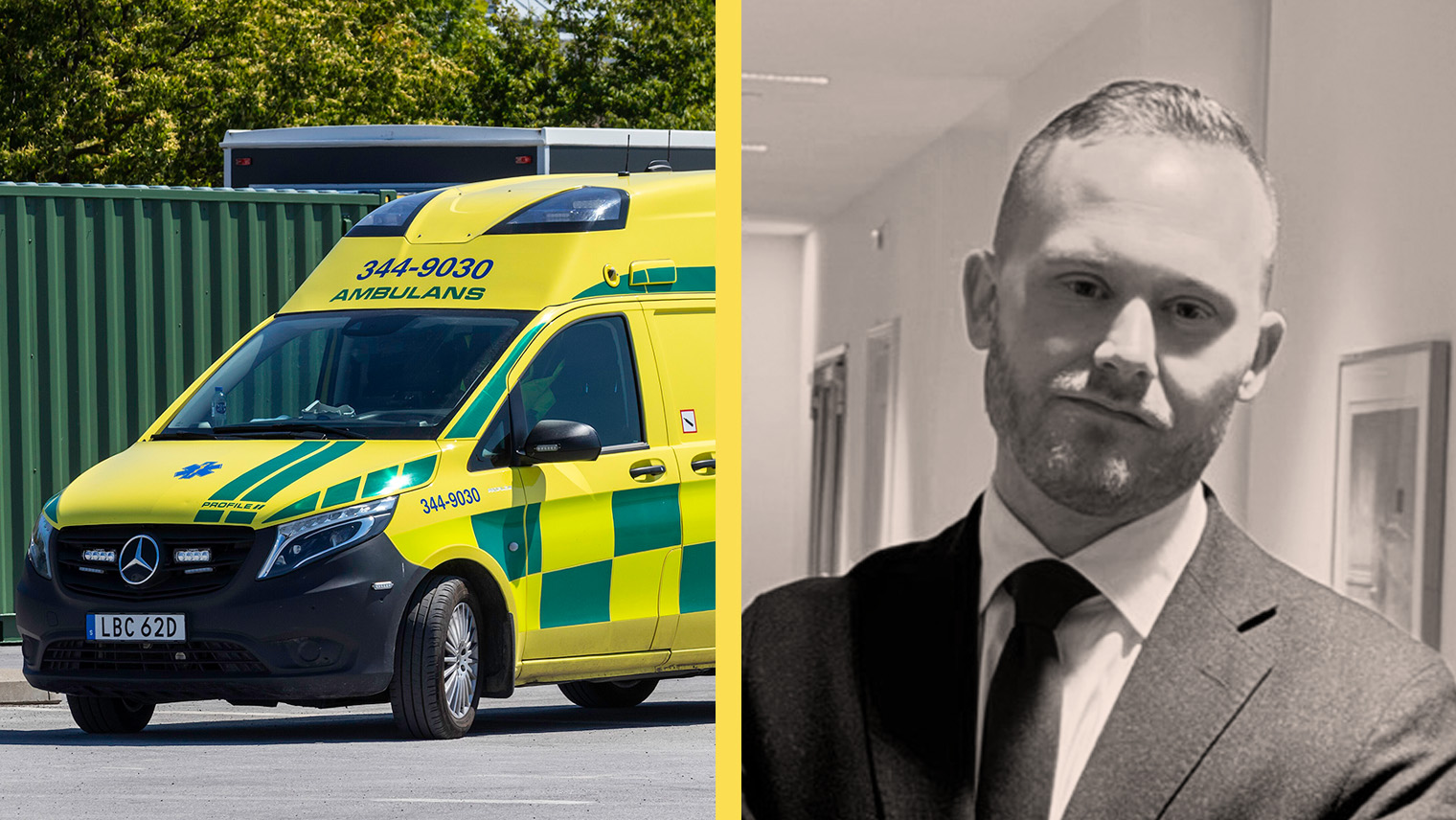
Henrik Vinge (SD) “Was Ahead of His Time”
The issue of alerting ambulance staff to dangerous addresses isn’t new. In the middle of the interview, Johansson himself points out Henrik Vinge, parliamentary group leader for the Sweden Democrats—whom Samnytt interviewed earlier this week—as one of the politicians who sought to draw early attention to the problem.
SEE ALSO: SD Leader Warns of a Social Democratic Win: “The Most Left-Extreme Government Ever”
According to Johansson, Vinge pushed for the flagging of dangerous addresses and for greater safety for ambulance staff during his time in Stockholm County Council.
“He was the first in Sweden to raise the issue of flagging addresses,” Johansson says.
But that was also a time when it was very sensitive to talk about immigration. Violence against ambulance staff is largely linked to people with immigrant backgrounds. It’s a phenomenon that comes from mass immigration. For the other parties, admitting that ambulance staff needed these safety measures also meant admitting that the multicultural experiment had failed. They’d rather let ambulance staff take the hit than admit failure.
Henrik Vinge, Deputy Party Leader, Sweden Democrats
According to him, Vinge got no support.
“He had no one backing him. Why? He had the wrong party card.”
Johansson says he still references Vinge in his lectures about ambulance staff safety, describing him as a politician who dared to discuss the problems long before the issues gained today’s relevance.
“He was ahead of his time.”
Johansson argues that many of today’s safety issues could have been discussed 15–20 years ago. At the same time, he claims that the messenger long determined which proposals were taken seriously.
Against this backdrop, Samnytt has also reached out to Henrik Vinge to hear how he himself remembers the battle over ambulance staff safety—and what he thinks now that many of the measures discussed back then are again highly relevant.
Henrik Johansson from the Ambulance Union points you out as one of the first politicians to push for flagging dangerous addresses and better protection for ambulance workers. What did you see already back then?
“It was the increase in violence against emergency services. Paramedics went out to help people and were met by violence—with improvised weapons and, in some cases, firearms.” He continues:
“I was a politician in the County Council at the time, and we proposed various safety measures for ambulance staff in Stockholm County, including protective gear and address flagging. Unfortunately, all other parties said no.”
SEE ALSO: Henrik Vinge (SD): ‘Those Who Commit Humiliation Robberies Against Swedes Must Not Get Off Lightly’
Johansson says you had ‘the wrong party book.’ Do you recognize the claim that proposals were blocked because they came from the Sweden Democrats?
“That was an important part of the reason. But it was also a time when it was very sensitive to talk about immigration. Violence against ambulance staff is largely linked to people with immigrant backgrounds. It’s a phenomenon that comes from mass immigration.” The SD leader continues:
“For the other parties, admitting that ambulance staff needed these safety measures also meant admitting that the multicultural experiment had failed. They’d rather let ambulance staff take the hit than admit failure.”
Now there’s talk of bulletproof vests, ballistic helmets, and even armed security guards. What does that say about Sweden?
“It says that something has gone very wrong in Sweden. When this debate took place in the County Council, many didn’t believe it was true. I still think many do not really understand that this is already the practice. Vinge continues:
“Many times, ambulances call for police before entering an area and wait outside. They can stand 200–300 meters from the incident site and wait for police backup before approaching the patient. He elaborates:
“Somewhere in that process, a person with a heart attack could die. It could be a child who’s choking, someone with an allergic reaction, or an elderly person in urgent need of CPR.”
“It is also appalling that healthcare resources need to be spent on guards. That money could go towards another ambulance or more doctors and nurses.”
SEE ALSO: SD Leader Warns of a Social Democratic Win: “The Most Left-Extreme Government Ever”
Johansson mainly identifies gangs and clan structures as threats to ambulance staff. Is this also your view?
“Yes. Both aspects exist—even mentally ill individuals can pose a risk—but there are groups in certain areas who consider the area to be theirs. Ambulance staff represent the public sector, the state. When the state comes in, it is perceived as entering their territory.” He continues:
15–20 years ago, it happened occasionally. Today it happens all the time: controlling, dictating, dominating. There’s a brutality that’s hard to put into words.
Henrik Johansson, Secretary, Ambulance Union
“The logic becomes: ‘Sweden has no business here. The state has no power here. I have the power here.’ When an unarmed representative of the state enters, it can be seen as a provocation.” Vinge concludes:
“It’s the ultimate manifestation of a parallel society. They feel this is a different society within the society, not part of Sweden but something else. We have to break this. It’s obviously totally unacceptable.”
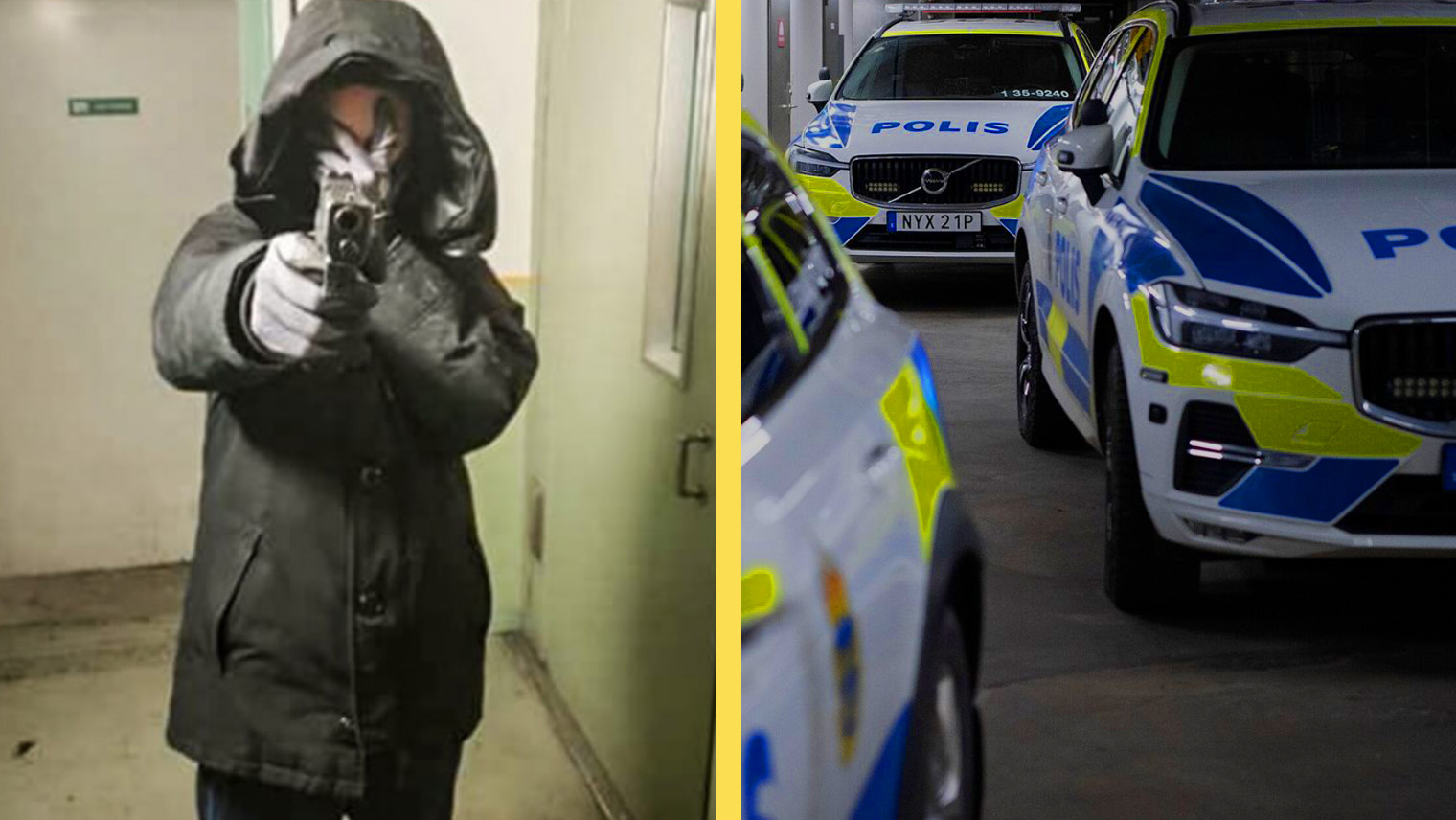
A Brutality Hard to Describe
When Samnytt asks Henrik Johansson what this development says about Swedish society, he goes further. He describes it as indicative of the times but also the result of a change that has taken place over the last 15–20 years. A central feature is what he calls increasingly common “dominance behavior.”
“Fifteen to twenty years ago, it was sporadic. Today it happens all the time—controlling, dictating, dominating. There’s a brutality that’s hard to put into words.”
SEE ALSO: Beachgoers Blocked Ambulance and Filmed as Children Drowned
Johansson says that even security staff and those in other public service professions report similar changes. He himself notices people who openly despise or look down on ambulance staff.
At the same time, he believes society has increasingly adapted to behaviors that previously would never have been accepted. He worries about what the next generation will consider normal.
Automatic Rifles and “Low-Intensity War”
This trend has also changed healthcare itself. Johansson brings up how tactical medicine is used in the UK, France, and Denmark. There they have staff and units trained and equipped to work in dangerous environments. He believes Sweden is moving in the same direction.
“This is a form of low-intensity war.”
Johansson refers, among other things, to situations where ambulance staff arrive at scenes where automatic rifles have been used and the threat remains. Paramedics also represent society and the authorities, which, he argues, itself can make staff targets for aggression.
This is a ticking bomb—and it explodes from time to time. This will not get better. It will absolutely not get better.
Henrik Johansson, Secretary, Ambulance Union
At the same time, there is a paradox—the person who scorned society one moment can, in the next, be the one shot and fully dependent on ambulance staff to save his life.
Johansson describes how, even in acute situations, staff can be met with attempts to “control and dictate” the care provided.
Points to Gangs and Clan Structures
Asked by Samnytt to specify which groups he is referring to, Johansson answers:
“It’s often people linked to different types of clan structures. It can be gangs, it can be religious groups, which often have clan ties.”
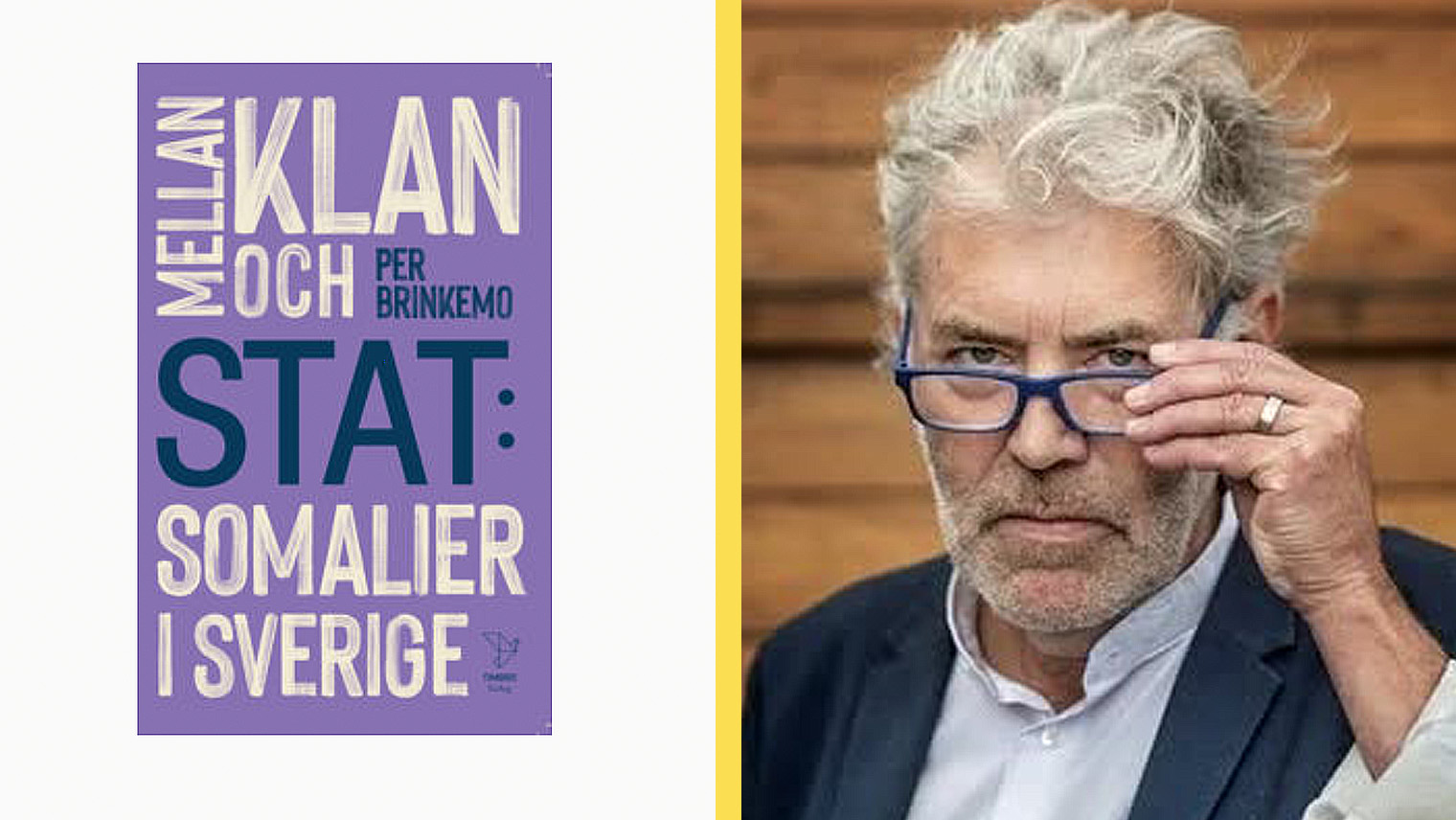
He refers, among others, to author and journalist Per Brinkemo’s work on clan societies. Johansson emphasizes that he does not see this as an isolated problem confined to individual stairwells or neighborhoods.
SEE ALSO: Equality Ombudsman’s Justice in the Hands of Religious and Left-Wing Activists
“We now have a very large group who consciously, clearly, and explicitly do not want to be a part of this society. But they want to enjoy all the benefits provided by society.”
Is it a case of importing the Middle East’s violence problems?
“Yes, it’s a relevant comparison.”
“It Absolutely Will Not Get Better”
Johansson paints a grim picture of the future.
“This is a ticking bomb—and it explodes from time to time.”
He sees no reason to believe the threats will diminish.
“This won’t get better. It absolutely will not get better.”
This leaves the question of how far security adaptation in Swedish ambulance care will need to go. Bulletproof vests and ballistic helmets are already in use. The Ambulance Union wants to see security personnel on site.
In other European countries, there are tactical medical units for particularly dangerous situations. Samnytt asks Johansson if the next step in Sweden could be ambulances where an armed person accompanies the medical staff. His answer is immediate:
“Absolutely. That’s how it will be.”
