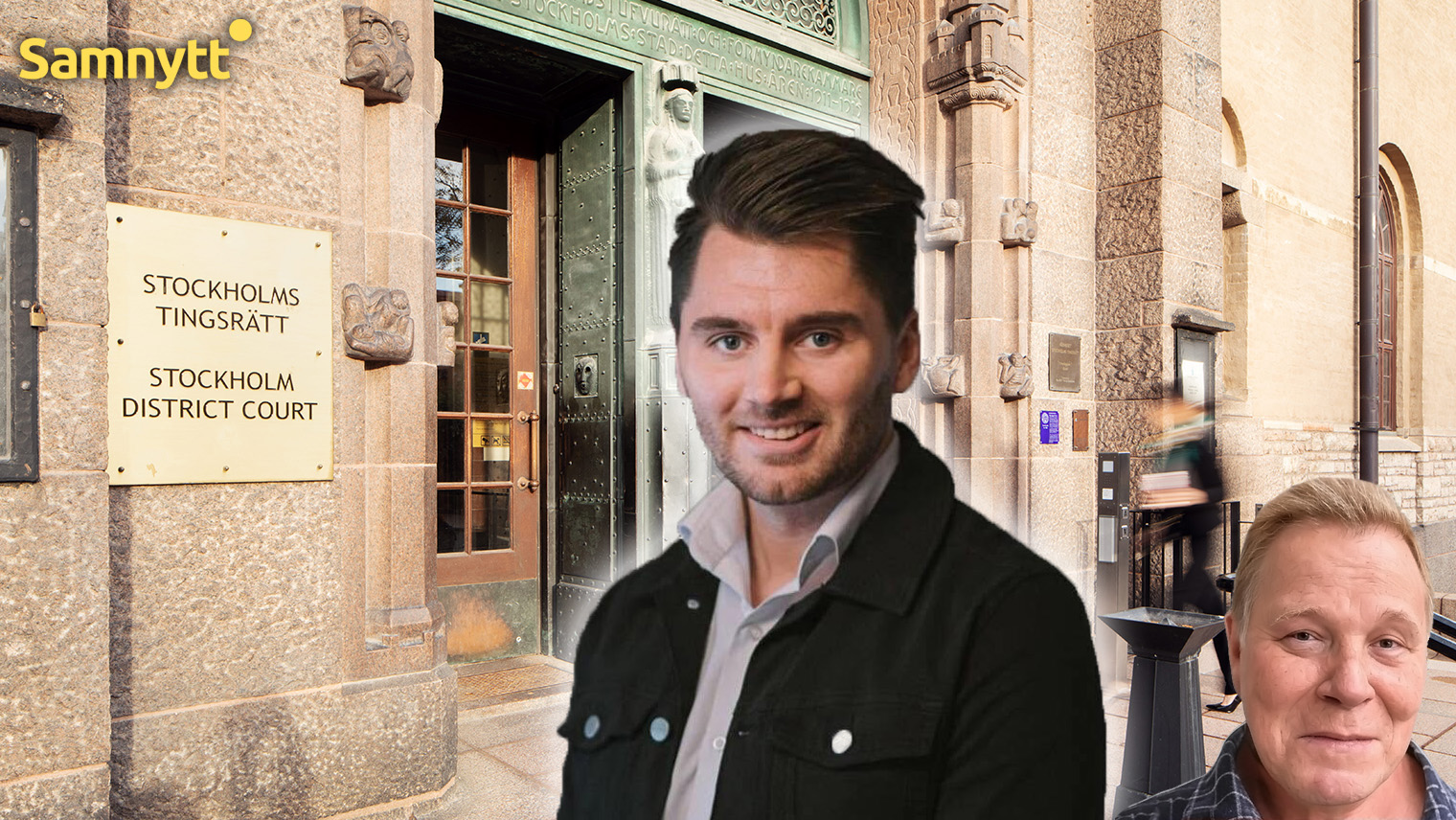
EDITORIAL • Today, children’s rights activist Jonatan Alfvén stands trial. The charge is several counts of aggravated defamation. The justice system has rushed to the defense of a number of pedophiles, convicted of a long series of brutal sexual assaults on children—several of them repeat offenders—who feel their honor and dignity have been insulted because Alfvén has warned the public about them on social media.
According to the indictment, he has identified the men as criminal or reprehensible in their way of life and exposed them to the contempt of others. The prosecutor argues that the publicity was likely to cause serious harm to the men.
The First Point
The fact that the sexual crimes these individuals committed against children were particularly brutal perversely works in their favor. Alfvén’s defamation offenses are classified as aggravated because what he has accused these individuals of is considered especially insulting.
READ ALSO: Dagerlind: High Time to Address the Root Causes of Pedophile Crimes
At the same time, there is no doubt that these individuals are, in fact and objectively, criminal and reprehensible in their way of life. One could reasonably argue that they have even surpassed these epithets, that words which could also describe petty thieves and drunkards do not come close to covering what these people have done—that it is to trivialize the concepts.
In the general sense of justice, these individuals are the scum of the earth and have more than earned not only other people’s contempt, but also disgust and revulsion, including the kind of serious harm referenced in this context. One could even argue that they have forfeited much of what we call human dignity. That is the first point.
The Second Point
The second point is that the one who identified these men is not Alfvén, but the justice system itself. Identification has occurred in court judgments that are considered public documents, which everyone has the right to access according to the constitutionally protected principle of public access. Such legal documents are reviewed for confidentiality, and anything not deemed for public viewing is redacted or anonymized.
READ ALSO: Patrik Sjöberg chased medals in the ’80s—now he hunts pedophiles
To prevent the publication and dissemination of such documents, for example by prosecuting for defamation, is therefore a constitutional violation. The constitution trumps ordinary law, and a law that conflicts with the constitution must not be enacted. Defamation legislation can be used to prosecute those who spread false information or true but confidential information about someone, but not true information from public documents.
A Broader Perspective Needed
The debate about the unreasonableness of defamation laws has largely focused on actors like Alfvén and the operators of the pedophile hunter site Dumpen. Voices have been raised that the law needs to be changed so that those who warn and expose the human refuse that these pedophiles, predators, and sex offenders are should not be at risk of prosecution for it.
Emotionally, it is understandable that the focus has become so strong. To fight for defenseless children in a society where the justice system feels more sorry for pedophiles than for their victims is particularly commendable and important. But when revising defamation legislation, it is still important to do so with a bit more of a bird’s-eye view.
READ ALSO: Dumpen convicted of aggravated defamation—this is the sentence
The undersigned has himself been sentenced to one month in prison for aggravated defamation, commuted to house arrest with an ankle monitor for the same period. This was in my capacity as responsible publisher for Samnytt because we sparingly quoted true and relevant information from public legal documents in news coverage about another defamation case between an online hate investigator and a freelance journalist.
Defamation legislation, both in its design and application, constitutes a serious threat to press freedom. There may be ethical reasons in journalism not to highlight certain information in public documents, but it should not be able to constitute defamation or aggravated defamation. To work as a journalist using such documents as a basis must be possible without the arbitrary risk of prosecution simply because someone feels offended at being brought to attention.
READ ALSO: Samnytt’s responsible publisher sentenced to prison—after journalism about the Hate Monitor
The law about what may and may not be said and written must also be general. Today, someone can selectively choose which journalists they want to prosecute, and these are punished for publications that other media have also made, but the offended person did not choose to sue them.
Unconstitutional and Offensive
When it comes to activities such as those run by Alfvén and Dumpen, there is also the same kind of arbitrariness and systemic error. Reporting on a person’s serious crimes, documented in public documents, should never be able to constitute defamation. Possibly there might be a threshold where the witch-hunt for pedophiles crosses into some kind of harassment that could be classified as molestation. But that bar must be set high.
That the justice system, using your and my tax money, spends time and resources defending the honor and dignity of those who have none and have themselves forfeited it is downright offensive. Alfvén now risks both significant financial consequences in fines and damages, as well as a custodial sentence, because Sweden has an unconstitutional defamation law that protects some of the country’s most reprehensible criminals instead of their victims and those who step in to safeguard children’s safety where society fails to do so.