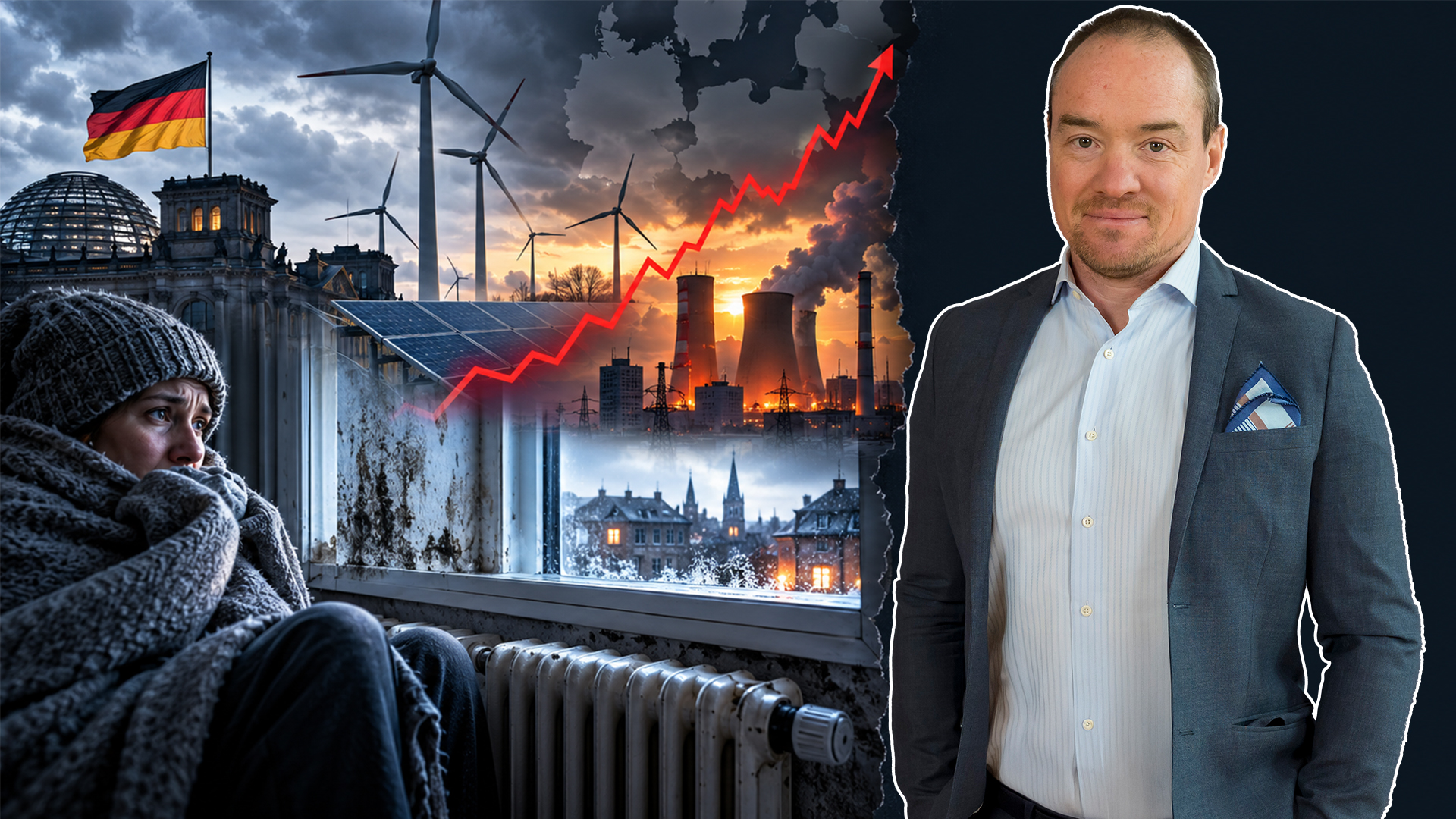
Germany was supposed to be the leading nation in Europe’s green transition. Nuclear power was to be abolished, wind and solar were to take over, and Europe’s largest industrial nation was to show the rest of the world how a modern society could get rid of yesterday’s energy systems. But today, Germans are sitting and freezing in their homes. One would be hard-pressed to find a better symbol of the total failure of the left-liberals.
TV4 reports from Erfurt about people who, during the previous energy crisis, simply stopped heating their homes when they could no longer afford their bills. The result was, among other things, mold problems. Now prices are rising again, new German electricity contracts are at their highest levels in three years, and Germany is once again among the countries in Europe with the most expensive household electricity.
A combination of high gas prices, the phasing out of nuclear power, the transition to renewables, and an insufficient infrastructure are identified as parts of the problem. It should prompt more people to ask the simple question they should have asked long ago: what if we were wrong about energy policy?
A Wealthy Society Needs a Lot of Energy
Energy is not just another commodity among others but is the very ability to do things. It powers the blast furnace, the server hall, the mine, the paper mill, the chemical industry, and the workshop. It heats the house, cools the food, purifies the water, transports people and goods, and keeps the hospital running. Almost all economic activity is, in a sense, the transformation of energy into something people value.
Being efficient with energy is, of course, not bad in itself but a central part of technological development. But for an advanced industrial society, access to a lot of energy at a low and predictable price is a top-tier competitive advantage.
This is why Europe’s energy prices should be regarded as an industrial policy emergency. The EU Commission notes that European companies pay more than twice as much for electricity as American companies. The IEA calculates that prices for energy-intensive industry in the EU in 2025 were still about twice as high as in the USA and more than 50 percent higher than in China and India.
You don’t have to be a professor of economics to understand what happens over time when a factory in Europe has to pay double for one of its most important production factors compared to a competitor across the Atlantic.
The German Experiment
Germany shut down its last three nuclear reactors on April 15, 2023. The decision was the culmination of a policy that had been ongoing for years, aiming to replace nuclear power primarily with wind and solar energy, while coal power was also to be phased out incrementally.
In one sense, Energiewende has been impressive. In 2025, 58.8 percent of Germany’s electricity production came from renewable energy sources. Wind power was the largest single power source, and solar power set records. But this is precisely where the problem arises with measuring an electricity system’s success by the share that happens to come from a certain energy source at a certain time, which is how the left continually tries to defend the disastrous energy policy.
In the same year, however, German gas-fired electricity production increased by 6.4 percent, and production from hard coal by 3 percent. Germany imported 21.9 terawatt-hours more electricity than it exported. The average wholesale price rose by 13.8 percent. For 573 hours, the electricity price was negative because more power was produced than the market needed, while for 40 other hours, prices shot up above 300 euros per megawatt hour.
This is almost a caricature of a system where the issue is no longer simply how many terawatt-hours are produced in a year, but when they are produced.
When the sun is shining and the wind is blowing, production can be enormous. When the weather changes, something else must be there. Gas, coal, hydropower, storage, imported power, or some other dispatchable source must fill the gap. In addition, the grid must be expanded to transport large amounts of electricity between different parts of the country. The German grid agency reports that the cost for so-called redispatch and reserve power alone in 2025 amounted to about 3.06 billion euros.
This is why the discussion that wind and solar are the “cheapest” just becomes the left’s way of trying to salvage their failure. The cost of an individual kilowatt-hour produced is not the same as the cost of a functioning electricity system delivering power at 6 p.m. on a windless January day.
Industry Pays the Price
The consequences are now visible far beyond household electricity bills. The German manufacturing industry shrank in 2025 for the third year in a row. Even more telling is the development in energy-intensive industry: production in 2025 was 17.8 percent lower than in 2021. Even in 2026, German industry has continued to struggle.
Energy is of course not the only explanation for Germany’s woes. The country’s automotive industry is under hard pressure from Chinese competition, labor is expensive, bureaucracy is extensive, and demographic trends are troublesome. But when an industrial nation at the same time makes the energy that drives industry expensive, volatile, and more dependent on imported fuels, it has at least succeeded in making its problems many times worse.
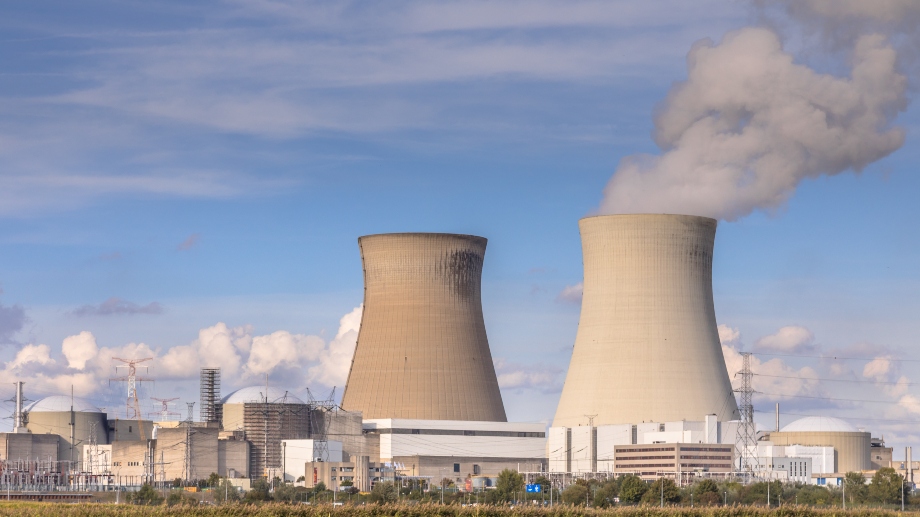
The most absurd thing is that Germany implemented the final phase-out of nuclear power in the midst of Europe’s biggest energy crisis in decades, after Russia’s invasion of Ukraine had shown just how dangerous it was to base an industrial society’s energy supply on cheap imported gas.
They had just seen the vulnerability exposed in broad daylight – and still shut down three functioning nuclear reactors.
Europe Begins to Understand
There are signs that other European countries have learned from recent developments.
Belgium in 2025 reversed the phase-out of nuclear power that had been decided over two decades earlier. France is proceeding with the construction of six new large EPR2 reactors. Italy, which shut down its nuclear plants after the 1987 referendum, decided as recently as this September to open the way back to nuclear power. Sweden has amended its legislation and funding model to enable new reactors.
Spain, meanwhile, is a warning example showing that the old reflex still persists. The country’s plan is still to successively close all nuclear power by 2035. But even there, reality is pushing in: in August, the government extended the operation of the Almaraz nuclear power plant until 2030, explicitly citing uncertainty on the international energy markets and the risk of sharp price spikes.
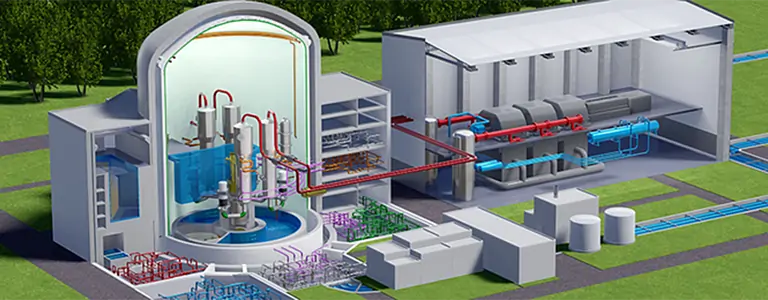
It is hard to find a better illustration of Europe’s energy-policy idiocy.
First, politicians decide that functioning dispatchable production must be eliminated. Then they discover that energy supply has become more sensitive to war, gas prices, weather, and imports. Finally, taxpayers’ money is used to mitigate the consequences of high prices and the state is forced to intervene to save the capacity it previously resolved to remove.
Poverty Is Not Environmental Policy
There is, finally, a greater point that too often gets forgotten in the climate debate. A poorer Europe is not automatically a greener Europe.
On the contrary, advanced environmental protection requires money, technology, and institutions. Yale University’s Environmental Performance Index for 2026 finds a strong correlation between countries’ prosperity and their environmental performance. Wealth alone does not create good environmental policy, but it is a reminder of something rather obvious: societies with ample resources also have significantly greater ability to purify water, manage waste, protect nature, develop new technology, and invest in cleaner production.
Truly sustainable energy policy should therefore not aim to make people use less simply because energy has become too expensive. The goal should be that our societies can use enormous amounts of energy without ruining households, deindustrializing the economy, or becoming dependent on the gas and oil of dictatorships.
That is a completely different idea than what the “green transition” has led to. Instead of energy poverty, closed factories, and cold homes—all so left-liberals can sing kumbaya and imagine they are doing good—we need more energy, cleaner energy, more stable energy, and cheaper energy.
A wealthy industrial society that takes care of its environment does not need less power. It needs more.
Unfortunately, the parties responsible for this energy catastrophe continue to enjoy the confidence of voters. It’s unclear why.