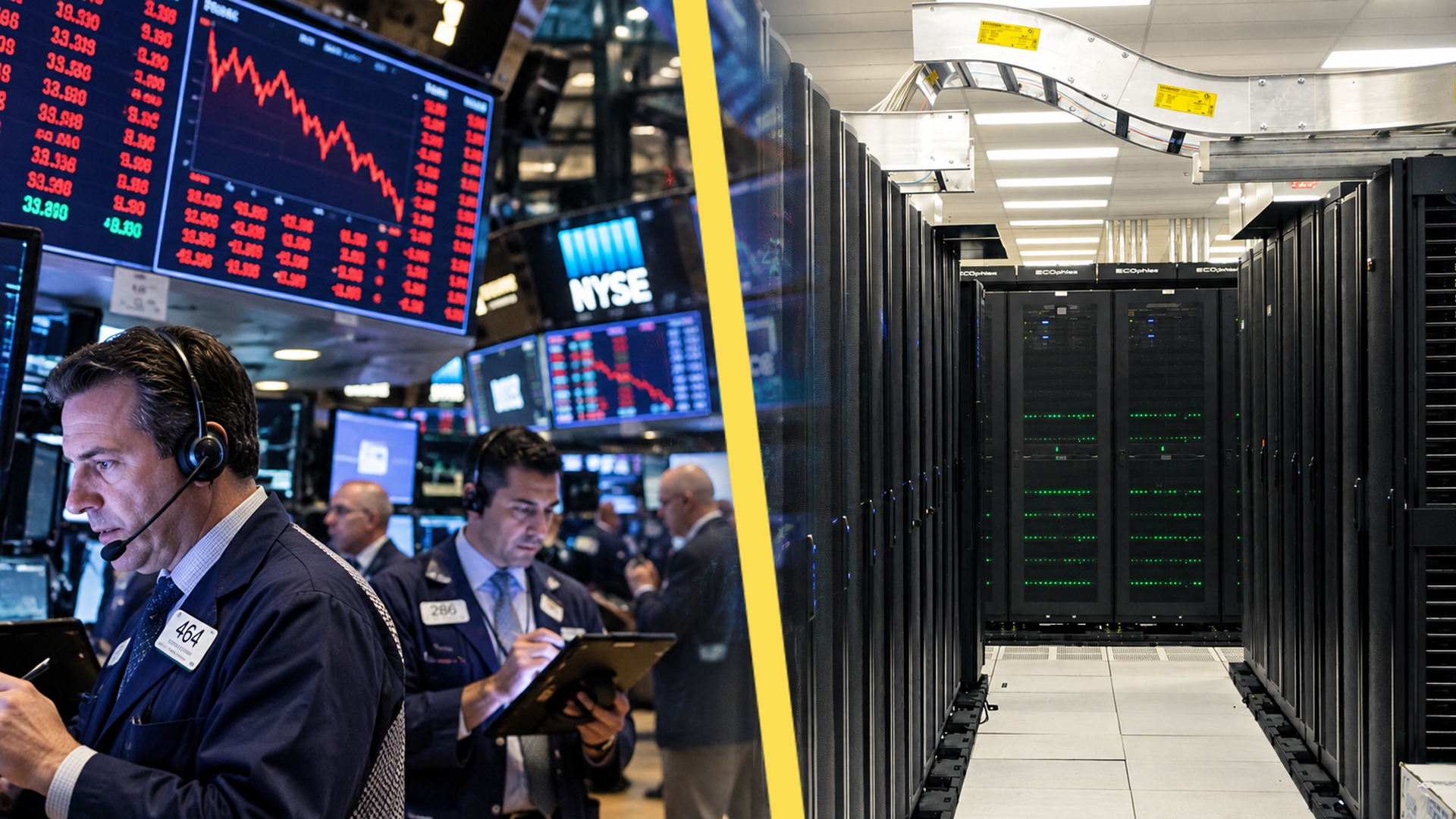
AI is rapidly transforming the financial market and is already being used by banks and other financial companies. Now, the Swedish National Debt Office warns that the technology could simultaneously amplify stock market crashes, facilitate cyberattacks, and create new risks for the entire financial system.
Artificial intelligence is currently used for everything from customer service and credit assessments to investment analysis, trading, and risk management. In a new analysis, the Debt Office reviews the development and finds that the technology can make the financial market both more efficient and more vulnerable.
One problem arises if many banks, fund managers, and other investors start using similar AI models. Models trained on similar data and responding to the same market signals may reach the same conclusion simultaneously. In a volatile market, the consequence could be that many systems, for example, start selling the same assets at the same time.
AI can reinforce herding behavior
Herding is not a new phenomenon in the financial market. Investors have always been influenced by what others do, which can reinforce both upswings and downturns. However, the Debt Office notes that AI can exacerbate the problem. If many market participants use the same or similar models, their actions risk becoming more homogeneous.
This can, in turn, amplify price movements and worsen liquidity when the market is already under pressure.
The authority also points out the problem of so-called black boxes. The most advanced AI systems can make decisions through processes so complex that even the humans using the systems have difficulty explaining, in retrospect, why a certain decision was made.
If AI takes on an increasingly larger role in trading, it may therefore become harder to understand why the market suddenly reacts in a certain way.
Banks dependent on the same tech giants
Another risk is that the financial sector becomes dependent on a small number of technology firms. Banks do not need to develop the major AI models or the infrastructure behind them themselves. Instead, the same models, cloud services, and data centers can be used by a large number of companies.
This creates a concentration risk. A technical failure, a cyberattack, or other problems at a central provider could affect many financial actors simultaneously.
Already in 2024, 84 percent of the financial companies that participated in a survey from the Financial Supervisory Authority stated that employees used generative AI in their work. 22 percent had concrete areas of application for AI systems within their operations, and additional companies were working on pilot projects or planning such initiatives.
Hundreds of billions of dollars invested in AI
The Debt Office also highlights the enormous investments in the infrastructure required for AI.
Global investments in, among other things, data centers and other AI-related infrastructure were estimated at about 318 billion dollars in 2025. The investments are expected to continue to increase sharply.
As the amounts grow, companies increasingly need external financing. Part of this comes from traditional banks, but the rapidly growing private credit market is also used. That market is less transparent than the traditional banking sector, which, according to the Debt Office, makes it harder to assess how the risks are distributed.
The authority also refers to the European Central Bank, which has pointed to the very high valuations of American tech and AI companies. Valuation levels in some respects have approached those seen during the dot-com bubble at the turn of the millennium.
If expectations for AI companies’ future profits prove too optimistic, sharply falling valuations could therefore have consequences even for companies and lenders who financed the expansive build-out.
Cyberattacks the most acute risk
Perhaps the most immediate risk, however, lies within cybersecurity.
AI can be used to quickly analyze large amounts of code, detect vulnerabilities, and help attackers identify how these can be exploited. This can make advanced cyberattacks both cheaper and easier to carry out.
– You could argue that, in the near term, AI’s ability to facilitate cyberattacks is the most acute risk, says report author Andreas Johnson in the Debt Office’s presentation.
In the longer term, he assesses that AI’s impact on how financial markets function could become a significant risk to financial stability.
The Debt Office simultaneously emphasizes that the technology has significant potential benefits. AI can, among other things, streamline analyses and risk assessments and improve the ability to detect fraud. But the bigger the role the technology plays in the financial system, the greater the consequences if many actors start relying on the same models, data, and technical infrastructure.