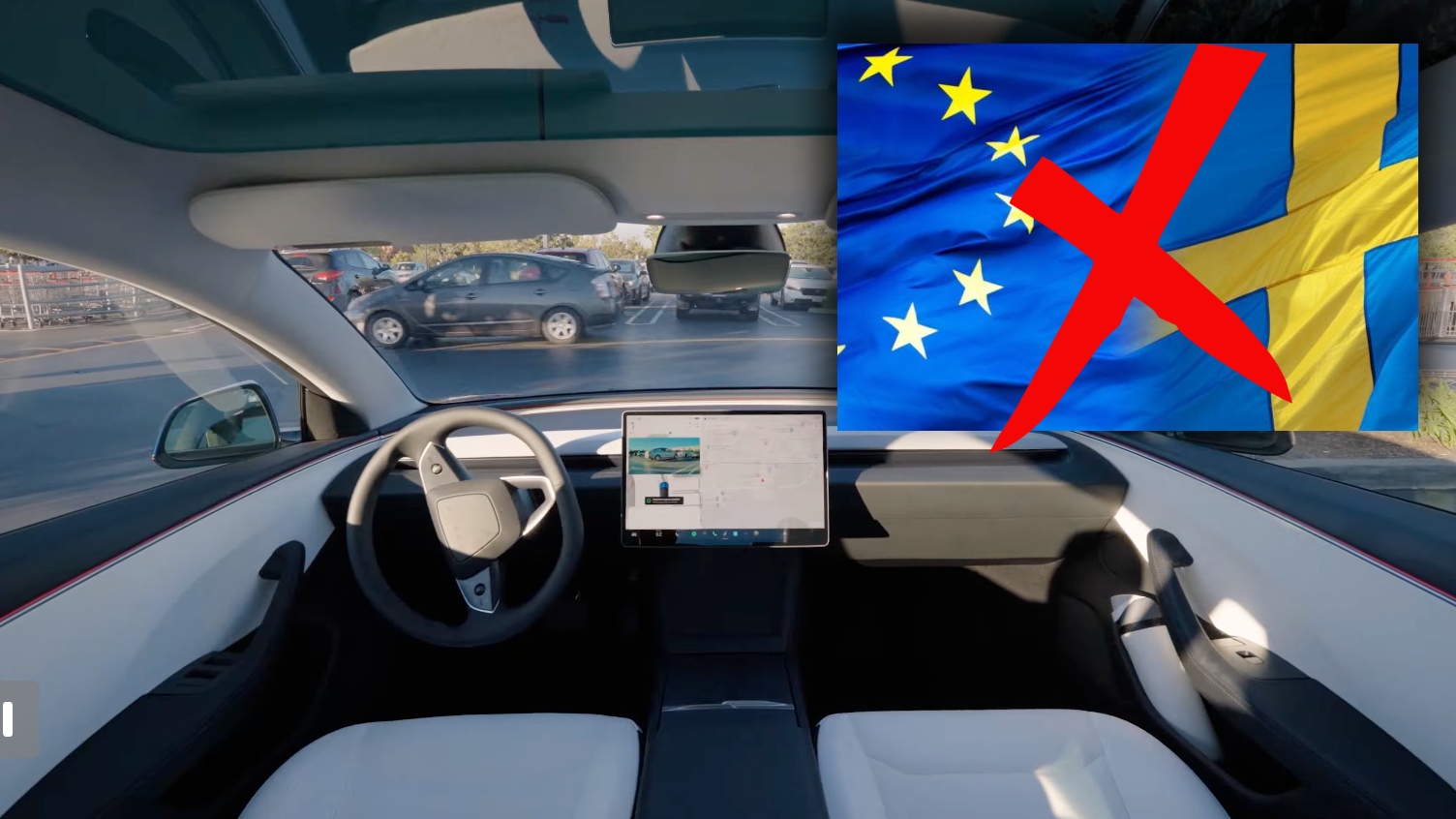
Sweden and several other EU countries have slowed Tesla’s attempt to gain joint approval for its supervised self-driving system. When the technical committee for motor vehicles met in early October, there was no vote on the agenda—only a brief follow-up discussion. For Swedish Tesla owners, this means the wait continues.
According to Carup, the EU’s Technical Committee on Motor Vehicles (TCMV) was supposed to discuss the issue of Tesla’s FSD Supervised on Wednesday. It now appears the decision will be postponed.
The Dutch vehicle authority RDW has already approved the system nationally and wants to see a broader European approval.
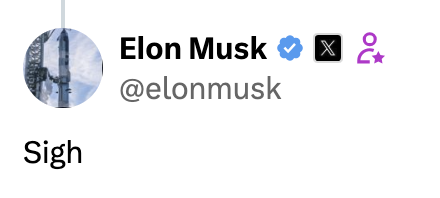
Sweden is among the countries that have expressed skepticism. Tesla’s CEO Elon Musk reacted briefly with a “sigh.”
At the end of September, Reuters reported that the October 6 meeting only scheduled 25 minutes for further discussion of the Netherlands’ request under Article 39—no vote was planned. The next scheduled TCMV meeting after October is in December, making that the earliest possible time for a decision.
The process began in the Netherlands, where RDW in April granted Tesla a provisional approval. Since then, more countries have recognized the Dutch exemption.
According to Allt om Elbil, FSD Supervised is now approved in seven EU countries: the Netherlands, Denmark, Belgium, Estonia, Lithuania, Slovenia, and the Czech Republic. Sweden is not among these countries.
The Swedish Transport Agency calls the system “Total self-driving under supervision” and maintains that it still cannot be generally activated for Swedish car owners. Tesla has been granted permission for limited tests on Swedish roads with specific test drivers, but the general public cannot enable the function, writes Input.
Safety Concerns and Speed Limits
Several member states, including Sweden, have according to Reuters expressed concerns that FSD can exceed speed limits. Countries that have already approved the system instead emphasize that the driver remains responsible for following traffic laws.
The system is a level 2 driver assistance system where the car can steer, adjust speed, brake, and change lanes, but the driver must constantly monitor the drive and be prepared to intervene.
EU-wide approval requires a qualified majority—support from 15 out of 27 member states representing at least 65 percent of the union’s population. The same committee approved Ford’s driver assistance system BlueCruise in March 2024, with Germany as a guarantor.
Infrastructure Minister Andreas Carlson has said that the government’s ambition is to enable EU-wide approvals for advanced driver assistance systems, provided the safety requirements are met.
The Swedish Transport Agency has also indicated that a broader Swedish launch, even after a possible EU approval, could be delayed until the spring or summer of 2027.