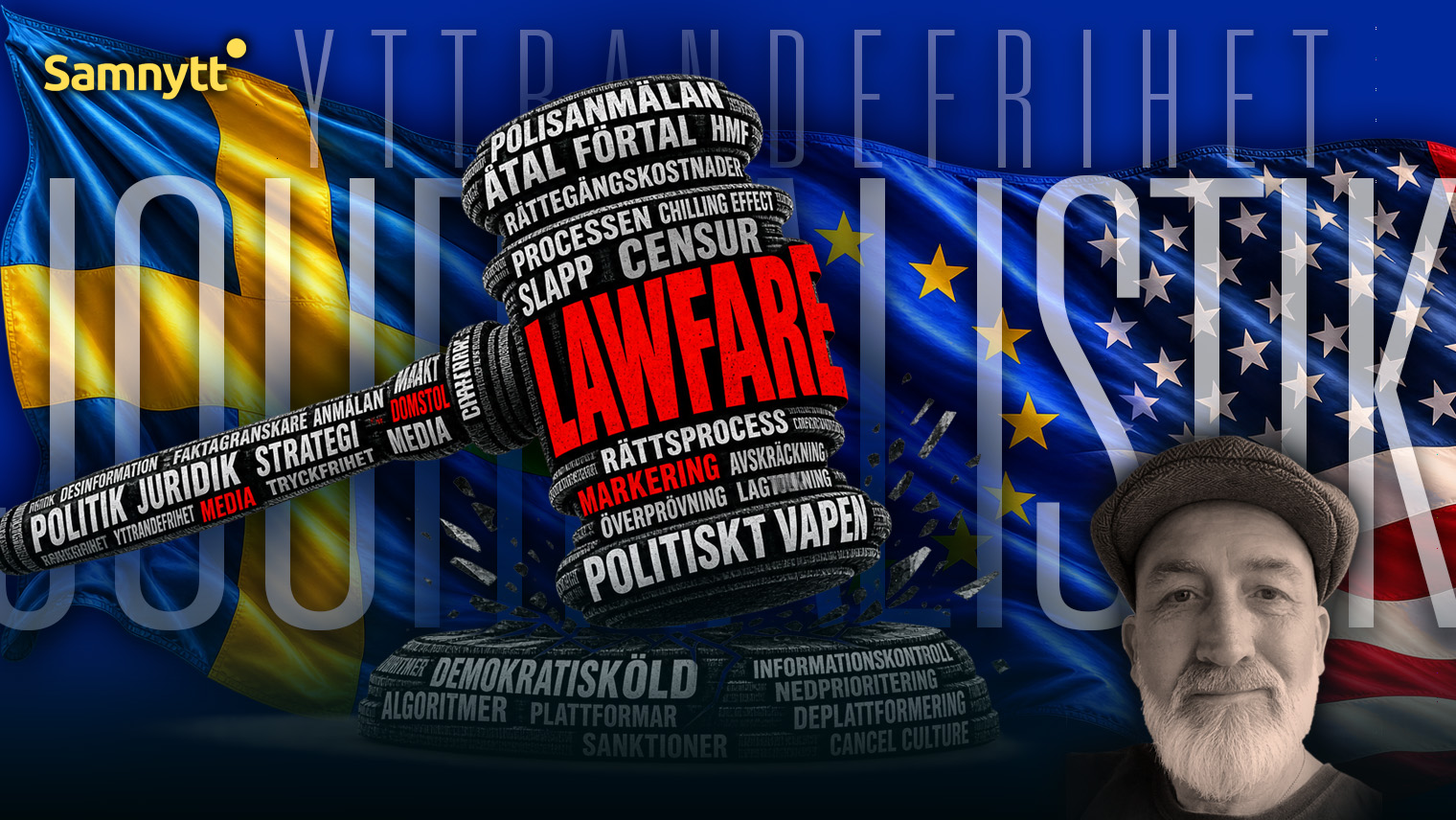
COLUMN • In the past, censorship was simple. The powers that be would ban a book, shut down a newspaper, or muzzle the opposition. In the modern democracy, much more elegant methods are required – police reports, legal proceedings, lawyer fees, algorithms, and the state-sanctioned fight against “disinformation.” You can still say almost anything you want – the question is, what does it cost you?
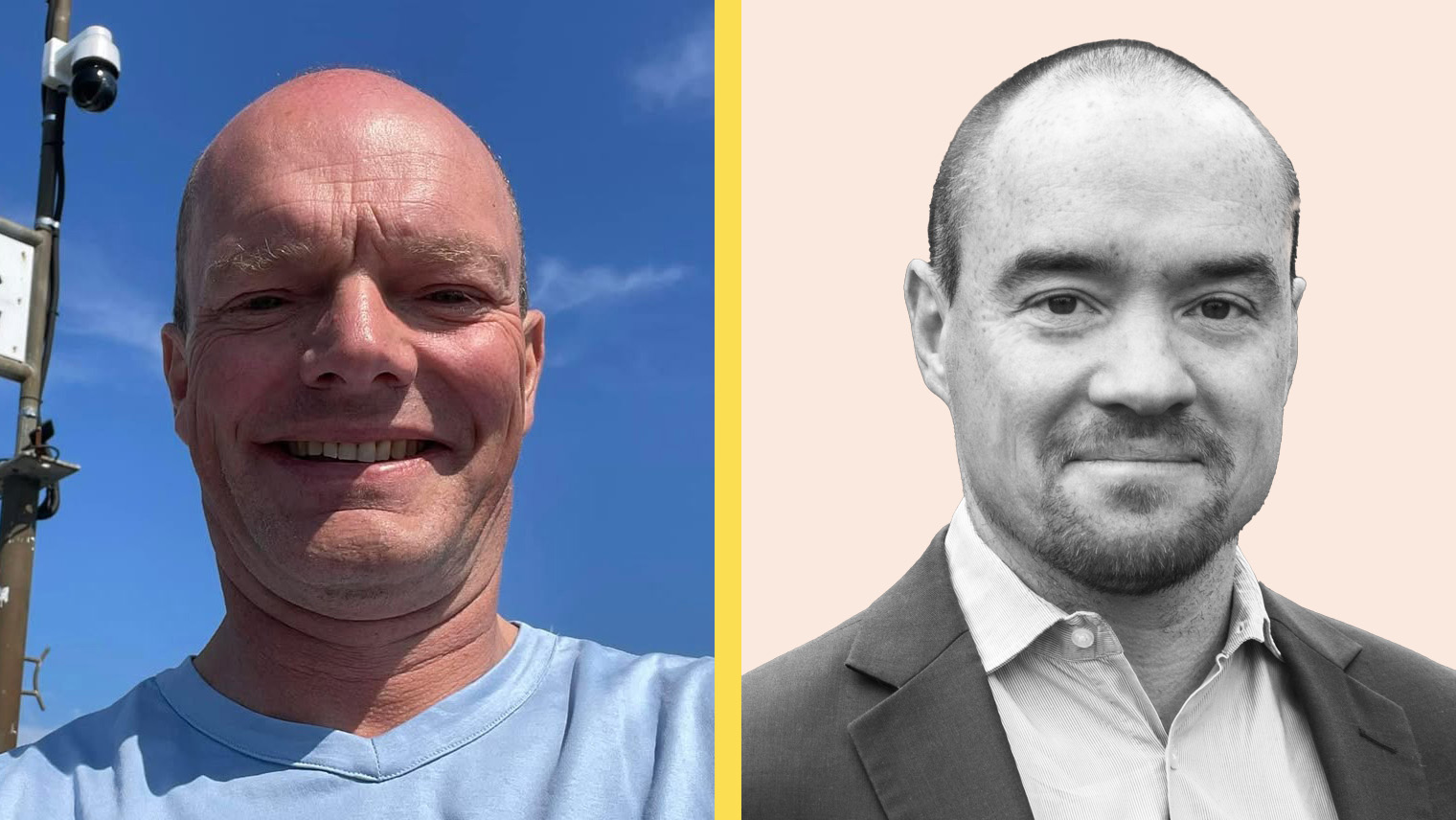
This time, it began with a single word – “voter cattle.” Sweden Democrat Kent Ekeroth used the term in a comment about voters with foreign backgrounds, upon which the Centre Party’s Stefan Lennartsson felt the statement crossed a legal line and reported Ekeroth for incitement against an ethnic group.
When I recently interviewed Lennartsson for Samnytt, something he said stuck with me. The police report, as he put it, was also a “signal.” That particular word is interesting.
The police are not a debate editorial, and a criminal complaint is not really a political response. Either there is reason to suspect a crime, or there isn’t. But what happens when the legal system is also used to send signals to political opponents?
There is a word for this phenomenon – lawfare. The term refers to the strategic use of legal processes to fight, burden, or neutralize an opponent.
When civil lawsuits are used to scare journalists, activists, and commentators into silence, it is often called SLAPP – Strategic Lawsuits Against Public Participation.
The problem is so established that the EU has adopted a special anti-SLAPP directive, and since May 1 this year, Sweden has a new law on protection for participating in public debate. I will return to this irony.
When Reporting Becomes a Political Tool
Sweden already has an organization that has turned systematic police reporting of statements into a lucrative business idea. Näthatsgranskaren has for years searched through social media for posts the organization deems might, among other things, constitute incitement against an ethnic group and forwarded them to the police.
Already in 2017, the organization made about 800 reports. Swedish Radio reported the following year that Näthatsgranskaren said their work had resulted in 175 convictions for hate crimes or incitement against ethnic groups.
SEE ALSO: Näthatsgranskaren: “Samnytt enables radicalization and mass murder!”
The organization itself described the point: “There is a deterrent effect in people being prosecuted and convicted.” Of course, one can argue that people who actually commit crimes should be deterred from continuing to do so. That’s the whole idea of criminal law.
But the fundamentally interesting question arises when organizations systematically search for statements to report – and when the mere act of reporting has consequences before any court has established a crime. Richard Jomshof experienced this in 2024.
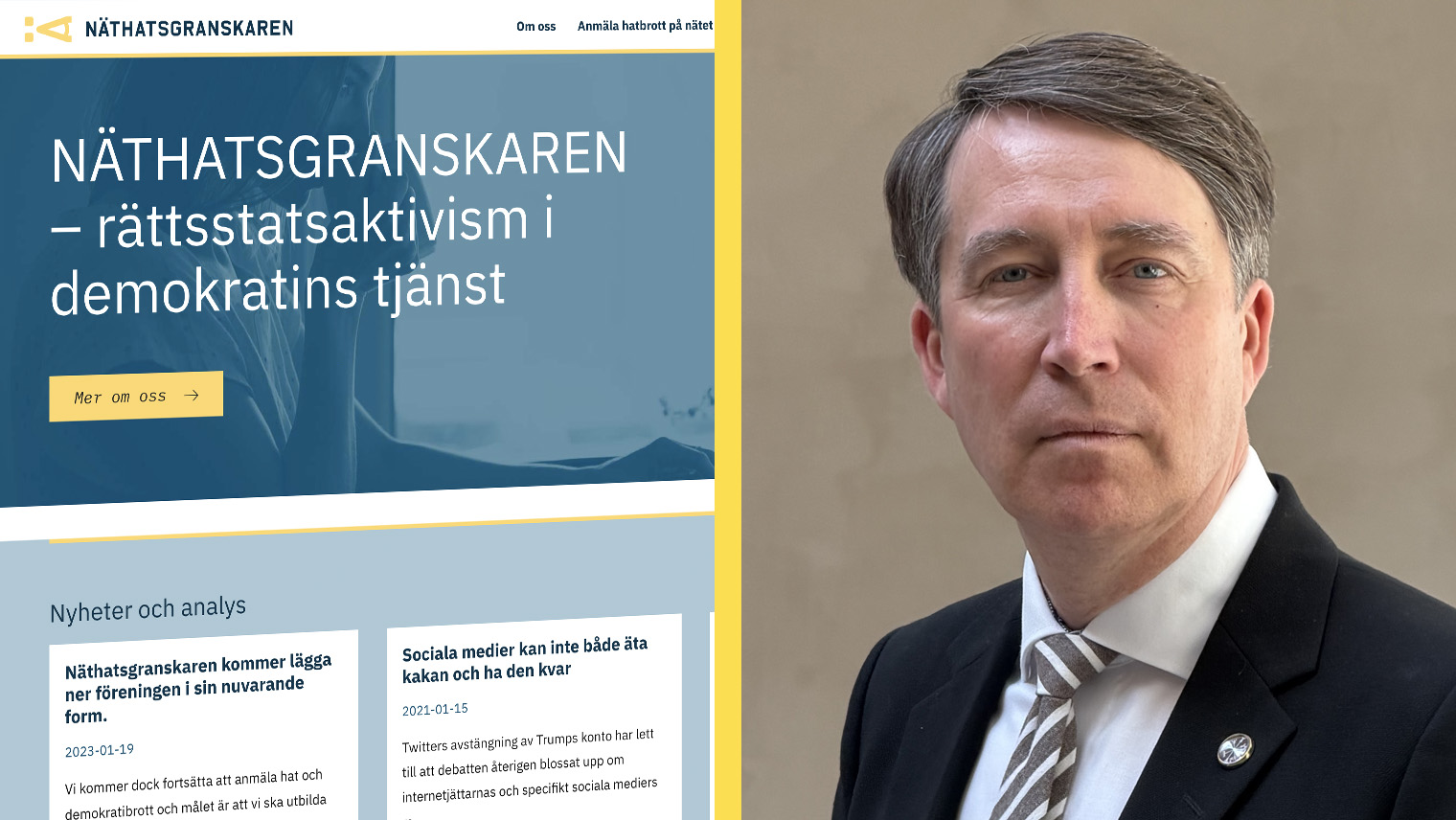
Näthatsgranskaren reported him to the police for two Islam-critical satirical cartoons he had shared on X. Jomshof was called in for questioning, formally suspected of incitement against an ethnic group, and temporarily stepped down as chairman of the parliament’s justice committee.
SEE ALSO: Näthatsgranskaren reports Jomshof’s criticism of Islam as an opinion crime: “Dehumanizing”
The preliminary investigation was then dropped. The prosecutor found no reason to believe a crime had been committed, but Näthatsgranskaren appealed. The senior prosecutor also upheld the decision to close the case.
Jomshof returned to his position, but the political effect had already occurred. An MP had left the chairmanship of the justice committee based on suspicions that the justice system subsequently determined would not go any further.
This does not mean it was illegal to report him, nor that everyone who files a report for suspected crime is engaging in lawfare. It means that the process itself has power.
When the Process Becomes the Punishment
Ann-Sofie Hermansson knows a thing or two about this. The former Social Democratic chair of Gothenburg’s municipal council ended up in conflict with activists Fatima Doubakil and Maimuna Abdullahi after the debate on the screening of the film Burka Songs 2.0.
Hermansson was reported to the police for her statements, but the preliminary investigation was dropped. The story could have ended there. Instead, a private lawsuit for aggravated defamation was filed.
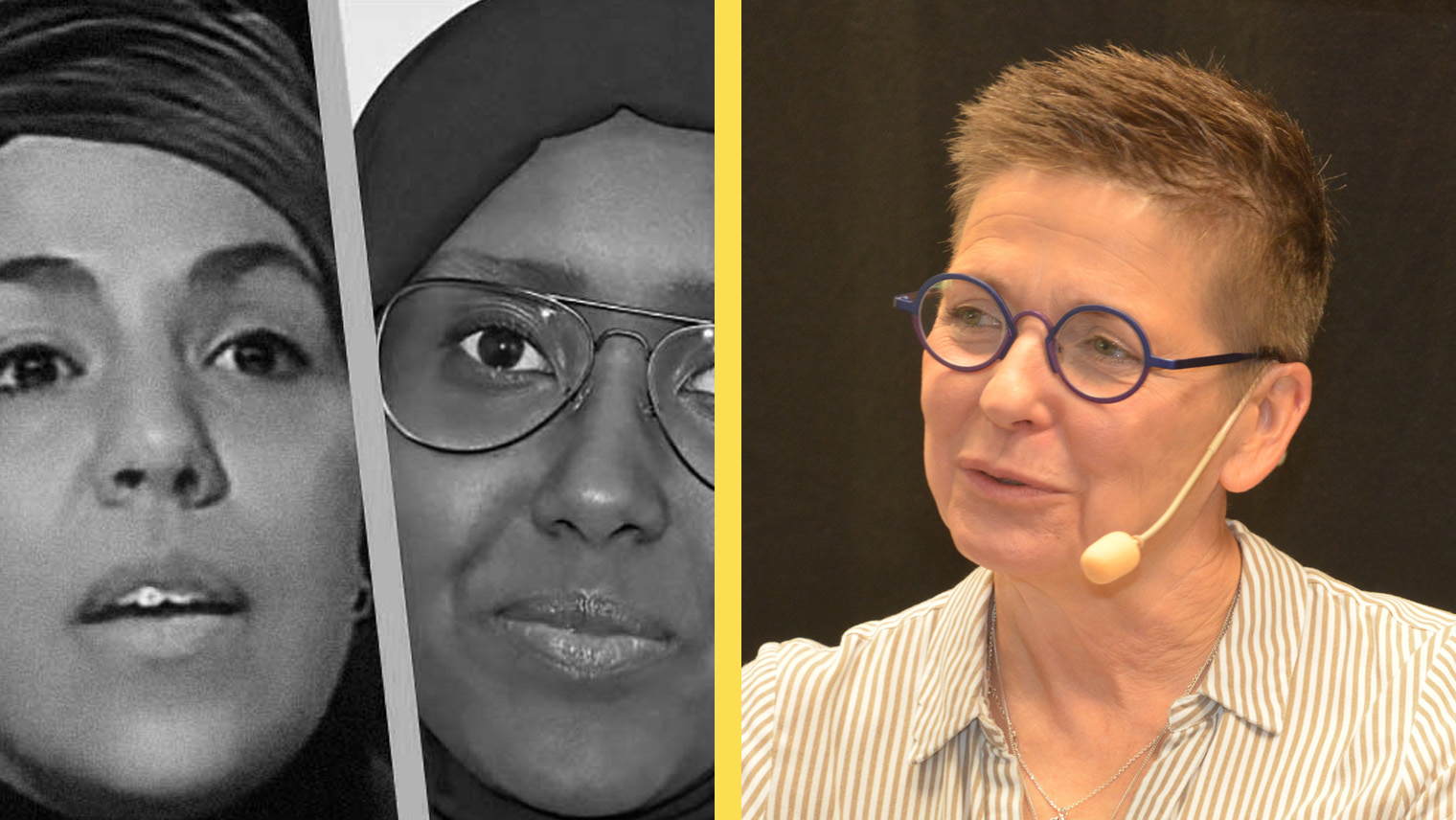
Hermansson was acquitted in the district court, but the process continued. She was also acquitted in the Court of Appeals, which ordered the plaintiffs to reimburse her for hundreds of thousands of kronor in legal expenses. They tried to have the case heard in the Supreme Court, which denied leave to appeal.
SEE ALSO: Court of Appeals acquits S politician – not defamation to call Islamists extremists
The fascinating thing about such a case is not just the outcome, but the journey – lawyers, preparations, hearings, headlines, costs, and uncertainty. You can win every legal battle and still end up paying a significant price. In that case, the process itself becomes the punishment.
This is a boundary that not only determines what is allowed, but also affects what the next responsible editor dares to publish. That is where the chilling effect arises. And that is where the discussion gets much bigger than Samnytt, Näthatsgranskaren, or a Centre Party politician reporting Kent Ekeroth.
Jonas Andersson
Samnytt has its own experience on the other side – when the process actually ends in punishment. The newspaper’s former responsible publisher Mats Dagerlind was sentenced in 2024 to one month in prison for two counts of defamation and one count of aggravated defamation after a series of articles about a person connected to Näthatsgranskaren.
SEE ALSO: Why we write that Mats Dagerlind was jailed for illegal journalism
The publications included, among other things, information related to public records. Here the legal situation should be correctly described – Dagerlind was not convicted for “publishing public documents” as such, but for defamation and aggravated defamation. But for a journalist, the fundamental question still remains difficult to avoid.
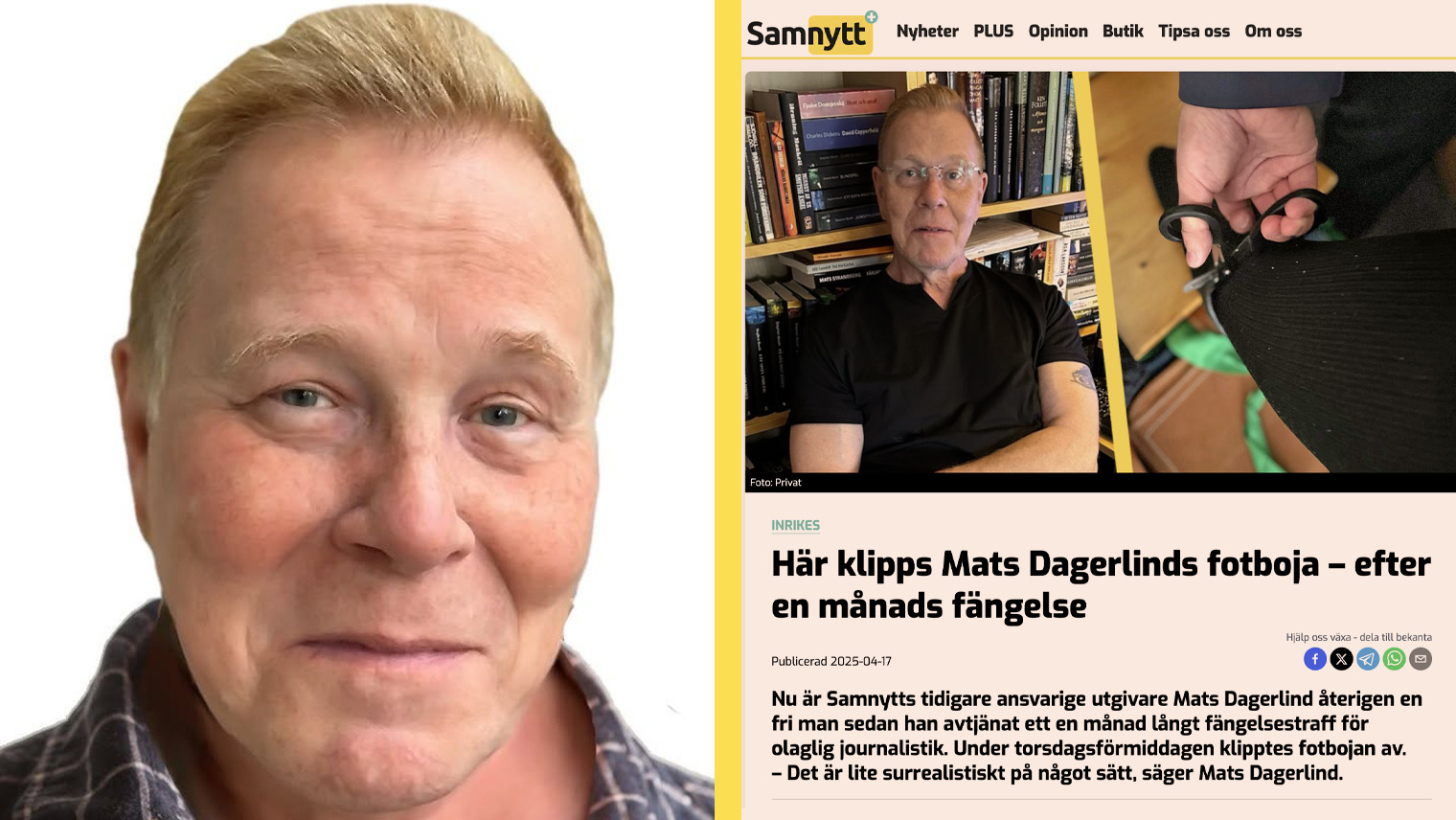
Information may be found in a public document that anyone has the right to request – while a journalistic publication of the information may result in liability depending on context, how it’s presented, and the legal assessment of defamation.
SEE ALSO: Here the ankle monitor is removed from Mats Dagerlind – after a month in prison
This is a boundary that not only determines what is allowed, but also affects what the next responsible editor dares to publish. That is where the chilling effect arises. And that is where the discussion gets much bigger than Samnytt, Näthatsgranskaren, or a Centre Party politician reporting Kent Ekeroth.
SEE ALSO: After release: Long interview with Mats Dagerlind
From Trump to the New Censorship
Donald Trump is the world’s most spectacular example of how law and politics can intertwine. During the 2024 presidential election, the former president and candidate was simultaneously involved in an entire battery of criminal cases.
In the past, the censor had to ban a book. Today, the book, post, or video can remain, while fewer people get to see the content. A post can be deprioritized or “shadowbanned” (which several right-leaning outlets, including Samnytt, experience today – especially on Facebook), an account can be restricted, a warning can be affixed to the content, and a fact-check can be attached. An algorithm can decide that the material should not be recommended. You’re not silenced – you’re just speaking in a room where someone has slowly turned down the volume.
Jonas Andersson
Trump and his supporters described these as lawfare. The prosecutors, of course, claimed the opposite – that no one, not even a presidential candidate, is above the law. One does not need to subscribe completely to either description to see the democratic dilemma.
If political candidates are immune to legal action just because they are running in an election, we’ve created a political aristocracy. But if the legal system can be used selectively to target political opponents, we have created something even more dangerous.
SEE ALSO: Supreme Court stops Trump – birthright citizenship remains despite the president’s offensive
Therefore, the question is not whether politicians should be able to be prosecuted. Of course they should. The question is whether the law is applied equally – and whether the legal process is used for the administration of justice or also for political purposes.
But the law is only one part of modern control over public discourse. In the past, the censor would ban a book. Today, the book, post, or video can remain, while fewer people get to see the content.
A post can be deprioritized or “shadowbanned” (which several right-wing outlets, including Samnytt, experience today – especially on Facebook), an account can be restricted, a warning can be attached to the content, and a fact-check can be linked to it.
An algorithm can decide that the material should not be recommended. You’re not silenced – you’re just speaking in a room where someone has slowly turned down the volume.
This is the development that Henrik “HAX” Alexandersson recently warned about in an interview with Företagande.se about the EU’s new “Democracy Shield.”
Alexandersson’s criticism is not primarily about the old kind of censorship, where the state forbids an opinion, but rather about control over distribution and information flow – who gets visibility, who decides what is disinformation and which institutions get to sort the democratic conversation.
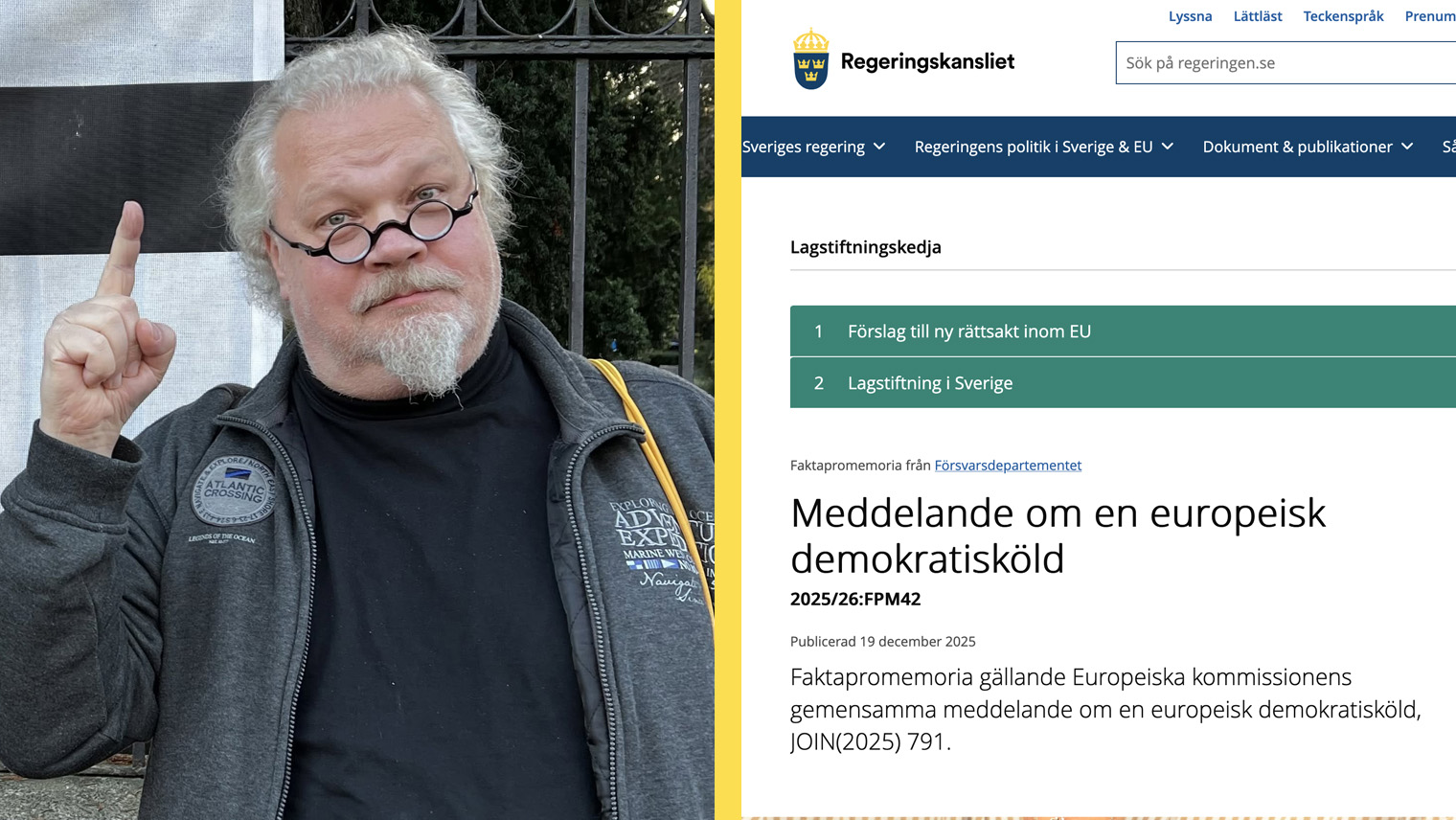
It’s an important distinction. Freedom of expression is not just about the ability to open your mouth. A free society also requires people to seek information, take part in competing descriptions of reality, and decide for themselves whom they want to believe.
This is where the EU Democracy Shield comes in. The European Commission presented the European Democracy Shield in November last year, including a European network of fact-checkers, cooperation with digital platforms, measures against disinformation and information manipulation, and a new European Centre for Democratic Resilience.
SEE ALSO:EU’s “Democracy Shield” criticized as a censorship machine: “Ministry of Truth”
The Commission itself describes a main objective as protecting “the integrity of the information space.” Among other things, they want to use the Digital Services Act, strengthen efforts against foreign information manipulation, and create a European network of fact-checkers in all EU languages.
If you are reported to the police and suspected, or end up in court and are forced to spend hundreds of thousands of kronor on lawyers? Will your employer dare to keep you, and will the next editor-in-chief dare to publish the same information? Is the spread limited, is the content marked or deprioritized? And who, then, has been given the power to decide what is a normal political statement and what is “disinformation,” “hate,” “information manipulation” or a threat to democracy?
Jonas Andersson
The stated aim is worthy – to protect free elections and European democracies from, for example, foreign influence operations, manipulation, and disinformation. But the eternal problem of democracy remains: Who will watch the watchdogs?
SEE ALSO: USA statement: EU’s leaders censor to protect themselves
Swedish Moderate Tomas Tobé was appointed rapporteur for the European Parliament’s special committee on the Democracy Shield. Parliament voted on the committee’s recommendations on September 15 this year.
Moreover, this is not a single “censorship law.” The Democracy Shield is a much broader political program, and the EU explicitly emphasizes the protection of freedom of expression, free media, and journalists.
Ironically, the same Democracy Shield also contains measures against SLAPP processes – legal proceedings used to silence participants in public debate.
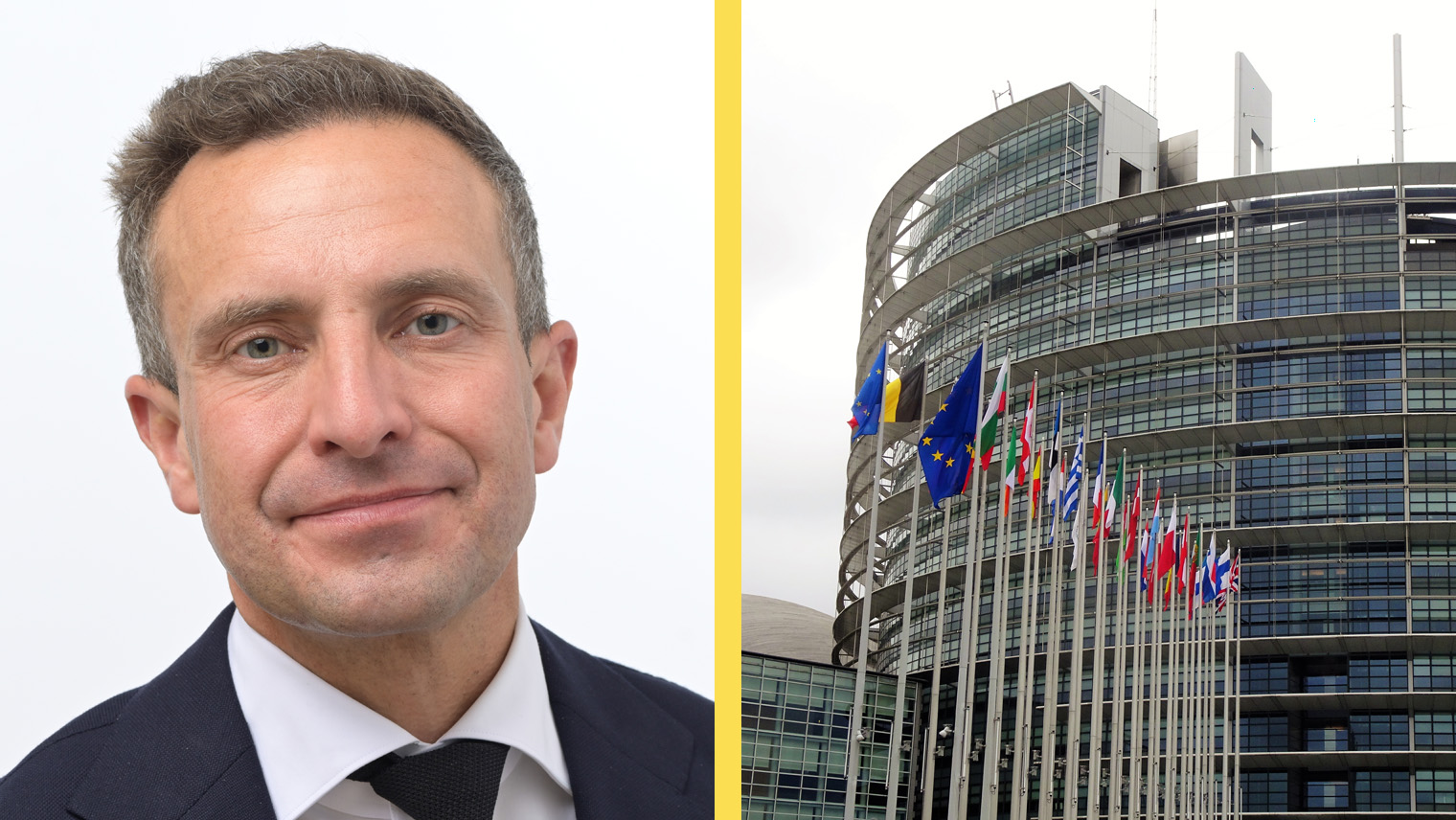
So, the EU wants to both protect us from those who use the legal system to silence debate – and build a greater European infrastructure to identify and counter disinformation and information manipulation. This is where HAX’s warning deserves to be taken seriously, even by those who do not share his conclusions.
SEE ALSO: Despite two no’s – now the EU Parliament will be forced to vote on ChatControl again
For the problem is not just what today’s well-meaning officials will do with the tools. The problem is what tools we are building and who will get to use them tomorrow.
You Can Still Speak
It’s tempting to dismiss this entire discussion with the same objection: “But no one has forbidden you from saying it.” No – and that is why the modern censorship debate looks different.
Kent Ekeroth was not forbidden to say “voter cattle,” Richard Jomshof was not forbidden to publish his images, and Ann-Sofie Hermansson was not forbidden to criticize Islamist environments. Mats Dagerlind was not preemptively banned from publishing his articles, Donald Trump was not banned from running for president, and the EU’s Democracy Shield does not forbid citizens from criticizing Ursula von der Leyen.
That would be the old model. The new question is, what happens after you have spoken?
Are you reported to the police and suspected, or do you end up in court and have to spend hundreds of thousands of kronor on lawyers? Will your employer keep you and will the next publisher dare to publish the same information? Is the distribution restricted, is the content flagged or deprioritized?
And who, then, has the power to decide what is a normal political statement and what is “disinformation,” “hate,” “information manipulation,” or a threat to democracy?
I therefore return to Centre Party politician Stefan Lennartsson’s little word “signal.” Of course, people must be able to report what they sincerely believe is criminal, defamation must be punishable, and foreign powers’ attempts to manipulate our elections must be fought.
SEE ALSO:Lawfare – the new weapon to silence the truth
But the moment the legal apparatus is used as a political signal, something happens. And when the state, supranational institutions, activist organizations, fact-checkers, and global tech companies all increasingly play a role in deciding how information is classified, distributed, and made visible, every journalist must begin asking the same old question in new form: who decides what you get to hear?
The modern censor no longer needs to say you can’t speak. A friendlier message may suffice:
Go ahead and speak, my friend. We’ll take care of the rest.
Samnytt?
Do you value Samnytt? Show it by becoming a subscriber or making a donation.
DONATE VIA SWISH
123 083 33 50